Goodreads helps you follow your favorite authors. Be the first to learn about new releases!
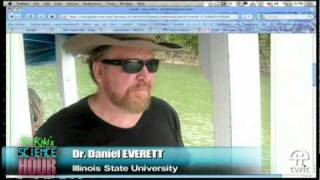
Start by following Daniel L. Everett.

Showing 1-30 of 214
“There is a certain dignity in going through life without the promise of Heaven or the threat of Hell.”
―
―
“They have no craving for truth as a transcendental reality. Indeed, the concept has no place in their values. Truth to the Pirahãs is catching a fish, rowing a canoe, laughing with your children, loving your brother, dying of malaria. Does this make them more primitive? Many anthropologists have suggested so, which is why they are so concerned about finding out the Pirahãs notions about God, the world, and creation.
But there is an interesting alternative to think about things. Perhaps it is their presence of these concerns that makes a culture more primitive, and their absense that renders a culture more sophisticated. If that is true, the Pirahãs are a very sophisticated people. Does this sound far-fetched? Let's ask ourselves if it is more sophisticated to look at the universe with worry, concern, and a believe that we can understand it all, or to enjoy life as it comes, recognizing the likely futility of looking for truth or God?”
― Don't Sleep, There Are Snakes: Life and Language in the Amazonian Jungle
But there is an interesting alternative to think about things. Perhaps it is their presence of these concerns that makes a culture more primitive, and their absense that renders a culture more sophisticated. If that is true, the Pirahãs are a very sophisticated people. Does this sound far-fetched? Let's ask ourselves if it is more sophisticated to look at the universe with worry, concern, and a believe that we can understand it all, or to enjoy life as it comes, recognizing the likely futility of looking for truth or God?”
― Don't Sleep, There Are Snakes: Life and Language in the Amazonian Jungle
“I mean, what are you going to do to him for shooting your dog?” “I will do nothing. I won’t hurt my brother. He acted like a child. He did a bad thing. But he is drunk and his head is not working well. He should not have hurt my dog. It is like my child.” Even when provoked, as Kaaboogí was now, the Pirahãs were able to respond with patience, love, and understanding, in ways rarely matched in any other culture I have encountered.”
― Don't Sleep, There Are Snakes: Life and Language in the Amazonian Jungle
― Don't Sleep, There Are Snakes: Life and Language in the Amazonian Jungle
“My evangelism professor at Biola University, Dr. Curtis Mitchell, used to say, “You’ve gotta get ’em lost before you can get ’em saved.”
― Don't Sleep, There Are Snakes: Life and Language in the Amazonian Jungle
― Don't Sleep, There Are Snakes: Life and Language in the Amazonian Jungle
“I did not see Pirahã teenagers moping, sleeping in late, refusing to accept responsibility for their own actions, or trying out what they considered to be radically new approaches to life. They in fact are highly productive and conformist members of their community in the Pirahã sense of productivity (good fishermen, contributing generally to the security, food needs, and other aspects of the physical survival of the community). One gets no sense of teenage angst, depression, or insecurity among the Pirahã youth. They do not seem to be searching for answers. They have them. And new questions rarely arise.”
― Don't Sleep, There Are Snakes: Life and Language in the Amazonian Jungle
― Don't Sleep, There Are Snakes: Life and Language in the Amazonian Jungle
“Philosophers wonder whether the things we categorize are there because we have words for them or because there really is an underlying distinction or perhaps they are just imagined. That is, do languages agree about what the world consists of because the world consists of those things or because humans share limitations that lead them to perceive the world in similar ways?”
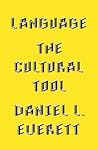
― Language: The Cultural Tool
― Language: The Cultural Tool
“I have never heard a Pirahã say that he or she is worried. In fact, so far as I can tell, the Pirahãs have no word for worry in their language. One group of visitors to the Pirahãs, psychologists from the Massachusetts Institute of Technology’s Brain and Cognitive Science Department, commented that the Pirahãs appeared to be the happiest people they had ever seen.”
― Don't Sleep, There Are Snakes: Life and Language in the Amazonian Jungle
― Don't Sleep, There Are Snakes: Life and Language in the Amazonian Jungle
“A serious and war-threatening misunderstanding grew out of two distinct cultural interpretations of this deceptively simple-looking treaty. The indigenes expected one thing. The government expected another. And both were right according to the language.”
― How Language Began: The Story of Humanity’s Greatest Invention
― How Language Began: The Story of Humanity’s Greatest Invention
“When we returned from our jog, several Pirahãs were huddled in a corner of our house, and there was a strong smell of alcohol in the air. Those in the huddle looked conspiratorial and stared at us. Some seemed angry, others ashamed. Others just stared down at something on the ground that they were all surrounding. As I approached, they parted. Pokó’s baby was on the ground, dead. They had forced cachaça down its throat and killed it. “What happened to the baby?” I asked, almost in tears. “It died. It was in pain. It wanted to die,” they replied. I just picked up the baby and held it, with tears now beginning to stream down my cheeks. “Why would they kill a baby?” I asked myself in confusion and grief.”
― Don't Sleep, There Are Snakes: Life and Language in the Amazonian Jungle
― Don't Sleep, There Are Snakes: Life and Language in the Amazonian Jungle
“It is why caution must be exercised before accepting the popular but very misleading idea that the brain is a computer, an artefact very unlike an organ. Indeed, computers lack culture.”
― How Language Began: The Story of Humanity’s Greatest Invention
― How Language Began: The Story of Humanity’s Greatest Invention
“It was eventually discovered that Indo-European was the mother of most European languages. And it was then discovered that this was also the mother of non-European languages such as Farsi, Hindi and many others.”
― How Language Began: The Story of Humanity’s Greatest Invention
― How Language Began: The Story of Humanity’s Greatest Invention
“All human behaviour, including language, is the working out of intentions, what our minds are directed towards.”
― How Language Began: The Story of Humanity’s Greatest Invention
― How Language Began: The Story of Humanity’s Greatest Invention
“They felt certain that this baby was going to die. They felt it was suffering terribly. And they believed that my clever milk tubes contraption was hurting the child and prolonging its suffering. So they euthanized the child. The father himself put the baby to death, by forcing alcohol down its throat.”
― Don't Sleep, There Are Snakes: Life and Language in the Amazonian Jungle
― Don't Sleep, There Are Snakes: Life and Language in the Amazonian Jungle
“Each human alive enjoys their grammar and society because of the work, the discoveries and the intelligence of Homo erectus.”
― How Language Began: The Story of Humanity’s Greatest Invention
― How Language Began: The Story of Humanity’s Greatest Invention
“Ability to think in complex ways must precede talking in complex syntactic constructions”
― How Language Began: The Story of Humanity’s Greatest Invention
― How Language Began: The Story of Humanity’s Greatest Invention
“Speech sounds, words, sentences, grammatical affixes and tones all emerged from the initial invention of the symbol, with the invention being improved and spreading over time by total societal involvement, just as all other inventions are.”
― How Language Began: The Story of Humanity’s Greatest Invention
― How Language Began: The Story of Humanity’s Greatest Invention
“Some have asked whether a language can communicate complicated information with only eleven phonemes. A computer scientist knows, however, that computers can communicate anything we program them to do, and that they do this with only two “letters” — 1 and 0, which can be thought of as phonemes. Morse code also has only two “letters,” long and short.
And that is all any language needs. In fact, a language could get by with a single phoneme. In such a language words might look like a, aa, aaa, aaaa, and so on.”
― Don't Sleep, There Are Snakes: Life and Language in the Amazonian Jungle
And that is all any language needs. In fact, a language could get by with a single phoneme. In such a language words might look like a, aa, aaa, aaaa, and so on.”
― Don't Sleep, There Are Snakes: Life and Language in the Amazonian Jungle
“This insight was that Sanskrit, Greek, Latin, Gothic (German-related languages) and Celtic all traced their origin back to a common ancestor.”
― How Language Began: The Story of Humanity’s Greatest Invention
― How Language Began: The Story of Humanity’s Greatest Invention
“reflected in their language – then it must be concluded that thought is independent of language in important ways.”
― Language: The Cultural Tool
― Language: The Cultural Tool
“I said that our up-high father had made my life better. Once, I said, I used to drink like the Pirahãs. I had many women (exaggerating somewhat here), and I was unhappy. Then the up-high father came into my heart and made me happy and made my life better. I gave no thought to whether all these new concepts, metaphors, and names that I was inventing on the fly were actually intelligible to the Pirahãs. They made sense to me. This night, I decided to tell them something very personal about myself—something that I thought would make them understand how important God can be in our lives. So I told the Pirahãs how my stepmother committed suicide and how this led me to Jesus and how my life got better after I stopped drinking and doing drugs and accepted Jesus. I told this as a very serious story. When I concluded, the Pirahãs burst into laughter. This was unexpected, to put it mildly. I was used to reactions like “Praise God!”with my audience genuinely impressed by the great hardships I had been through and how God had pulled me out of them. “Why are you laughing?” I asked. “She killed herself? Ha ha ha. How stupid. Pirahãs don’t kill themselves,” they answered. They were utterly unimpressed. It was clear to them that the fact that someone I had loved had committed suicide was no reason at all for the Pirahãs to believe in my God. Indeed, it had the opposite effect, highlighting our differences. This was a setback for my missionary objectives. Days went by after this in which I thought long and hard about my purpose among the Pirahãs.”
― Don't Sleep, There Are Snakes: Life and Language in the Amazonian Jungle
― Don't Sleep, There Are Snakes: Life and Language in the Amazonian Jungle
“But the fact remains that 2 million years ago in Africa, a Homo erectus community began to share information among its members by means of language. They were the first to say, ‘It’s over there,’ or, ‘I am hungry.’ Maybe the first to say, ‘I love you.”
― How Language Began: The Story of Humanity's Greatest Invention
― How Language Began: The Story of Humanity's Greatest Invention
“So long as they possessed symbols, ordering of the symbols and meanings partially determined by those components in conjunction with context they had language.”
― How Language Began: The Story of Humanity’s Greatest Invention
― How Language Began: The Story of Humanity’s Greatest Invention
“The current Sahara desert was then non-existent. Instead, all of North Africa was covered in lush forests that stretched across the Middle East and on through Asia. Flora and fauna were rich throughout large swathes of the world that are today barren deserts. This ecological-climatological fecundity dramatically contrasts”
― How Language Began: The Story of Humanity’s Greatest Invention
― How Language Began: The Story of Humanity’s Greatest Invention
“The Pirahãs are firmly committed to the pragmatic concept of utility. They don’t believe in a heaven above us, or a hell below us, or that any abstract cause is worth dying for. They give us an opportunity to consider what a life without absolutes, like righteousness or holiness and sin, could be like. And the vision is appealing.”
― Don't Sleep There are Snakes: Life and Language in the Amazonian Jungle
― Don't Sleep There are Snakes: Life and Language in the Amazonian Jungle
“In spite of such obvious difficulties in convincing others about things cultures do not have, it is possible to find evidence of absence rather than merely absence of evidence. And sometimes the absence of something teaches us more about the world than its presence. Sometimes it is the conjunction of the things we can talk about and the things we cannot talk about that reveals more about us then either of these alone. And the things we talk about and don’t talk about can affect the way we think. Different languages and different cultures can, therefore, produce different thoughts.”
― Language: The Cultural Tool
― Language: The Cultural Tool
“In other words, in response to the question, ‘Can anything at all be translated from any language to any other language,’ the answer seems to be, ‘No. Different languages might have different expressive powers for different kinds of information.”
― Language: The Cultural Tool
― Language: The Cultural Tool
“process of phonation.”
― How Language Began: The Story of Humanity’s Greatest Invention
― How Language Began: The Story of Humanity’s Greatest Invention
“It is no coincidence that the greatest changes and innovations in human physiology, cognition, sociality, communication, technology and culture (dwarfing any of today’s inventions and developments) occurred during the Pleistocene.”
― How Language Began: The Story of Humanity’s Greatest Invention
― How Language Began: The Story of Humanity’s Greatest Invention
“Grammar is symbols used together. Syntax is the arrangement of those symbols as they are used together.”
― How Language Began: The Story of Humanity’s Greatest Invention
― How Language Began: The Story of Humanity’s Greatest Invention
“therefore, produce different thoughts.”
― Language: The Cultural Tool
― Language: The Cultural Tool