Goodreads helps you follow your favorite authors. Be the first to learn about new releases!
Start by following Michael Patrick Lynch.

Showing 1-15 of 15
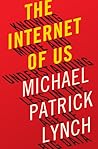
“What we—both as individuals and as a society—should learn from Mom and Locke is that we must be extremely careful about allowing online information acquisition—Google-knowing—to swamp other ways of knowing.”
― The Internet of Us: Knowing More and Understanding Less in the Age of Big Data
― The Internet of Us: Knowing More and Understanding Less in the Age of Big Data
“My hypothesis is that information technology, while expanding our ability to know in one way, is actually impeding our ability to know in other, more complex ways; ways that require 1) taking responsibility for our own beliefs and 2) working creatively to grasp and reason how information fits together. Put differently, information technologies, for all their amazing uses, are obscuring a simple yet crucial fact: greater knowledge doesn’t always bring with it greater understanding.”
― The Internet of Us: Knowing More and Understanding Less in the Age of Big Data
― The Internet of Us: Knowing More and Understanding Less in the Age of Big Data
“As the literary critic and writer Leon Wieseltier remarks, “every technology is used before it is completely understood.”
― The Internet of Us: Knowing More and Understanding Less in the Age of Big Data
― The Internet of Us: Knowing More and Understanding Less in the Age of Big Data
“So here are our truisms about truth:
Truth is objective.
Truth is good.
Truth is a worthy goal of inquiry.
Truth is worth caring about for its own sake.”
― True to Life: Why Truth Matters
Truth is objective.
Truth is good.
Truth is a worthy goal of inquiry.
Truth is worth caring about for its own sake.”
― True to Life: Why Truth Matters
“Information is the atmosphere—what the philosopher Luciano Floridi calls the infosphere—of our lives.7 But the fact that we live in the infosphere, that it is becoming ordinary, doesn’t mean that we understand it, nor how it is changing us and what Ludwig Wittgenstein might have called our form of life.”
― The Internet of Us: Knowing More and Understanding Less in the Age of Big Data
― The Internet of Us: Knowing More and Understanding Less in the Age of Big Data
“Some years ago I was struck by the large numbers of falsehoods that I had accepted as true in my childhood, and by the highly doubtful nature of the whole edifice that I had subsequently based on them.”10 Descartes”
― The Internet of Us: Knowing More and Understanding Less in the Age of Big Data
― The Internet of Us: Knowing More and Understanding Less in the Age of Big Data
“But without understanding, something deeper is missing. And our digital form of life, while giving us more facts, is not particularly good at giving us more understanding. Most of us sense this. That is one reason we try to limit our children’s screen time and encourage them to play outside. Interaction with the world brings with it an understanding of how and why things happen physically that no online experience can give.”
― The Internet of Us: Knowing More and Understanding Less in the Age of Big Data
― The Internet of Us: Knowing More and Understanding Less in the Age of Big Data
“Big data techniques are going to assist our models and explanations, not supplant them.”
― The Internet of Us: Knowing More and Understanding Less in the Age of Big Data
― The Internet of Us: Knowing More and Understanding Less in the Age of Big Data
“Una convicción es una creencia que adquiere carácter de compromiso —una llamada a la acción— porque refleja nuestra propia identidad. Refleja el tipo de persona que aspiramos a ser y la clase de grupos y tribus a la que deseamos pertenecer. Por eso los ataques a nuestras convicciones parecen ataques a nuestra identidad —porque lo son—. Pero es esta la razón por la que solemos omitir la evidencia que atenta contra nuestras convicciones: renunciar a ellas sería tanto como cambiar lo que imaginamos que somos”
― Know-It-All Society: Truth and Arrogance in Political Culture
― Know-It-All Society: Truth and Arrogance in Political Culture
“One way of describing the direction in which our own culture is moving is that many of us are starting to adapt what we might call a digital form of life—one which takes life in the infosphere for granted, precisely because the digital is so seamlessly integrated into our lives. The Internet of Things is becoming the Internet of Us, and figuratively, if not yet literally, we are becoming digital humans.”
― The Internet of Us: Knowing More and Understanding Less in the Age of Big Data
― The Internet of Us: Knowing More and Understanding Less in the Age of Big Data
“Today, the fastest and easiest way of knowing is Google-knowing, which means not just “knowledge by search engine” but the way we are increasingly dependent on knowing via digital means. That can be a good thing; but it can also weaken and undermine other ways of knowing, ways that require more creative, holistic grasps of how information connects together.”
― The Internet of Us: Knowing More and Understanding Less in the Age of Big Data
― The Internet of Us: Knowing More and Understanding Less in the Age of Big Data
“We digital humans do have access to more information than ever before—whether or not we have neuromedia. But it is also true that in other respects we know less, that the walls of our digital life make real objective knowledge harder to come by, and that the Internet has promoted a more passive, more deferential way of knowing.”
― The Internet of Us: Knowing More and Understanding Less in the Age of Big Data
― The Internet of Us: Knowing More and Understanding Less in the Age of Big Data
“Democracies can't function if their citizens don't strive, at least some of the time, to inhabit a common space, a space where they can pass ideas back and forth when — and especially when — they disagree.”
―
―
“Truth and democracy are intertwined values.”
― On Truth in Politics: Why Democracy Demands It
― On Truth in Politics: Why Democracy Demands It
“And it is why so many of us who use Facebook are still troubled by its siren song: it is a simulacrum of intimacy, a simulacrum of mutual understanding, not the real thing. The pattern of what people like or don’t like tells us something about them—more, in fact, than they may wish. But it doesn’t tell us why they like what they like. It doesn’t allow us to understand them. Facebook knows, but doesn’t understand.”
― The Internet of Us: Knowing More and Understanding Less in the Age of Big Data
― The Internet of Us: Knowing More and Understanding Less in the Age of Big Data