Goodreads helps you follow your favorite authors. Be the first to learn about new releases!
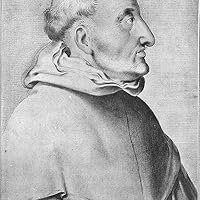
Start by following Louis of Granada.
Showing 1-30 of 66
“Our souls may be considered as consisting of two parts, which theologians call the superior and the inferior parts. The first is the seat of the will and of reason, the natural light with which God endowed us at creation. This noble and beautiful gift of reason makes man the image of God and capable of enjoying God, and raises him to a companionship with the angels. The inferior part of the soul is the seat of the sensual appetites, which have been given to us to aid us in procuring the necessities of life and in preserving the human race. But these appetites are blind – they must follow the guidance of reason. They are unfitted to command, and, therefore, like good stewards, they should act only in obedience to their master. Alas! How often do we see this order reversed! How often do we behold the servant become the master!”
― The Sinner's Guide
― The Sinner's Guide
“God, in the Old Law, ordained that children should be circumcised on the eighth day after birth, teaching us thereby that, on the day of the general resurrection which will follow the short space of this life, He will cut off the miseries and sufferings of those who, for love of Him, have circumcised their hearts by cutting off all the sinful affections and pleasures of this world. Now, who can conceive a happier existence than this, which is exempt from every sorrow and every infirmity?”
― The Sinner's Guide
― The Sinner's Guide
“St. Augustine observes, "He is a profoundly hidden God, yet everywhere present; He is essentially strength and beauty; He is immutable and incomprehensible; He is beyond all space, yet fills all the universe; invisible, yet manifest to all creatures; producing all motion, yet is Himself immovable; always in action, yet ever at rest, He fills all things and is circumscribed by nothing; He provides for all things without the least solicitude; He is great without quantity, therefore He is immense; He is good without qualification, and therefore He is the Supreme Good." (Meditations, 19 and 20).”
― The Sinner's Guide
― The Sinner's Guide
“in His boundless love He does not refuse to descend into depraved hearts, nor to pass through the hands of unworthy ministers who are the slaves of Satan and the victims of their unruly passion. To reach the hearts of His friends and to bring them His divine consolations, He submits to innumerable outrages and profanations.”
― The Sinner's Guide
― The Sinner's Guide
“Since it is the property and function of grace to make us virtuous, we must love virtue and abhor sin, which we cannot do if the understanding be not divinely enlightened to discern the malice of sin and the beauty of virtue. For the will, according to philosophers and theologians, is a blind faculty, incapable of acting without the guidance of the intellect, which points out the good it should choose and love, and the evil it should reject and hate. The same is true of fear, of hope, and of hatred for sin. We can never acquire these sentiments without a just knowledge of the goodness of God and the malice of sin.”
― The Sinner's Guide
― The Sinner's Guide
“Rest is attained only through labor; victory only through combat; joy only through tears; and the sweetness of God's love only through hatred of self.”
― The Sinner's Guide
― The Sinner's Guide
“Yet, notwithstanding these powerful reasons for hope, it is deplorable that this virtue should still be so weak in us. We lose heart at the first appearance of danger, and go down into Egypt hoping for help from Pharaoh (Cf. Is. 30:2) – that is, we turn to creatures instead of God.”
― The Sinner's Guide
― The Sinner's Guide
“Be no less watchful in protecting your ears from impure discourses. If unbecoming words are uttered in your presence, testify your displeasure by at least a grave and serious countenance; for what we hear with pleasure we learn to do with complacency. Guard with equal care your tongue. Let no immodest words escape you; for "evil communications," says the Apostle, "corrupt good morals." (1Cor. 15:33). A man's conversation discovers his inclination, for, to quote the words of the Gospel, from the abundance of the heart the mouth speaketh.”
― The Sinner's Guide
― The Sinner's Guide
“Let our prayers, then, be with St. Bernard: "Give me, O Lord, tribulations through life, that I may never be separated from Thee!" (Serm. 17 in Ps. 90).”
― The Sinner's Guide
― The Sinner's Guide
“Grace, then, is like an invulnerable armor. So strong does it render man that, according to St. Thomas, the least degree of grace suffices to triumph over all sin. (S. T. III, Q. 62, a. 6).”
― The Sinner's Guide
― The Sinner's Guide
“He is infinitely wise, infinitely merciful, infinitely just, infinitely good, and, therefore, infinitely worthy to be obeyed, feared, and reverenced by all creatures. Were the human heart capable of infinite homage, infinite love, it should offer them to this supreme Master. For if reverence and homage must be proportioned to the greatness and dignity of him to whom they are offered, then the homage we offer God should, if we were capable of it, be infinite also. How great, then, is our obligation to love God, had He no other title to our love and service!”
― The Sinner's Guide
― The Sinner's Guide
“To what labor do not men condemn themselves for the acquisition of perishable riches, the preservation of which, when they are obtained, is an ever-increasing source of care and anxiety! You are striving for the kingdom of Heaven. Will you show less energy, will you be less diligent, in toiling for spiritual treasures, which can never be taken from you?”
― The Sinner's Guide
― The Sinner's Guide
“When I seek my God I seek not corporal grace, nor transient beauty, nor splendor, nor melodious sound, nor sweet fragrance of flowers, nor odorous essence, nor honeyed manna, nor grace of form, nor anything pleasing to the flesh. None of these things do I seek when I seek my God. But I seek a light exceeding all light, which the eyes cannot see; a voice sweeter than all sound, which the ear cannot hear; a sweetness above all sweetness, which the tongue cannot taste; a fragrance above all fragrance, which the senses cannot perceive; a mysterious and divine embrace, which the body cannot feel. For this light shines without radiance, this voice is heard without striking the air, this fragrance is perceived though the wind does not bear it, this taste inebriates with no palate to relish it, and this embrace is felt in the center of the soul." (Conf., L.10, 6; Solil., c. 31).”
― The Sinner's Guide
― The Sinner's Guide
“For God being infinite, our obligations towards Him and our offences against Him are, in a measure, infinite.”
― The Sinner's Guide
― The Sinner's Guide
“that envying the prosperity of others does not alleviate your own misery, but rather increases it.”
― The Sinner's Guide
― The Sinner's Guide
“spirits. The reason for this is because the first source of sin is error in the understanding, which is the natural guide and counselor of the will. Consequently, the chief endeavor of the devil is to darken the understanding, and thus draw the will into the same error. Thus he clothes evil with the appearance of good, and presents vice under the mask of virtue, that we may regard it as a counsel of reason rather than a temptation of the enemy. When we are tempted to pride, anger, ambition, or revenge, he strives to make us believe that our desire is just, and that not to follow it is to act against the dictates of reason. Man, therefore, must have eyes to perceive the perfidious hook which is concealed beneath the tempting bait, that he may not be misled by vain appearances.”
― The Sinner's Guide
― The Sinner's Guide
“Reflect on this. Men act freely when they sin, for no man is forced to do wrong. But when they have fallen they cannot rise without the divine assistance.”
― The Sinner's Guide
― The Sinner's Guide
“When man rebelled against God, the passions rebelled against reason – and from this arose all the difficulties which we encounter in the practice of virtue. Thus we see that many who appreciate virtue refuse to practice it, just as sick men earnestly desire health, but refuse the unpalatable remedies which alone would restore it. As this repugnance is the principal barrier to virtue, which, when known, is always valued and loved, if we succeed in proving that there is little foundation for such repugnance we shall have accomplished a good work.”
― The Sinner's Guide
― The Sinner's Guide
“But why seek in Scripture various names? Cannot every name expressive of good be applied to Our Saviour? Does not he who seeks and loves Him find in Him the fulfillment of all his desires? Hence, St. Ambrose says, "We possess all things in Christ, or rather Christ is all things to us. If you would be healed of your wounds, He is a Physician; if you thirst, He is a living Fountain; if you fear death, He is your Life; if you are weary of the burden of sin, He is your Justification; if you hate darkness, He is uncreated Light; if you would reach Heaven, He is the Way; if you hunger, He is your Food." (De Virg. L.3). Behold how numerous are the titles which represent this one and indivisible God, who is all things to us for the healing of our innumerable infirmities.”
― The Sinner's Guide
― The Sinner's Guide
“That you may not be discouraged, bear in mind that the prize for which you are striving is worth more than all you can ever give to purchase it. Remember that you have powerful defenders ever near you. Against the assaults of corrupt nature you have God's grace. Against the snares of the devil you have the almighty power of God. Against the allurements of evil habits you have the force of good habits confirmed by grace. Against a multitude of evil spirits you have numberless angels of light. Against the bad example and persecutions of the world you have the good example and strengthening exhortations of the saints. Against the sinful pleasures and vain joys of the world you have the pure joys and ineffable consolations of the Holy Ghost. Is it not evident that all that are for you are stronger than all that are against you? Is not God stronger than the devil? Is not grace superior to nature? Are not the good angels more powerful than the fallen legions of Satan? Are not the pure and ineffable joys of the soul far more delightful than the gross pleasures of sense and the vain amusements of the world?”
― The Sinner's Guide
― The Sinner's Guide
“Death will rob you of all your earthly possessions; your works, good and bad, will alone accompany you beyond the tomb. If this dread hour finds you unprepared, great will be your misfortune. All that remains to you will then be distributed into three portions, your body will become the food of worms; your soul the victim of demons, and your wealth the prey of eager and perhaps ungrateful or extravagant heirs.”
― The Sinner's Guide
― The Sinner's Guide
“Above all, consider the merits and sufferings of Christ, which are our principal title to God's grace and mercy, and which form the treasure whence the Church supplies the necessities of her children. It was from a confidence inspired by such motives that the saints drew that strength which rendered them as firm as Mount Sion, and established them in the holy city whence they never could be moved. (Cf. Ps. 124:1). Yet, notwithstanding these powerful reasons for hope, it is deplorable that this virtue should still be so weak in us. We lose heart at the first appearance of danger, and go down into Egypt hoping for help from Pharaoh (Cf. Is. 30:2) – that is, we turn to creatures instead of God. There are many servants of God who zealously devote themselves to fasting, prayer, and almsgiving, but few who possess the confidence with which the virtuous ï Susanna was animated, even when condemned to death and led to execution. (Cf. Dan. 13). Read the Holy Scriptures, particularly the Psalms and the writings of the prophets, and you will find abundant motives for unfailing hope in God.”
― The Sinner's Guide
― The Sinner's Guide
“What a subject is this for our contemplation! "The same fire," says St. Chrysostom, "which purifies gold, consumes wood; so in the fire of tribulation the just acquire new beauty and perfection, while the wicked, like dry wood, are reduced to ashes." (Hom.14 in Matt.1). St. Cyprian expresses the same thought by another illustration: "As the wind in harvest time scatters the chaff but cleanses the wheat, so the winds of adversity scatter the wicked but purify the just." (De Unitate Eccl.). The passage of the children of Israel through the Red Sea is still another figure of the same truth. Like protecting walls the waters rose on each side of the people, and gave them a safe passage to the dry land; but as soon as the Egyptian army with its king and chariots had entered the watery breach, the same waves closed upon them and buried them in the sea. In like manner the waters of tribulation are a preservation to the just, while to the wicked they are a tempestuous gulf which sweeps them into the abyss of rage, of blasphemy, and of despair.”
― The Sinner's Guide
― The Sinner's Guide
“This event ushered in a deepening in the soul of Louis of Granada. More and more he realized that prayer, rather than study, is the way to true spiritual knowledge of Christ. He saw more clearly that his goal should be to live the life of Christ within his own soul, and then to preach Christ to others. He even began to have a distaste for study.”
― The Sinner's Guide
― The Sinner's Guide
“And what is this hundredfold which the just receive in this life? Honors, riches, titles, and dignities are not their portion; the greater number of the just lead hidden, obscure lives, forgotten by the world and overwhelmed with infirmities. How, then, does God fulfill His infallible promise to give them a hundredfold even in this life? Ah! It is not with the perishable goods of this world that He will reward His servants. Joy and peace and happiness are the spiritual treasures with which the liberality of our God enriches those who love Him. These are the blessings which the world does not know, and which the wealth of the world can never buy. And how fitting this is; for as man does not live by bread alone, so the craving of his soul cannot be satisfied by anything short of spiritual blessings. Study the lives of the saints, and you will see that they have received the hundredfold promised in this life. In exchange for the false riches which they forsook, they received true riches which they can bear with them to eternity. For the turmoil and conflicts of the world, they received that "peace which surpasseth all understanding." Their tears, their fasting, and their prayers brought them more joy and consolation than they could ever hope to obtain from the fleeting pleasures of this life.”
― The Sinner's Guide
― The Sinner's Guide
“Consider also that the fellow creature whom you hate is either a just man or a sinner. If a just man, it is certainly a great misfortune to be the declared enemy of a friend of God. If a sinner, it is no less deplorable that you should undertake to punish the malice of another by plunging your own soul into sin. And if your neighbor in his turn seeks vengeance for the injury you inflict upon him, where will your enmities end? Will there be any peace on the earth? The Apostle teaches us a more noble revenge when he tells us "not to be overcome by evil, but to overcome evil by good" (Rom. 12:21 ) – that is, to triumph by our virtues over .the vices of our brethren. In endeavoring to bc revenged upon a fellow creature you are often disappointed and vanquished by anger itself. But if you overcome your passion, you gain a more glorious victory than he who conquers a city. Our noblest triumph is won by subduing ourselves, by subjecting our passions to the empire of reason,”
― The Sinner's Guide
― The Sinner's Guide
“Imitate this saint, and, rising in spirit above the world, gaze on the scene laid before you. You will be overwhelmed by the sight of so much falsehood, treachery, perjury, fraud, calumny, envy, hatred, vanity, and iniquities of every kind, but particularly by the total forgetfulness of God which prevails in the world. You will see the majority of men living like beasts, following the blind impulse of brutal passions, and living as regardless of justice or reason as if they were pagans, ignorant of the existence of God, and knowing no other object than to live and die. You will see the innocent oppressed, the guilty acquitted, the just despised, the wicked honored and exalted, and interest always more powerful than virtue. You will see justice bribed, truth disfigured, modesty unknown, arts ruined, power abused, public places corrupted.”
― The Sinner's Guide
― The Sinner's Guide
“Nor should this surprise us when we consider with what care God provides even the brute creation with all that is necessary for the maintenance of life. For whence is that natural instinct which teaches the sheep to distinguish among plants those which are poisonous and those which are wholesome? Who has taught them to run from the wolf and to follow the dog? Was it not God, the Author of nature? Since, then, God endows the brute creation with the discernment necessary for the preservation of animal life, have we not much more reason to feel that He will communicate to the just the knowledge necessary for the maintenance of their spiritual life?”
― The Sinner's Guide
― The Sinner's Guide
“St. Thomas gives us a profound reason for this. All sin, he says, proceeds from self-love, for we never commit sin without coveting some gratification for self.”
― The Sinner's Guide
― The Sinner's Guide
“We find the same beautiful variety in the works of nature, where the Sovereign Creator wisely apportions all gifts or qualities so that the lack of one perfection is compensated by the possession of another. The peacock, which has a most discordant note, possesses a beautiful plumage; the nightingale delights the ear, but has no charms for the eye; the horse bears us where we will and is valuable in camp and field, but is rarely used for food; the ox is useful for farm and table, but has scarcely any other qualities to recommend him; fruit trees give us food, but have little value for building; forest trees yield no fruit, but afford us the necessary material for erecting our dwellings. Thus we do not find all qualities or all perfections united in one creature, but that variety among them which constitutes the beauty of nature and binds them to one another by a mutual and necessary dependence.”
― The Sinner's Guide
― The Sinner's Guide