Goodreads helps you follow your favorite authors. Be the first to learn about new releases!
Start by following Ronald Gross.

Showing 1-26 of 26
“Cultivate skepticism as a virtue. In this exercise you will upgrade what Professor Neil Postman of New York University calls your “crap detector.” The term is from Ernest Hemingway, who said that it was one of the writer’s most important tools. Each day, keep an eye peeled for the most telling instance of lying, deceiving, and distortion or concealment of the truth. This will take no extra time at all, since these messages and images are thrust at you continually, unless you live in a cabin at Walden Pond without a television set or computer. For example: • Billboards • Advertising flyers • Newspapers • Commercials on radio or TV (and sometimes the newscasts!) • Opinions thrust on us by other people. For the top choice each day, identify the technique of deception or distortion being used. (It’s going to be a hard call!) Share your examples with friends and colleagues, and invite their comments and observations.”
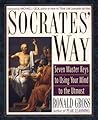
― Socrates' Way: Seven Keys to Using Your Mind to the Utmost
― Socrates' Way: Seven Keys to Using Your Mind to the Utmost
“On the contrary, asking good questions is the basis of lifelong learning. “Once you have learned how to ask questions—relevant and appropriate and substantial questions—you have learned how to learn and no one can keep you from learning whatever you want or need to know,” in the ringing words of Neil Postman and Charles Weingartner in their aptly titled Teaching as a Subversive Activity. “Question-asking is the most important intellectual ability man has yet developed.”
― Socrates' Way: Seven Keys to Using Your Mind to the Utmost
― Socrates' Way: Seven Keys to Using Your Mind to the Utmost
“In some of these cases, I found that I could not defend my beliefs adequately and needed to change my opinion. In others, I was able to reaffirm my convictions with real confidence. The point is that reexamining these basic beliefs was painful, sometimes agonizingly so. It was not a purely intellectual effort, but involved some of my deepest emotions. It challenged my sense of myself, since I had closely identified some of these beliefs with who I was and what I stood for.”
― Socrates' Way: Seven Keys to Using Your Mind to the Utmost
― Socrates' Way: Seven Keys to Using Your Mind to the Utmost
“Socrates always insisted that any of us could do what he did if we were willing to give full expression to our innate capacity to ask questions, learn from everyone, challenge our own beliefs, and stand up for what is right.”
― Socrates' Way: Seven Keys to Using Your Mind to the Utmost
― Socrates' Way: Seven Keys to Using Your Mind to the Utmost
“Questions can excite, disturb, discipline, or comfort, but they always stimulate inquiry.”
― Socrates' Way: Seven Keys to Using Your Mind to the Utmost
― Socrates' Way: Seven Keys to Using Your Mind to the Utmost
“Socrates’ cave represents the world of our “received beliefs.” Each of us harbors a myriad of ideas, attitudes, and opinions that have been “programmed” into us by our upbringing, schooling, culture, and social and media environment. The “chains” that bind us to these ideas are our understandable desire to please others, to be accepted, and to save ourselves the effort of thinking things through ourselves.”
― Socrates' Way: Seven Keys to Using Your Mind to the Utmost
― Socrates' Way: Seven Keys to Using Your Mind to the Utmost
“At least once a month (perhaps on a plane flight where you have a wide choice of free magazines), purposely spend a half-hour reading a magazine with a viewpoint completely contrary to your own. Or listen to a television or radio discussion program of that kind. For example, if your orientation is liberal and progressive, then read respectfully and openly National Review or a similar conservative journal. If you are conservative yourself, choose The Nation or one of its liberal cousins. When you come across an opinion or argument that really rattles your cage, ask yourself these questions to test the validity of the belief of yours that it challenges: • Where and when did you adopt your position? • What evidence or logic would you use to support your belief, and is it really more compelling than what you are reading? • Are any facts or arguments being presented that you have not really taken into account before? • Can you appreciate why the argument being presented could be convincing to the person presenting it and to the many readers who find it convincing? • Can you develop any facts or insights that would make you or the author you are reading change position? • Are there any circumstances or situations that would make the position in the magazine more acceptable or understandable? • Are there any ways in which the view you are reading could be reconciled, even partially, with your own?”
― Socrates' Way: Seven Keys to Using Your Mind to the Utmost
― Socrates' Way: Seven Keys to Using Your Mind to the Utmost
“Socrates’ demonstration of the defect in the officers’ concept of courage has some important implications. A commander who believed that ordering a retreat was cowardly would be severely constrained in his options; one who had a broader definition would have more tactical choices.”
― Socrates' Way: Seven Keys to Using Your Mind to the Utmost
― Socrates' Way: Seven Keys to Using Your Mind to the Utmost
“When a group of friends have enjoyed fine conversation together, you will find that uddenly omething extraordinary happen . A they are peaking, it’ a if a park ignite , pa ing from one peaker to another, and a it travel , it gather trength, building into a warm and illuminating flame of mutual under tanding which none of them could have achieved alone. SOCRATES, IN PLATO’S “CRITIAS”
― Socrates' Way: Seven Keys to Using Your Mind to the Utmost
― Socrates' Way: Seven Keys to Using Your Mind to the Utmost
“As managers and professionals, we can benefit from being this persistent in seeking the “root causes” of organizational problems. One of the best ways to do this is to simply ask “Why?” until you get a satisfactory answer. This is the organizational counterpart of Exercise 3 in the previous chapter. a. Pick the symptom or problem you wish to explore and ask “Why is this taking place?” b. Repeat the process for each answer you get, asking “Why?” about each one. c. Continue asking “Why?” about each answer you get. The answers will soon begin to converge, as numerous separate symptoms are traced back to two or three basic sources. Avoid fixating on blaming individuals or specific events. Probe for systemic causes—the ones that truly answer the question “Why?”
― Socrates' Way: Seven Keys to Using Your Mind to the Utmost
― Socrates' Way: Seven Keys to Using Your Mind to the Utmost
“To achieve self-mastery and insight requires a lifelong regimen of asking questions, thinking things through, liberating your mind, benefiting from the perspectives of other people, and caring for your soul.”
― Socrates' Way: Seven Keys to Using Your Mind to the Utmost
― Socrates' Way: Seven Keys to Using Your Mind to the Utmost
“Such acceptance is not entirely bad. In most cases, these ideas, opinions, and attitudes are quite serviceable. We should not have to think through everything ourselves. We do not need to challenge everything. But we do need to know how to conduct such a self-examination of our beliefs when it is required. Otherwise, we will live our lives as unwitting intellectual puppets.”
― Socrates' Way: Seven Keys to Using Your Mind to the Utmost
― Socrates' Way: Seven Keys to Using Your Mind to the Utmost
“Among those Athenian values and principles are: • Self-understanding is the basis for authentic living. • We must question “conventional wisdom” to verify the truth for ourselves, rather than rely on tradition. • The individual has moral and spiritual authority over his or her own “soul.” • Free speech, open dissent, and questioning of authority are essential to a healthy society. • To be most productive, thinking should be disciplined by logic and personal experience. • Our human dignity mandates that we rule ourselves through participation in constitutional government. • A sound economy should have due respect for private property, markets that work, and individual enterprise. • The state’s military powers should be under civilian control. • We should value and appreciate the body, physical fitness, and the enjoyment of our sexuality.”
― Socrates' Way: Seven Keys to Using Your Mind to the Utmost
― Socrates' Way: Seven Keys to Using Your Mind to the Utmost
“The IQ test was supposed to measure your capacity to think and learn and therefore to predict your success in school. However, contemporary psychologists have debunked this whole idea of a single capacity called intelligence. You have not one but at least seven intelligences, according to Harvard psychologist Howard Gardner. • Linguistic intelligence • Logical-mathematical intelligence • Spatial intelligence • Musical intelligence • Bodily-kinesthetic intelligence • Intrapersonal intelligence (knowing yourself) • Interpersonal intelligence (knowing other people)”
― Socrates' Way: Seven Keys to Using Your Mind to the Utmost
― Socrates' Way: Seven Keys to Using Your Mind to the Utmost
“SOCRATES’ SCORN OF PEOPLE WHO REFUSE TO THINK Socrates had no patience for people who give up on stretching their minds because our reasoning so often falters and fails. He even coined a word for them: misologists—“haters of reasoning.” “It is a sad case,” he said, “when a man discovers that some of his cherished beliefs are false and therefore gives up on finding the truth. He should blame himself for failing to validate his belief, but instead he turns against thinking itself. So for the rest of his life he goes on hating reason and speaking ill of it.” Socrates would have recoiled from our common practice of dodging discussion of an important but controversial topic by saying, “You have your opinion, and I have mine. Let’s just agree to disagree.” To Socrates, this would have been an avoidance of the need to engage in dialogue, to be willing to test our convictions in the give-and-take of discussion. “Let us not let into our souls this idea that perhaps there is no soundness in reasoning,” he enjoined his friends. “Let us think instead that we ourselves are not yet sound, and struggle to become better thinkers.”
― Socrates' Way: Seven Keys to Using Your Mind to the Utmost
― Socrates' Way: Seven Keys to Using Your Mind to the Utmost
“[T]he most radical theorists... are not critics of the educational system in the usual sense, because they are not interested first and foremost in schooling. They are interested less in teaching and learning than in growth, dignity, autonomy, freedom, and the development of the full range of human potentialities." (p. 17)”
― Radical School Reform
― Radical School Reform
“Critical thinking is not merely a negative activity. Its ultimate purpose is to cut through the crap and develop sound opinions that impel intelligent, effective action.”
― Socrates' Way: Seven Keys to Using Your Mind to the Utmost
― Socrates' Way: Seven Keys to Using Your Mind to the Utmost
“Strengthening Your Socratic Spirit • Do you think of yourself as a thinker and relish using your mind? (Exercise #1) • Are you truly open-minded? (Exercise #2) • Do you regularly challenge your mind to go beyond facts to analysis, synthesis, and judgment? (Exercise #3) • Do you take the time to think for yourself by acknowledging that a problem or question requires extended thought and giving yourself the needed time? (Exercise #4) • Do you think fluently not only with words but also with numbers and time frames? (Exercise #5) • Do you have a handy way to spark yourself and others to generate new, positive ideas on any situation or issue? (Exercise #6) • Do you know how to refine your thinking to take account of constant change? (Exercise #7), • Do you have a “mental toolbox” of ways to orchestrate your thinking? (Exercise #8) • Are you an independent scholar—a self-directed and productive investigator and thinker in the areas that matter most to you? (Exercise #9)”
― Socrates' Way: Seven Keys to Using Your Mind to the Utmost
― Socrates' Way: Seven Keys to Using Your Mind to the Utmost
“3. Challenge your mind to make significant judgments. To Socrates, the capacity to judge for ourselves was the expression of our human dignity. No oracle, no law, no assumed belief, no unanimously held opinion was exempt from our examination of its validity.”
― Socrates' Way: Seven Keys to Using Your Mind to the Utmost
― Socrates' Way: Seven Keys to Using Your Mind to the Utmost
“2. Cultivate an open mind. Socrates’ fellow-Athenians prided themselves on having open minds. As Pericles declared in his paean to the citizenry, “Each Athenian, in his own person seems to have the power of adapting himself to the most varied forms of action with the utmost versatility and grace.” Socrates tested that vaunted openness and frequently found it lacking. When he challenged his fellow citizens to justify their fundamental beliefs, they usually stuck by their convictions even when it was apparent that they had no solid foundation in logic,”
― Socrates' Way: Seven Keys to Using Your Mind to the Utmost
― Socrates' Way: Seven Keys to Using Your Mind to the Utmost
“SOCRATES: I appreciate that, Agathon, and of course I have prepared well for our dialogue. These discussions are my main way of becoming the best Socrates I can be. But if I just wanted to speak my own thoughts out loud, I could talk to a mirror, without the bother of leaving my house. I’ve come here because I’ll only be sure I’ve done my best thinking, when I hear others, and submit to the exhilarating discipline of the dialogue. All of us are smarter than any of us.”
― Socrates' Way: Seven Keys to Using Your Mind to the Utmost
― Socrates' Way: Seven Keys to Using Your Mind to the Utmost
“The secret of leading in a rapidly changing environment is to be committed to living the examined life oneself. Leaders must learn to be flexible and creative in tactics, and adaptable to shifts in culture and style, while holding to guiding principles of vision and ethics as though they were Platonic ideals.”
― Socrates' Way: Seven Keys to Using Your Mind to the Utmost
― Socrates' Way: Seven Keys to Using Your Mind to the Utmost
“Our words channel our thoughts. Our concepts drive our thinking. Our ideas shape our actions.”
― Socrates' Way: Seven Keys to Using Your Mind to the Utmost
― Socrates' Way: Seven Keys to Using Your Mind to the Utmost
“Effective leaders are skilled at asking carefully worded questions, guiding people to greater understanding of issues and problems until appropriate solutions become obvious. By guiding people to think things through for themselves, the (Socratic) leader encourages shared pride and ownership of the solutions generated.”
― Socrates' Way: Seven Keys to Using Your Mind to the Utmost
― Socrates' Way: Seven Keys to Using Your Mind to the Utmost
“Our culture encourages such a posture. We all have been brought up and educated with the “adversarial” model for resolving disputes. This model, based on our legal system, assumes that the truth will emerge through the most vigorous combat between advocates of opposing positions. If each of us fights for our own opinion as ruthlessly as possible, then the one left standing when the smoke clears must be right. Regrettably, this model obscures the truth as often as it helps us discover it. The adversarial model favors the bigger, stronger, louder champion, regardless of his or her views. Even worse, it distracts us from looking for creative ways to reconcile conflicts by finding new perspectives that accommodate differences or mediate opposing positions.”
― Socrates' Way: Seven Keys to Using Your Mind to the Utmost
― Socrates' Way: Seven Keys to Using Your Mind to the Utmost
“Socrates immersed himself in the cutting-edge intellectual work of his day, then transcended it. He took advantage of the fact that the most exciting thinkers in the Western world were drawn to Athens. He sought them out, learned what they had to teach, then challenged what he had learned to enhance his own understanding.”
― Socrates' Way: Seven Keys to Using Your Mind to the Utmost
― Socrates' Way: Seven Keys to Using Your Mind to the Utmost