Goodreads helps you follow your favorite authors. Be the first to learn about new releases!
Start by following Ian Tattersall.

Showing 1-19 of 19
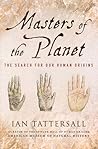
“It is...highly probable that from the very beginning, apart from death, the only ironclad rule of human experience has been the Law of Unintended Consequences.”
― Masters of the Planet: The Search for Our Human Origins
― Masters of the Planet: The Search for Our Human Origins
“Inside our skulls are fish, reptile and shrew brains, as well as the highest centers that allow us to integrate information in our unique way; and some of our newer brain components talk to each other via some very ancient structures indeed. Our brains are makeshift structures, opportunistically assembled by Nature over hundreds of millions of years, and in multiple different ecological contexts.”
―
―
“Hominids typically haven't so much adapted to change, as they have accommodated to it.”
― Masters of the Planet: The Search for Our Human Origins
― Masters of the Planet: The Search for Our Human Origins
“For over a century, an evolving microcosm of Anthropology’s turbulent history has hidden behind the staid façade of the American Museum of Natural History. From an insider’s perspective, the well-known ethnologist Stan Freed engagingly introduces us to an amazing cast of explorers, eccentrics, idealists, pranksters and forbidding intellectual - an unlikely mix that played a key role in establishing the science of Anthropology as we know it today.”
―
―
“And we can’t take absence of evidence as evidence of absence.”
― Masters of the Planet: The Search for Our Human Origins
― Masters of the Planet: The Search for Our Human Origins
“Human beings, on the other hand, are symbolic creatures. Inside their heads they break down the outside world into a mass of mental symbols, then recombine those symbols to recreate that world. What they subsequently react to is often the mental construct, rather than the primary experiences themselves.”
― The World from Beginnings to 4000 BCE
― The World from Beginnings to 4000 BCE
“There are three major genetic observations that have been made about the diversity of people living on the African continent. First, Africa shows more genetic diversity than the other continents. Second, most of the genetic variation outside of Africa is a subset of the variation found within Africa. Finally, genetic diversity decreases with increasing distance from Africa.”
― Race?: Debunking a Scientific Myth
― Race?: Debunking a Scientific Myth
“Looking over what we have just written, we found it just as difficult to banish fleeting thoughts of taking the Pledge as to resist pouring a hasty glass of wine. Humans, as we’ve already remarked, tend to take good ideas to extremes, and as in all other realms of human experience, there is a calculation to be made. It is a good idea to moderate the intake of any alcoholic beverage, including wine, not only to avoid the short-term repercussions of over-imbibing, but also to avoid long-term addiction to alcohol. Yet, as we celebrate throughout this book, wine has since the earliest times played a special role in human life, both as an emblem of civilization and as an enhancement of our experience of the world. There is, quite simply, nothing to replace it. We can offer no alternative to the standard exhortation: drink, responsibly.”
― A Natural History of Wine
― A Natural History of Wine
“In all of these papers, we find the key words admixture and expansion used over and over again. In other words, no matter how much Homo sapiens explores and moves about, we like to mate with whatever other people we meet up with.”
― Race?: Debunking a Scientific Myth
― Race?: Debunking a Scientific Myth
“The fact that Homo sapiens is the only hominid species on the Earth today makes it easy to assume that our lonely eminence is historically a natural state of affairs—which it clearly is not.”
― The World from Beginnings to 4000 BCE
― The World from Beginnings to 4000 BCE
“technologies (reflecting new and more complex behaviors) do not tend to be associated with the appearance of new kinds of hominid. It was old kinds of hominid that started to do new things, even though those new things always seem to indicate a step up in cognitive complexity.”
― Masters of the Planet: The Search for Our Human Origins
― Masters of the Planet: The Search for Our Human Origins
“some current controversies are caused, or at least stoked, by a reluctance to abandon received ideas that may well have outlived their usefulness.”
― Masters of the Planet: The Search for Our Human Origins
― Masters of the Planet: The Search for Our Human Origins
“Predators preserve an echo of the isotopic ratios of their prey, so they can be included in the calculation, too. Carbon-isotope studies have shown, for example, that some very early human relatives were quite likely eating more meat than had been suspected. Similarly, the further up the food chain you are, the greater the ratio in your bones and teeth will be between the stable nitrogen isotopes 15N and 14N. On this basis, it has been suggested that our close relatives the Neanderthals were highly carnivorous: that, indeed, they may have specialized, at least regionally, in hunting extremely large-bodied prey, such as woolly mammoths and woolly rhinos.”
― Paleontology: A Brief History of Life
― Paleontology: A Brief History of Life
“...in the late 1960s not a few paleoanthropologists were prepared at least to entertain the possibility that the differences between the robust and gracile australopithecines were due to sexual dimorphism: size and shape differences between the sexes (which in the bones of modern humans, if not apes, are relatively minor). And while others mumbled about how remarkable it was that all of the females had died at once at Sterkfontein, while all the males had waited around another half-million years before stampeding across the valley to become extinct at Swartkrans,”
― The Fossil Trail: How We Know What We Think We Know About Human Evolution
― The Fossil Trail: How We Know What We Think We Know About Human Evolution
“the chimpanzee can’t articulate his state of mind to us, or answer our questions about it. But then, for all of his physical differences, if he could talk he would be one of us. Nothing else he could do would place him more emphatically in the human camp, for it has been recognized since ancient times that language defines us as nothing else does.”
― Masters of the Planet: The Search for Our Human Origins
― Masters of the Planet: The Search for Our Human Origins
“THE “AUSTRALOPITHS” At 4.2 million years ago, in northern Kenya, we find the first evidence of a hominid species called Australopithecus anamensis. This is the first member of our family whose fossil leg and foot bones speak directly of upright bipedality. Its jaws and teeth were also comfortingly similar to the next-in-time Australopithecus afarensis, a hominid whose fossils are widely known in eastern Africa between about 3.6 and 3.0 million years ago. Most famously represented by the 3.2-million-year-old partial skeleton “Lucy,” from Hadar in Ethiopia,”
― Race?: Debunking a Scientific Myth
― Race?: Debunking a Scientific Myth
“In fact, Wilson and King showed that the difference in the average protein-coding gene sequences of chimps and modern humans was about 1 percent. In other words, the proteins that we use in our day-to-day biology are nearly identical to those that chimpanzees and bonobos use.”
― Race?: Debunking a Scientific Myth
― Race?: Debunking a Scientific Myth
“A people is what is seen before the eyes or what history reveals; a race is what is looked for and is often assumed.” Here was one of the first explicit intimations that race might be an intellectual rather than a biological construct.”
― Race?: Debunking a Scientific Myth
― Race?: Debunking a Scientific Myth
“We tend to take what is familiar for what is natural”
― The World from Beginnings to 4000 BCE
― The World from Beginnings to 4000 BCE