Goodreads helps you follow your favorite authors. Be the first to learn about new releases!
Start by following Charles J. Chaput.

Showing 1-30 of 95
“Evil preaches tolerance until it is dominant, then it tries to silence good.”
―
―
“Tolerance is not a Christian value. Charity, justice, mercy, prudence, honesty--these are Christian values.”
―
―
“In Tolkien’s Lord of the Rings trilogy, the wizard Saruman turns from wisdom to rapacity in his taste for power. He rips out the ancient trees and flattens the land to make room for the industries of war. The lesson is simple: All technology, along with its blessings, also carries a temptation—an appetite for control, a willingness to flatten the world (if needed) to make space for the human will. And”
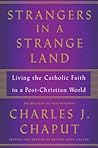
― Strangers in a Strange Land: Living the Catholic Faith in a Post-Christian World
― Strangers in a Strange Land: Living the Catholic Faith in a Post-Christian World
“Instead of helping the poor, we go shopping. Instead of spending meaningful time with our families and friends, we look for videos on the Internet. We cocoon ourselves in a web of narcotics, from entertainment to self-help gurus to chemicals. We wrap ourselves in cheap comforts and empty slogans, and because there are never enough of them, we constantly look for more. We enjoy getting angry about problems that we can’t solve, and we overlook the child who wants us to watch her dance, or the woman on the street corner asking for food.”
― Strangers in a Strange Land: Living the Catholic Faith in a Post-Christian World
― Strangers in a Strange Land: Living the Catholic Faith in a Post-Christian World
“Second, there is no truth, no real mercy and no authentic compassion in blessing a course of action that leads persons away from God.”
―
―
“People who hold a classic understanding of sexuality, marriage, and family have gone in just twenty years from pillars of mainstream conviction to the media equivalent of racists and bigots. So what do we do now? Patriotism,”
― Strangers in a Strange Land: Living the Catholic Faith in a Post-Christian World
― Strangers in a Strange Land: Living the Catholic Faith in a Post-Christian World
“if new orthodoxies of unbelief attack inherited faith, if scientism and a cult of technology lower our eyes to the gadgets in our hands, the effect ripples across a culture’s soul.”
― Strangers in a Strange Land: Living the Catholic Faith in a Post-Christian World
― Strangers in a Strange Land: Living the Catholic Faith in a Post-Christian World
“The White House elected to power in November 2008 campaigned on compelling promises of hope, change, and bringing the nation together. The reality it delivered for eight years was rather different: a brand of leadership that was narcissistic, aggressively secular, ideologically divisive, resistant to compromise, unwilling to accept responsibility for its failures, and generous in spreading blame. As”
― Strangers in a Strange Land: Living the Catholic Faith in a Post-Christian World
― Strangers in a Strange Land: Living the Catholic Faith in a Post-Christian World
“marriages are viewed as (short-term) contracts subject to a cost/benefit analysis, children become consumer goods or accessories, family bonds are weakened and our bodies are treated like so many raw materials to be mined and exploited for manufacture and pleasure. Those individuals rendered worthless as producers and commodities by obsolescence—the old and infirm—are discarded (warehoused or euthanized) and the nonproductive poor (the homeless, the unemployed, the irresponsible, the incompetent) are viewed as a threat.28”
― Strangers in a Strange Land: Living the Catholic Faith in a Post-Christian World
― Strangers in a Strange Land: Living the Catholic Faith in a Post-Christian World
“we’re often worse than pagans. True pagans had a reverence for nature and the gods. Today we worship ourselves and our tools. That sin defaces the world.”
― Strangers in a Strange Land: Living the Catholic Faith in a Post-Christian World
― Strangers in a Strange Land: Living the Catholic Faith in a Post-Christian World
“In decoupling gender from biology and denying any given or “natural” meaning to male and female sexuality, gender ideology directly repudiates reality. People don’t need to be “religious” to notice that men and women are different. The evidence is obvious. And the only way to ignore it is through a kind of intellectual self-hypnosis.”
― Strangers in a Strange Land: Living the Catholic Faith in a Post-Christian World
― Strangers in a Strange Land: Living the Catholic Faith in a Post-Christian World
“The Founders believed that liberty depended on persons with the maturity to avoid both radical self-assertion and a timid reliance on the state.”
― Strangers in a Strange Land: Living the Catholic Faith in a Post-Christian World
― Strangers in a Strange Land: Living the Catholic Faith in a Post-Christian World
“Aelred writes that true Christian friendship begins with two people who are drawn to some quality of holiness or virtue they see in each other. Since both persons love Jesus Christ and want to build their friendship on their love of Christ, Jesus is, in a real sense, the third person in their friendship.”
― Strangers in a Strange Land: Living the Catholic Faith in a Post-Christian World
― Strangers in a Strange Land: Living the Catholic Faith in a Post-Christian World
“In American life, democracy and capitalism, despite their advantages, tend to erode the place of traditional authorities (families, religious faith, and other institutions), while putting new authorities (public opinion and market forces) in their stead. And that has consequences.”
― Strangers in a Strange Land: Living the Catholic Faith in a Post-Christian World
― Strangers in a Strange Land: Living the Catholic Faith in a Post-Christian World
“Scripture is a record of the same story told again and again, in different ways but always with the same theme, for more than three thousand years. God loves man. Man betrays God. Then God calls man back to his friendship. Sometimes that call involves some very painful suffering, and for good reason. God respects our freedom. But he will not interfere with our choices or their consequences, no matter how unpleasant. As a result, the struggle in the human heart between good and evil—a struggle that seems burned into our chromosomes—projects itself onto the world, to ennoble or deform it. The beauty and the barbarism we inflict on one another leave their mark on creation.”
― Strangers in a Strange Land: Living the Catholic Faith in a Post-Christian World
― Strangers in a Strange Land: Living the Catholic Faith in a Post-Christian World
“What’s at stake in current sex and gender-identity struggles is not just the ability of Catholic ministries and schools to serve unhampered in the public square. The freedom of Catholic families to raise their children according to Christian beliefs is also, in everyday practice, becoming more difficult.”
― Strangers in a Strange Land: Living the Catholic Faith in a Post-Christian World
― Strangers in a Strange Land: Living the Catholic Faith in a Post-Christian World
“Without the restraints of some higher moral law, democracy instinctively works against natural marriage, traditional families, and any other institution that creates bonds and duties among citizens. It insists on the autonomous individual as its ideal. In”
― Strangers in a Strange Land: Living the Catholic Faith in a Post-Christian World
― Strangers in a Strange Land: Living the Catholic Faith in a Post-Christian World
“One of the ways in which a good Christian marriage mirrors the divine is that, just as God’s love overflowed into creation, so the love of man and woman should overflow into new life. The family is the “domestic Church” where parents preach the word of God to their children by example and instruction.30 It’s a school of deeper and more fruitful humanity.31”
― Strangers in a Strange Land: Living the Catholic Faith in a Post-Christian World
― Strangers in a Strange Land: Living the Catholic Faith in a Post-Christian World
“Pornography hurts more than the user. It alienates spouses. It destroys real intimacy. It reduces people to objects. And those are just the immediate human costs. The social impact is much wider and more damaging. It’s a major factor in divorce, infidelity, and broken families. And even more brutally, the porn industry also fuels and feeds on the exploitation of women and minors forced into “sex work.” Today”
― Strangers in a Strange Land: Living the Catholic Faith in a Post-Christian World
― Strangers in a Strange Land: Living the Catholic Faith in a Post-Christian World
“This post-Christian confusion—MacIntyre calls it “emotivism”—now shapes American public life. In such an environment, the purpose of moral discourse, he writes, “[becomes] the attempt of one will to align the attitudes, feelings, preferences and choices of another with its own.” Other people become instruments to be dominated and used. They’re means to achieve our ends, not ends in themselves.6 As a result, most of our moral debates about public policy never get near the truth of an issue.”
― Strangers in a Strange Land: Living the Catholic Faith in a Post-Christian World
― Strangers in a Strange Land: Living the Catholic Faith in a Post-Christian World
“IT’S RATHER ODD THAT in the wake of the bloodiest century in history—a twentieth century in which scores of millions of human beings were shot, starved, gassed, blown apart, and incinerated with superhuman ingenuity—even many religious leaders are embarrassed to talk about the devil (Pope Francis is a notable exception). In fact, it’s more than odd. It’s revealing.”
― Strangers in a Strange Land: Living the Catholic Faith in a Post-Christian World
― Strangers in a Strange Land: Living the Catholic Faith in a Post-Christian World
“The point of course is to be a great saint, to love greatly, rightly, and with passion, until we burn ourselves up in service to God and to others. Our wholeness, our integrity, depends on the health of our friendship with God. It was he who fashioned us from the dust. It was he who breathed his life into our bodies. So when we ignore God’s Word, we violate our own identity.”
― Strangers in a Strange Land: Living the Catholic Faith in a Post-Christian World
― Strangers in a Strange Land: Living the Catholic Faith in a Post-Christian World
“James Madison, in his Memorial and Remonstrance against Religious Assessments in 1785, said that man’s duty to honor God “is precedent both in order of time and degree of obligation to the claims of civil society. Before any man can be considered as a member of civil society, he must be considered as a subject of the Governor of the universe.” And as John Adams told the Massachusetts militia in 1789, “Our constitution was made only for a moral and religious people. It is wholly inadequate to the government of any other.”
― Strangers in a Strange Land: Living the Catholic Faith in a Post-Christian World
― Strangers in a Strange Land: Living the Catholic Faith in a Post-Christian World
“We’re a culture of self-absorbed consumers who use noise and distractions to manage our lack of shared meaning. What that produces in us is a drugged heart—a heart neither restless for God nor able to love and empathize with others. There”
― Strangers in a Strange Land: Living the Catholic Faith in a Post-Christian World
― Strangers in a Strange Land: Living the Catholic Faith in a Post-Christian World
“We need to engage him with our whole lives. That means cleaning out the garbage of noise and distraction from our homes. It means building real Christian friendships. It means cultivating oases of silence, worship, and prayer in our lives. It means having more children and raising them in the love of the Lord. It means fighting death and fear with joy and life, one family at a time, with families sustaining one another against the temptations of weariness and resentment.”
― Strangers in a Strange Land: Living the Catholic Faith in a Post-Christian World
― Strangers in a Strange Land: Living the Catholic Faith in a Post-Christian World
“The Church will endure until the end of time. We have the Word of God on that. But how and where she survives is another matter. “The question,” as one scholar suggested, “is whether her life in our time will be indifferent, fearful and corrupt, or a luminous proposal to the world of a more excellent way. The answer in our time, as so often in the past, may depend upon small communities that mirror to the world the light that came into the world, the light that has not and will never, never ever, be extinguished.”
― Strangers in a Strange Land: Living the Catholic Faith in a Post-Christian World
― Strangers in a Strange Land: Living the Catholic Faith in a Post-Christian World
“As Kraynak notes, “the Founders believed that freedom was based on moral order, not moral relativism.” They drew their natural law principles from John Locke, Cicero, and others, as well as from the strong natural law tradition in Christian thought. Thus, for Kraynak, “Without natural law—meaning an objective moral law put into nature and human nature by the Creator—the ideal of republican liberty lacks an ultimate foundation.”13 The”
― Strangers in a Strange Land: Living the Catholic Faith in a Post-Christian World
― Strangers in a Strange Land: Living the Catholic Faith in a Post-Christian World
“If we don’t believe in the devil, sooner or later we won’t believe in God. Try as we might, and as awkward as it might be for our own peace of mind, we can’t cut Lucifer out of the ecology of salvation. The supernatural is real, and his existence is near the heart of this world’s confusion, fears, sufferings, and spiritual struggles.”
― Strangers in a Strange Land: Living the Catholic Faith in a Post-Christian World
― Strangers in a Strange Land: Living the Catholic Faith in a Post-Christian World
“the biggest failure of so many people of my (baby boomer) generation, including parents, teachers, and leaders in the Church, has been our failure to pass along our faith in a compelling way to the generation now taking our place. The”
― Strangers in a Strange Land: Living the Catholic Faith in a Post-Christian World
― Strangers in a Strange Land: Living the Catholic Faith in a Post-Christian World
“in a chapter on “repairing God’s house,” they’ll find no new ideas for projects, programs, studies, procedures for nominating bishops, committees, structures, offices, synods, councils, pastoral plans, changed teaching, new teaching, budget realignments, sweeping reforms, or reshuffled personnel. None of those things matter. Or rather, none of them is essential. The only thing essential, to borrow a thought from the great Leon Bloy, is to be a saint. And we do that, as a Church and as individuals, by actually living what we claim to believe, and believing the faith that generations of Christians have suffered and died to sustain.”
― Strangers in a Strange Land: Living the Catholic Faith in a Post-Christian World
― Strangers in a Strange Land: Living the Catholic Faith in a Post-Christian World