Goodreads helps you follow your favorite authors. Be the first to learn about new releases!
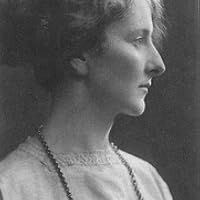
Start by following F. Marian McNeill.
Showing 1-5 of 5
“Although the medieval witch-cult of Western Europe derived from a primitive, non-selfconscious nature-religion, with sophistication it had become corrupt (as had paganism in ancient Greece) and developed into a pathological cult in which the doctrine and rites of the Christian Church were deliberately parodied, and evil instincts and desires were sanctioned and encouraged.”
― The Silver Bough, Volume 1: Scottish Folklore and Folk-Belief
― The Silver Bough, Volume 1: Scottish Folklore and Folk-Belief
“...[A] legend shows the Cailleach and Bride not as two contending personalities but as one and the same. On the Eve of Bride, the Cailleach repairs to the Isle of Youth, in whose woods lies the miraculous Well of Youth. There, at the first glimmer of dawn, before any bird has sung, or any dog has barked, she drinks of the water that bubbles in a crevice of rock, and having renewed her youth, emerges as Bride, the fair young goddess, at the touch of whose wand the dun grass turns a vivid green starred with the white and yellow flowers of spring.”
― The Silver Bough
― The Silver Bough
“In the pre-Christian era the calendar in general use was lunar; time-reckoning was lunar; festivals began on the rising of the moon - that is on their eve and many agricultural operations were governed by its phases.”
― The Silver Bough, Volume 2: A Calendar of Scottish National Festivals - Candlemas to Harvest Home
― The Silver Bough, Volume 2: A Calendar of Scottish National Festivals - Candlemas to Harvest Home
“Bride is kept prisoner all winter in Ben Nevis, where she awaits her rescuer, Aengus of the White Steed, Aengus the Ever-young, who has his home in the green island of perpetual summer that drifts about on the silver tide of the Atlantic. Aengus beholds Bride in a dream and sets out to succour her, riding on his milk-white steed with flowing mane, over the Isles and over the Minch. The Cailleach strives in vain to keep them apart, and the Day of Bride celebrates their union.”
― The Silver Bough
― The Silver Bough
“The Scottish equivalent of Demeter is the Cailleach (Gaelic), or the Carline or Auld Wife (Scots), all signifying the old woman; whilst Persephone corresponds to the Maiden or Bride. This name Bride is given to the last sheaf in districts as far apart as Midlothian and the Mearns. In later times the distinction between the Cailleach and Bride was not everywhere maintained.”
― The Silver Bough, Volume 2: A Calendar of Scottish National Festivals - Candlemas to Harvest Home
― The Silver Bough, Volume 2: A Calendar of Scottish National Festivals - Candlemas to Harvest Home