Goodreads helps you follow your favorite authors. Be the first to learn about new releases!
Start by following Rand Cardwell.

Showing 1-30 of 46
“This point is an excellent target when your opponent is at close range. By gripping the collarbone, you can dig your fingers down behind the natural curve of the bone and towards the centerline of the body. It is most active when your opponent has their arm raised and given the structural weakness of the body at this location. I consider this point one as being utilized to gain positional dominance over an opponent, as it will quickly cause the opponent to bend at the knees and expose other areas for follow-on strikes. Additionally, hard chops or hammerfist to the collarbone, besides breaking it and aiding in disabling the arm on that side, will trigger this point causing the same automatic bending of the knees. Taking split second advantage of their compromised body position is one of the reasons that I feel this point was included in the Bubishi, which is not to mention the systemic effect of the energetic system. This point is usually gained when an attacker launches a punch towards your head that is effectively defeated and their attacking arm is captured. This allows for a quick attack on ST-12 with your other hand that causes the opponent to buckle at the knees.”
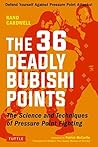
― 36 Deadly Bubishi Points: The Science and Technique of Pressure Point Fighting - Defend Yourself Against Pressure Point Attacks!
― 36 Deadly Bubishi Points: The Science and Technique of Pressure Point Fighting - Defend Yourself Against Pressure Point Attacks!
“GV-15 Chinese Point name: Ya Men;18 English translation: “Mute’s Gate;” Special Attributes: It is the intersection point of the Yang Linking Vessel and the Governing Vessel; Location: About .5 of an inch within the hairline on the centerline of the neck. This points marks the point in which the Governing Vessel leaves the back and ascends onto the head; Western Anatomy: Branches of the occipital artery and vein and the third occipital nerve are present; Comments: This point is of major importance to the martial artist. Strikes to this point should aimed at about a 30-degree upward angle. Considering that this point is located where the skull and spine connect, it is a structural weak location. Strikes to this point can cause death.”
― 36 Deadly Bubishi Points: The Science and Technique of Pressure Point Fighting - Defend Yourself Against Pressure Point Attacks!
― 36 Deadly Bubishi Points: The Science and Technique of Pressure Point Fighting - Defend Yourself Against Pressure Point Attacks!
“ST-9 This point is a bilateral point that is found on both sides of the neck and is located about 1.5 inches to the outside of the edge of the Adam’s apple of the throat. The fact that the point lays directly over the carotid artery allows strikes to have an immediate reaction to the flow of blood to the brain and head in general. It has a cryptic name in Chinese, Ren Ying,9 which means “Man’s Prognosis” and provides no clues to its location or use from a martial standpoint. Its proximity to the carotid artery allows this point to be one of the weakest points on the human body and regardless of the size and muscular strength of an opponent it is extremely sensitive. The superior thyroid artery, the anterior jugular vein, the internal jugular vein, the carotid artery, the cutaneous cervical nerve, the cervical branch of the facial nerve, the sympathetic trunk, and the ascending branch of the hypoglossal and vagus nerves are all present. Just the structurally aspects of all these sensitive and vital nerves, arteries and veins should place it high on the list of potential targets. I personally consider it as one of the most important Vital Points because of this alone. Additionally, ST-9 is an intersection point for the Stomach Meridian, Gall Bladder Meridian and the Yin Heel Vessel. Strikes to this point can kill due to the overall structural weakness of the area. Strikes should be aimed toward the center of the spine on a 90-degree angle. A variety of empty hand weapons can be employed in striking this point. Forearms, edge of hand strikes, punches, kicks, and elbow strikes are all effective. The same defensive tactics outlined under the SI-16 should be employed against attacks to this extremely vital point. CV-22 This is one of the two most important acupuncture points to the martial arts that is concerned with the hostile actions of life-or-death combatives. It sets in the horseshoe notch located at the extreme upper part of the chest structure and at the centerline of the front of the neck. Resting under it is the trachea, or commonly known as the “windpipe,” and a hard and vicious strike to this point can cause the surrounding tissue to swell, which can shut off the body’s ability to pull oxygen into the lungs. A hard strike to this point can be deadly. Attacking this point should only be done in the most extreme life-or-death situations. Energetically, the Conception Vessel and the Yin Linking Vessel intersect at this point. The implications of that, from a Traditional Chinese Medicine perspective, is included in this book. Additionally, the structure of the suprasternal notch is an excellent “touch point” for situations when sight is reduced and you find yourself at extremely close range with your opponent. This allows for utilization of this point in a self-defense situation that is not as extreme as full force strikes, as only a finger or two are inserted and rolled to the backside of the notch causing pain for the opponent.”
― 36 Deadly Bubishi Points: The Science and Technique of Pressure Point Fighting - Defend Yourself Against Pressure Point Attacks!
― 36 Deadly Bubishi Points: The Science and Technique of Pressure Point Fighting - Defend Yourself Against Pressure Point Attacks!
“GV-3 Chinese Point name: Yao Yang Guan;6 English translation: “Yang Pass;” Location: Just below the fourth lumbar vertebra on the centerline of the body; Western Anatomy: The posterior branch of the lumbar artery and the medial branch of the posterior ramus of the lumbar nerve are both present; Comments: Martial attacks to this point, and the majority of the Governing Vessel points on the back, are limited to situations when you are at your opponents back. Strikes to these areas will have to be forceful given the protective nature of the Yang surface of the back. If an opponent is prone on their stomach, after they have been dropped by another technique, then utilize heel stomps to the Governing Vessel to disable them. The hard stomping action will not only shock the energy core of the body, but might also cause structural damage to the spine.”
― 36 Deadly Bubishi Points: The Science and Technique of Pressure Point Fighting - Defend Yourself Against Pressure Point Attacks!
― 36 Deadly Bubishi Points: The Science and Technique of Pressure Point Fighting - Defend Yourself Against Pressure Point Attacks!
“Why does the term “Root Vessels” provide an easier mental picture of the function of this energetic system? If we use the analogy of a tree, rather than that of water as the Chinese did, in describing the Qi Jing Ba Mai then they become the “Root Vessels” and the twelve Main Meridians become the “Branch Meridians.” The twelve “Branch Meridians,” or Main Meridians, serve to move energy/qi to and from the organs of the body as understood in Traditional Chinese Medicine. They are the branches of the tree, and like the branches of a tree they will die if there is not a healthy root system to support the growth and maintenance of the organism. The Extraordinary Vessels comprise the energetic system of the body that stores and releases energy to the twelve Main Meridians.4 They are the source of energy in the human body and the term of “root” more fully describes their interaction with the entire energy system. The Extraordinary Vessels, when working properly, move energy in a continuous manner to adjust and moderate the flow of energy throughout the twelve Main Meridians. Understanding how the Extraordinary Vessels do this is essential to gaining an advanced knowledge of the combative aspects of the martial arts, as well as Traditional Chinese Medicine in general.”
― 36 Deadly Bubishi Points: The Science and Technique of Pressure Point Fighting - Defend Yourself Against Pressure Point Attacks!
― 36 Deadly Bubishi Points: The Science and Technique of Pressure Point Fighting - Defend Yourself Against Pressure Point Attacks!
“Basically, action is, and always will be, faster than reaction. Thus, the attacker is the one that dictates the fight. They are forcing the encounter with technique after technique that are designed to overcome any defensive techniques initiated by the defender. Much of this exchange, and determining which of the adversaries is victorious, is all a matter of split seconds. That is the gap between action and reaction. That attacker acts; the defender reacts. Military history is saturated with an uneven amount of victorious attackers compared to victorious defenders. It is common to observe the same phenomenon in popular sports, fighting competitions, in the corporate world of big business. The list goes on and on. So, how do we effectively defend ourselves when we can easily arrive at the conclusion that the defender statistically loses? It is by developing the mentality that once attacked that you immediately counter-attack. That counter-attack has to be ferocious and unrelenting. If someone throws a punch, or otherwise initiates battle with you, putting you, for a split second, on the wrong side of the action versus reaction gap. Your best chance of victory is to deflect, smoother, parry, or otherwise negate their attack and then immediately launch into a vicious counter-attack. Done properly, this forces your adversary into a reactive state, rather than an action one. You turn the table on them and become the aggressor. That is how to effectively conceptualizes being in a defensive situation. Utilizing this method will place you in a greater position to be victorious. Dempsey, Sun Tzu and General Patton would agree. Humans are very violent animals. As a species, we are capable of high levels of extreme violence. In fact, approaching the subject of unarmed combatives, or any form of combatives, involves the immersion into a field that is inherently violent to the extreme of those extremes. It is one thing to find yourself facing an opponent across a field, or ring, during a sporting match. Those contests still pit skill verses skill, but lack the survival aspects of an unarmed combative encounter. The average person rarely, if ever, ponders any of this and many consider various sporting contests as the apex of human competition. It is not. Finding yourself in a life-or-death struggle against an opponent that is completely intent on ending your life is the greatest of all human competitions. Understanding that and acknowledging that takes some degree of courage in today’s society.”
― 36 Deadly Bubishi Points: The Science and Technique of Pressure Point Fighting - Defend Yourself Against Pressure Point Attacks!
― 36 Deadly Bubishi Points: The Science and Technique of Pressure Point Fighting - Defend Yourself Against Pressure Point Attacks!
“CV-22 Chinese Point name: Tian Tu;25 English translation: “Celestial Chimney;” Special Attributes: this is an Intersection Point of the Yin Linking Vessel and the Conception Vessel. It is listed as a Vital Point in the Bubishi; Location: On the centerline of the body at the center of the suprasternal notch. That structure is the commonly referred to the “horseshoe notch” at the base of the throat; Western Anatomy: the jugular arch and a branch of the inferior thyroid artery are superficially represented. The trachea, or windpipe, is found deeper and the posterior aspect of the sternum, the innominate vein and aortic arch are also present; Comments: This point is of particular importance the martial artist as it is the intersection point of the Yin Linking Vessel and the Conception Vessel. The interrelationship between these two vessels will be covered in detail later in the book. Additionally, the structure of the suprasternal notch is an excellent “touch point” for situations when sight is reduced and you find yourself at extremely close range with your opponent. CV-23 Chinese Point name: Lian Quan;26 English translation: “Ridge Spring;” Special Attributes: Some Traditional Chinese Medicine textbooks state that this location is an intersection point for the Yin Linking Vessel and the Conception Vessel; Location: On the centerline of the throat just above the Adam’s apple; Western Anatomy: the anterior jugular vein, a branch of cutaneous cervical nerve, the hypoglossal nerve, and branch of the glossopharyngeal nerve are present; Comments: Strikes to this point should directly inward, or slightly upward, to bust the structure of the Adam’s apple and disrupt the energy flow to the head. Generally, any strike to the throat area will activate a number of sensitive acupuncture points and attacks the structural weakness of this part of the human body. CV-24 Chinese Point name: Cheng Jiang;27 English translation: “Sauce Receptacle;” Special Attributes: It is the intersection point of the Stomach and Large Intestine Meridians. Some sources state that the Governing and Conception Vessels intersect at this location. It is one of the 36 Vital Points listed in the Bubishi; Location: On the centerline of the head at the slight depression on the upper aspect of the chin; Western Anatomy: Branches of the inferior labial artery and vein are found with a branch of the facial nerve. Comments: The translation of the Chinese term for the point, “Sauce Receptacle,” is illustrative in that if one were to drip sauce from their mouth while eating it would accumulate at this point of their chin. This point is another interesting point for the martial artist. Strikes to this point are generally most effective when aimed downward at a 45-degree angle. A hammerfist strike to this point, with enough force, will not only cause an instant knockout, but can dislocate the jaw.”
― 36 Deadly Bubishi Points: The Science and Technique of Pressure Point Fighting - Defend Yourself Against Pressure Point Attacks!
― 36 Deadly Bubishi Points: The Science and Technique of Pressure Point Fighting - Defend Yourself Against Pressure Point Attacks!
“LI-14 Chinese Point name: Bi Nao;14 English translation: “Upper Arm;” Special Attributes: It is the intersection point of the Large Intestine Meridian, the Stomach Meridian, and the Yang Linking Vessel. This point is bilateral; Location: On the upper arm near the insertion of the deltoid muscle; Western Anatomy: Branches of the posterior circumflex humeral artery and vein, the deep brachial artery and vein, the posterior brachial cutaneous nerve, and the radial nerve are present; Comments: Strikes to this point can cause damage to the shoulder joint. They are best if the wrist of the attacked arm is acquired. Energetically, it is a good target due to the three intersecting meridians. TW-13 Chinese Point name: Nao Hui;15 English translation: “Upper Arm Convergence;” Special Attributes: It is an intersection point of the Triple Warmer Meridian and the Yang Linking Vessel. This point is bilateral; Location: On the posterior border of the deltoid muscle about three inches from the tip of the shoulder; Western Anatomy: The medial collateral artery and vein, the posterior brachial cutaneous nerve, and the radial nerve are present; Comments: Strike in same manner as LI-14. SI-10 Chinese Point name: Nao Shu;16 English translation: “Upper Arm Point;” Special Attributes: This is an intersection point for the Small Intestine Meridian, the Yang Linking Vessel and the Yang Heel Vessel. This point is bilateral and extremely difficult to strike in a combative situation. This point is bilateral; Location: In the depression of the inferior of the scapula when the arm is raised; Western Anatomy: The posterior circumflex humeral artery and vein, the suprascapular artery and vein, the posterior cutaneous nerve of the arm, the axillary nerve, and the suprascapular nerve are present; Comments: A strike, if possible, should be directed towards the center of the body on a 90-degree angle. This is an important point because of the major energetic intersection, but is extremely difficult to strike.”
― 36 Deadly Bubishi Points: The Science and Technique of Pressure Point Fighting - Defend Yourself Against Pressure Point Attacks!
― 36 Deadly Bubishi Points: The Science and Technique of Pressure Point Fighting - Defend Yourself Against Pressure Point Attacks!
“BL-1 Chinese Point name: Jing Ming;21 English translation: “Bright Eyes;” Special Attributes: This point is bilateral. It is an intersection point of the Small Intestine Meridian, Bladder Meridian, Stomach Meridian, Yin Heel Vessel and the Yang Heel Vessel; Location: About .25 of an inch from the inner corner of the eye; Western Anatomy: The angular artery and vein and branches of the oculomotor and ophthalmic nerve are present; Comments: Strike this point slightly upward and towards the centerline of the head. This point is fairly difficult to strike in a combative situation due to the location. Forceful strikes to the eye socket area can activate this point, as well as traumatize the eye and possible breaking the bone structure in the general area. GB-20 Chinese Point name: Feng Chi;22 English translation: “Wind Pool;” Special Attributes: It is the intersection point for the Gall Bladder Meridian, the Triple Warmer Meridian, the Yang Linking Vessel, and the Yang Heel Vessel. It is also bilateral; Location: On the occipital bone on the back of the skull; It is a bilateral point. Western Anatomy: Branches of the occipital artery, vein, and nerve are present; Comments: GB-20 is an important point for the martial artist. Strikes to this point should be aimed at a 45-degree angle towards the opposite side of the head. When attacks are generated against the Five Element aspects of the twelve Main Meridians GB-20 will weaken significantly. Strikes to this point can easily produce a knockout. Utilizing Five Element attacks, or repeated forceful strikes, can cause death.”
― 36 Deadly Bubishi Points: The Science and Technique of Pressure Point Fighting - Defend Yourself Against Pressure Point Attacks!
― 36 Deadly Bubishi Points: The Science and Technique of Pressure Point Fighting - Defend Yourself Against Pressure Point Attacks!
“GV-20 Chinese Point name: Bai Hui;23 English translation: “Hundred Convergences;” Special Attributes: This is an intersection point of the six Yang Meridians and the Governing Vessel; Location: About 1.5 inches above GV-19 on the centerline of the head; Western Anatomy: A large network of arteries and veins of the superficial temporal and occipital branches, from both sides of the head, are present. A branch of the great occipital nerve is also found; Comments: Chinese Qigong methods teach that this point is one of the major locations that qi enters the body. This makes it a target, if possible, for martial artist. Given the natural strength of the skull, strikes to this point will need to be forceful. Additionally, the point may only be accessible if the opponent is prone on the ground. Solid kicks to this point can not only disrupt the energetic system, but also traumatize the brain. Strikes should be straight down at a 90-degree angle.”
― 36 Deadly Bubishi Points: The Science and Technique of Pressure Point Fighting - Defend Yourself Against Pressure Point Attacks!
― 36 Deadly Bubishi Points: The Science and Technique of Pressure Point Fighting - Defend Yourself Against Pressure Point Attacks!
“If someone is attacking you, regardless of what technique they are attacking with, the highest probability of winning that encounter is to immediately attack that person with everything you’ve got. Kicks, knees, elbow strikes, open palm strikes, chops, punches, etc., thrown rapidly and with as much power you can generate. The key to this kind of defensive theory is that once you initiate your counter-attack, you don’t stop throwing techniques until your opponent is incapacitated. Some schools call this a “blitz” type of attack, which is borrowed from American football, but regardless of the name, it is a solid, proven method of counter-attacking. Finding yourself in the position of “getting jumped” by one or more thugs, for instance, would be a perfect example of utilizing this kind of counter-attack.”
― 36 Deadly Bubishi Points: The Science and Technique of Pressure Point Fighting - Defend Yourself Against Pressure Point Attacks!
― 36 Deadly Bubishi Points: The Science and Technique of Pressure Point Fighting - Defend Yourself Against Pressure Point Attacks!
“ST-9 This point is a bilateral point that is found on both sides of the neck and is located about 1.5 inches to the outside of the edge of the Adam’s apple of the throat. The fact that the point lays directly over the carotid artery allows strikes to have an immediate reaction to the flow of blood to the brain and head in general. It has a cryptic name in Chinese, Ren Ying,9 which means “Man’s Prognosis” and provides no clues to its location or use from a martial standpoint. Its proximity to the carotid artery allows this point to be one of the weakest points on the human body and regardless of the size and muscular strength of an opponent it is extremely sensitive. The superior thyroid artery, the anterior jugular vein, the internal jugular vein, the carotid artery, the cutaneous cervical nerve, the cervical branch of the facial nerve, the sympathetic trunk, and the ascending branch of the hypoglossal and vagus nerves are all present. Just the structurally aspects of all these sensitive and vital nerves, arteries and veins should place it high on the list of potential targets. I personally consider it as one of the most important Vital Points because of this alone. Additionally, ST-9 is an intersection point for the Stomach Meridian, Gall Bladder Meridian and the Yin Heel Vessel. Strikes to this point can kill due to the overall structural weakness of the area. Strikes should be aimed toward the center of the spine on a 90-degree angle. A variety of empty hand weapons can be employed in striking this point. Forearms, edge of hand strikes, punches, kicks, and elbow strikes are all effective. The same defensive tactics outlined under the SI-16 should be employed against attacks to this extremely vital point.”
― 36 Deadly Bubishi Points: The Science and Technique of Pressure Point Fighting - Defend Yourself Against Pressure Point Attacks!
― 36 Deadly Bubishi Points: The Science and Technique of Pressure Point Fighting - Defend Yourself Against Pressure Point Attacks!
“GV-15 and 16 are located within one inch of each other on the back of the head, at the base of the hairline. By striking this point, the ability of the Extraordinary Vessels to correct energetic imbalances of the Yang associated meridians are severed. What does this mean exactly? It means that a forceful strike or series of strikes, which are aimed at GV-15 and 16, will greatly hinder, or even completely stop, the ability of the body to correct energetic imbalances to the heart. This concept is referred to as “sealing the qi”1 or “sealing the energy.”
― 36 Deadly Bubishi Points: The Science and Technique of Pressure Point Fighting - Defend Yourself Against Pressure Point Attacks!
― 36 Deadly Bubishi Points: The Science and Technique of Pressure Point Fighting - Defend Yourself Against Pressure Point Attacks!
“Governing Vessel Point Descriptions GV-1 Chinese Point name: Chang Qiang;4 English translation: “Long Strong;” Special Attributes: the intersection point for the Kidney Meridian, Gall Bladder Meridian, and Governing Vessel. It is also listed as one of the 36 Vital Points of the Bubishi; Location: Just below the coccyx bone on the end of the spine; Western Anatomy: branches of the inferior hemorrhoid artery and vein are present. Also, the posterior ramus of the coccygeal nerve, and the hemorrhoid nerve are found; Comments: Remember that strikes to intersection points have greater energetic effect on the body. Strikes to this point should be upward at a 45-degree angle. This places the force of the blow as being aimed at the energy center of the body. From a martial perspective, this point is generally difficult to hit, but situations when you move to the back of your opponent open the possibility of knee strikes aimed in the coccyx bone. These types of strikes are extremely effective in dropping an opponent. Hard knee strikes to this region not only shock the energy core of the body, but also shock the entire nervous system with the connection of the coccyx bone to the spine.”
― 36 Deadly Bubishi Points: The Science and Technique of Pressure Point Fighting - Defend Yourself Against Pressure Point Attacks!
― 36 Deadly Bubishi Points: The Science and Technique of Pressure Point Fighting - Defend Yourself Against Pressure Point Attacks!
“What level of aggressiveness do you use on an intoxicated patron at a bar that is staggering around and wanting to fight you? What level of aggressiveness do you use on a gang of thugs that have jumped you in a parking lot? I add these two extremes because you are more likely to face one of these examples than find yourself in a life-or-death struggle in a trench on the front lines of a battlefield. Do you understand the Force Continuum that is taught to Law Enforcement Officers? I would suggest that you familiarize yourself with it. Besides being an excellent mental tool to use when faced with potentially violent encounters, it could be invaluable if you ever have to justify your actions to law enforcement or before a judge. The techniques demonstrated in this book can be very serious when executed. You should have a solid understanding of the law, levels of force needed to mitigate a violent encounter, and most importantly, the moral and ethical foundation of a true warrior. A warrior that has a high level of self-confidence, but isn’t arrogant. One that trains their body and their mind for that moment that they might find themselves in a sudden violent encounter. Warriors understand when to hold back the level of their aggression, and likewise, they understand when to unleash it in all its ruthless darkness. Few in today’s society walk the true path of a warrior.”
― 36 Deadly Bubishi Points: The Science and Technique of Pressure Point Fighting - Defend Yourself Against Pressure Point Attacks!
― 36 Deadly Bubishi Points: The Science and Technique of Pressure Point Fighting - Defend Yourself Against Pressure Point Attacks!
“GB-27 Chinese Point name: Wu Shu;7 English translation: “Fifth Pivot;” Special Attributes: The point is an intersection point for the Gall Bladder Meridian and the Girdle Vessel. It is also bilateral; Location: About three inches below GB-26 on the inside of the hipbone; Western Anatomy: The superficial and deep circumflex iliac arteries and veins, and the iliohypogastric nerve are present; Comments: This point is an exception to the rule of striking to the energy core of the body. You still need to strike at a 45-degree downward angle, but your aim should be directed towards the outside of the body. This point is located on the hipbone and strikes to the outside will cause the hip to collapse backward. It works to either side, as the point is bilateral (that means it is found on both sides of the body). A strike here will cause the hip to fall back and to the outside, the legs to bend and an energetic fluctuation in the Gall Bladder Meridian. This may be important in follow-up strikes to finish the opponent.”
― 36 Deadly Bubishi Points: The Science and Technique of Pressure Point Fighting - Defend Yourself Against Pressure Point Attacks!
― 36 Deadly Bubishi Points: The Science and Technique of Pressure Point Fighting - Defend Yourself Against Pressure Point Attacks!
“The Girdle Vessel controls the amount of energy that flows to these meridians. This function of the Girdle Vessel illustrates its place in equalizing the energy of the leg meridians. In cases of trauma to the torso or head, as in the result of a combative strike, the Girdle Vessel will “tighten” (which inhibits the energy flow to the legs) and quickly drop the energy flow to the leg meridians. This will cause the opponent to either bend at the knees or drop completely to the ground. The Girdle Vessel is often referred to as the Belt Vessel or the Dai Mai.”
― 36 Deadly Bubishi Points: The Science and Technique of Pressure Point Fighting - Defend Yourself Against Pressure Point Attacks!
― 36 Deadly Bubishi Points: The Science and Technique of Pressure Point Fighting - Defend Yourself Against Pressure Point Attacks!
“ST-12 Chinese Point name: Que Pen;7 English translation: “Empty Basin;” Special Attributes: It is an intersection point of the Stomach Meridian and the Yin Heel Vessel. It is bilateral and is one of the 36 Vital Points listed in the Bubishi; Location: At the midpoint of the collarbone, which is about four inches lateral from the centerline of the body; and bilateral. Western Anatomy: The transverse cervical artery, intermediate supraclavicular nerve and the supraclavicular portion of the brachial plexus are present; Comments: This point is an excellent target when your opponent is at close range. By gripping the collarbone you can dig your fingers down behind the natural curve of the bone and towards the centerline of the body. It is most active when your opponent has their arms raised, given the structural weakness of the body at this location, will drop the majority of attackers. A sharp thrust down into this point will cause your opponents knees to bend. ST-9 Chinese Point name: Ren Ying;8 English translation: “Man’s Prognosis;” Special Attributes: ST-9 is an intersection point for the Stomach Meridian, Gall Bladder Meridian and the Yin Heel Vessel. It is a bilateral point that sets over the carotid artery. It is one of the 36 Vital Points listed in the Bubishi; Location: About 1.5 inches to the outside of the Adam’s apple on the throat; Western Anatomy: The superior thyroid artery, the anterior jugular vein, the internal jugular vein, the carotid artery, the cutaneous cervical nerve, the cervical branch of the facial nerve, the sympathetic trunk, and the ascending branch of the hypoglossal and vagus nerves are all present; Comments: This is one of the weakest points on the human body and regardless of the size and muscular strength of an opponent it is extremely sensitive. Strikes to this point can kill due to the structural weakness of the area. Strikes should be aimed toward the center of the spine on a 90-degree angle. A variety of empty hand weapons can be employed in striking this point. Forearms, edge of hand strikes, punches, kicks, and elbow strikes are all effective. BL-1 Chinese Point name: Jing Ming;9 English translation: “Bright Eyes;” Special Attributes: It is an intersection point of the Small Intestine Meridian, Bladder Meridian, Stomach Meridian, Yin Heel Vessel and the Yang Heel Vessel. It is also bilateral; Location: About .25 of an inch from the inner corner of the eye; Western Anatomy: The angular artery and vein and branches of the oculomotor and ophthalmic nerve are present; Comments: Strike this point slightly upward and towards the centerline of the head. This point is fairly difficult to strike in a combative situation due to the location. Forceful strikes to the eye socket area can activate this point, as well as traumatize the eye and possible breaking the bone structure in the general area.”
― 36 Deadly Bubishi Points: The Science and Technique of Pressure Point Fighting - Defend Yourself Against Pressure Point Attacks!
― 36 Deadly Bubishi Points: The Science and Technique of Pressure Point Fighting - Defend Yourself Against Pressure Point Attacks!
“GV-15 and 16 are located within one inch of each other on the back of the head, at the base of the hairline. By striking this point, the ability of the Extraordinary Vessels to correct energetic imbalances of the Yang associated meridians are severed. What does this mean exactly? It means that a forceful strike or series of strikes, which are aimed at GV-15 and 16, will greatly hinder, or even completely stop, the ability of the body to correct energetic imbalances to the heart. This concept is referred to as “sealing the qi”1 or “sealing the energy.” Remember that in a combative situation that your opponent’s body will be in an energetic state in which the Fire and Metal meridians will be in great excess. The Wood, Water, and Earth meridians will be energetically in a highly deficient state during such an encounter. During the encounter you attack the Main Meridians in a manner that accentuates those imbalances. This is through your initial entering technique to the strike that places your opponent in a position where strikes to GV-15 and 16 are possible. Your finishing strike or strikes are focused on those two points, which are no more than one half of an inch from each other. It is a great possibility that the excessive energy of the heart, which can not be corrected by the Extraordinary Vessels after your finishing strike, will result in a heart attack. Think of it this way. Because of the automatic responses of Body Alarm Reaction, the Heart meridian is “flooded” with extra energy by the Extraordinary Vessels. That extra energy places in the Heart meridian in an excessive state. Martial techniques are executed that contribute to this already excessive state. The heart will be overwhelmed with extra energy. It will be beating at a much greater than normal rate. To correct this excessive state the body would normally utilize the connection points of GV-15 and 16 to “pipe out” or “draw off” the excessive energy that is present in the Heart meridian. By striking GV-15 and 16, repeatedly if possible, the connection is disrupted to the point that this can not occur. The result is that the heart is in a major excessive state and it can not correct the imbalance. That can result in arrhythmia. This is the worst possible energetic attack to the delicate Yin associated Heart Meridian. It is the worst possible energetic attack period. The Heart is the most delicate and important organ of the body to energetic fluctuations. Where are no other energetic attacks that have this much of a negative effect on the body. The results of this type of attack are extremely serious and should only be used in life-or-death situations!”
― 36 Deadly Bubishi Points: The Science and Technique of Pressure Point Fighting - Defend Yourself Against Pressure Point Attacks!
― 36 Deadly Bubishi Points: The Science and Technique of Pressure Point Fighting - Defend Yourself Against Pressure Point Attacks!
“The Cycle of Creation states that the Water Element nourishes the Wood Element. An example of this is the rain/water that nourishes a tree/wood. The Wood Element nourishes the Fire Element. Think of adding a log/wood to a campfire. The Fire Element nourishes the Earth Element. Visualize the ashes of the fire mixing with the soil/earth. The Earth Element nourishes the Metal Element. Think of how various metals are found with the ground/earth. The Metal Element nourishes the Water Element. Consider the condensation/water on the side of a metal container on a hot day. That completes the cycle of interaction from a creation or nourishing perspective.1 It is depicted in the illustration below. Figure 9-1: Five Element Cycle of Creation. The Cycle of Control, or Destruction, is the counter to the Cycle of Creation. Chinese teachings maintain that there must always be balance within a system for everything to work properly. If all the organs of the body were in a constant state of nourishment the body would be completely out of balance. The Cycle of Control explains how the five elements can control one another, thus creating a balanced healthy organism. The Cycle of Control states that Water Element controls the Fire Element. That is easy enough to understand. Think of pouring water on a fire. The Fire Element controls the Metal Element. Visualize a blacksmith that is using fire to melt metal. The Metal Element controls the Wood Element. Think of a metal axe that is cutting a tree/wood. The Wood Element controls the Earth Element. Think of how the roots of a tree/wood penetrate the soil/earth. The Earth Element controls the Water Element. Think of how the soil/earth dams up a lake/water. That competes this cycle of interaction from a controlling or destructive perspective.2 See Figure 9-2. Figure 9-2: Five Element Cycle of Control. The Chinese grouped the various organs of the body, as they understood them, into the Five Element model. The amazing science of acupuncture, which was developed over the last three thousand years, utilizes that model to treat many forms of sickness and disease. Likewise, the martial artist can use the same model to enhance their combative abilities. The interactions of the Five Element Theory has expanded the combative aspects of the martial arts in the Western world. But, the vast majority of the applications have been focused on the easier understood interactions of the twelve Main Meridians. ORGAN”
― 36 Deadly Bubishi Points: The Science and Technique of Pressure Point Fighting - Defend Yourself Against Pressure Point Attacks!
― 36 Deadly Bubishi Points: The Science and Technique of Pressure Point Fighting - Defend Yourself Against Pressure Point Attacks!
“If someone is attacking you, regardless of what technique they are attacking with, the highest probability of winning that encounter is to immediately attack that person with everything you’ve got. Kicks, knees, elbow strikes, open palm strikes, chops, punches, etc., thrown rapidly and with as much power you can generate. The key to this kind of defensive theory is that once you initiate your counter-attack, you don’t stop throwing techniques until your opponent is incapacitated. Some schools call this a “blitz” type of attack, which is borrowed from American football, but regardless of the name, it is a solid, proven method of counter-attacking. Finding yourself in the position of “getting jumped” by one or more thugs, for instance, would be a perfect example of utilizing this kind of counter-attack. Remember the action verses reaction gap we covered earlier? I suggest you should take some time and do a little research on what is known about this interaction. Action is always faster than reaction. That just makes common sense, doesn’t it? So, if you are waiting on your opponent to make the first move out of some archaic martial arts dogma about not striking first, then you are already behind before the fight starts. To win, you must cause your opponent to react rather that act. They must be the one that is a millisecond behind, always attempting to catch up to what is going on. You must become the initiator, but only after you have determined the level of force needed to control the situation. Once you have determined that, and it is very helpful to rehearse various scenarios prior to actually being involved in them, then it is a matter of always causing your opponent to react during that situation. This concept has been pressure tested numerous times, it works and works very effectively.”
― 36 Deadly Bubishi Points: The Science and Technique of Pressure Point Fighting - Defend Yourself Against Pressure Point Attacks!
― 36 Deadly Bubishi Points: The Science and Technique of Pressure Point Fighting - Defend Yourself Against Pressure Point Attacks!
“The Governing Vessel is the sea of the yang channels.”
Su When The Governing Vessel is the Yang aspect of the “Human Battery.” It starts at the intersection of CV-1 and runs posteriorly to Governing Vessel 1 (GV-1) at the tip of the coccyx bone at the end of the spine. From GV-1 the Governing Vessel ascends the centerline of the body running over the spine to GV-15, which is the point that the head and the spine connect. From GV-15 the Governing Vessel follows the centerline of the head up and over onto the face. It then descends down the centerline of the face until it connects with Conception Vessel at GV-28. Given the yang characteristics of the Governing Vessel it is harder and more resilient to strikes than the softer Conception Vessel. Consider how the body is designed according to Traditional Chinese Medicine and Western Science. The Yang surfaces of the body are the natural shock absorbers of the body. Let us say that someone is going to strike you with a whip. Will you just stand there and take the strike across the front of your body? I doubt it. Your natural defenses will cause you to turn your back to the strike. The strike would fall on the Yang surfaces of the body. Thus allowing you to protect the more vulnerable yin surfaces. This description illustrates the difference between a Yang surface and a Yin surface. The Yang surfaces of the body can take more physical abuse than the Yin surfaces. This should be a major clue to the martial artist. The fact that the body is designed to protect the Yin over the Yang illustrates that attacks to Yin are more traumatic to the body.”
― 36 Deadly Bubishi Points: The Science and Technique of Pressure Point Fighting - Defend Yourself Against Pressure Point Attacks!
Su When The Governing Vessel is the Yang aspect of the “Human Battery.” It starts at the intersection of CV-1 and runs posteriorly to Governing Vessel 1 (GV-1) at the tip of the coccyx bone at the end of the spine. From GV-1 the Governing Vessel ascends the centerline of the body running over the spine to GV-15, which is the point that the head and the spine connect. From GV-15 the Governing Vessel follows the centerline of the head up and over onto the face. It then descends down the centerline of the face until it connects with Conception Vessel at GV-28. Given the yang characteristics of the Governing Vessel it is harder and more resilient to strikes than the softer Conception Vessel. Consider how the body is designed according to Traditional Chinese Medicine and Western Science. The Yang surfaces of the body are the natural shock absorbers of the body. Let us say that someone is going to strike you with a whip. Will you just stand there and take the strike across the front of your body? I doubt it. Your natural defenses will cause you to turn your back to the strike. The strike would fall on the Yang surfaces of the body. Thus allowing you to protect the more vulnerable yin surfaces. This description illustrates the difference between a Yang surface and a Yin surface. The Yang surfaces of the body can take more physical abuse than the Yin surfaces. This should be a major clue to the martial artist. The fact that the body is designed to protect the Yin over the Yang illustrates that attacks to Yin are more traumatic to the body.”
― 36 Deadly Bubishi Points: The Science and Technique of Pressure Point Fighting - Defend Yourself Against Pressure Point Attacks!
“CV-14 Chinese Point name: Ju Que;17 English translation: “Great Tower Gate;” Special Attributes: Alarm Point for the Heart; Location: About six inches above the navel on the centerline of the body; Western Anatomy: Branches of the superior epigastric artery and vein, and the anterior cutaneous branch of the seventh intercostal nerve are present; Comments: This point being the Heart Alarm Point offers excellent attack value. Alarm points are generally considered as diagnostic indicators of energetic imbalances of the associated organ. Simple finger pressure on the alarm point of specific organs will produce some pain if there is a disease present. From a combative perspective the alarm points generally are located over the organ in question. It is not true in this case, as the heart is located approximately four inches higher than the Traditional Chinese Alarm point that it is associated. Regardless, strikes to this point should be downward at a 45-degree angle for best results, but an upward strike can effectively knock the air out of the lungs.”
― 36 Deadly Bubishi Points: The Science and Technique of Pressure Point Fighting - Defend Yourself Against Pressure Point Attacks!
― 36 Deadly Bubishi Points: The Science and Technique of Pressure Point Fighting - Defend Yourself Against Pressure Point Attacks!
“GV-26 Chinese Point name: Shui Gou;29 English translation: “Water Trough;” Special Attributes: It is the intersection point of the Large Intestine Meridian and the Governing Vessel. It is also listed as one of the 36 Vital Points in the Bubishi; Location: Below in the nose and a little above the midpoint of the philtrum; Western Anatomy: The superior labial artery and vein, the buccal branch of the facial nerve, and a branch of the infraorbital nerve are present; Comments: This point can be struck or pinched. In a situation in which it is necessary to control an individual GV-26 can be pinched between the thumb and the forefinger with great effect. A strike should be aimed upward at a 45-degree angle. This strike, if thrown with force, will also hit GV-25.”
― 36 Deadly Bubishi Points: The Science and Technique of Pressure Point Fighting - Defend Yourself Against Pressure Point Attacks!
― 36 Deadly Bubishi Points: The Science and Technique of Pressure Point Fighting - Defend Yourself Against Pressure Point Attacks!
“FIVE ELEMENT THEORY “In nature, we have the four seasons and five energetic transformations of wood, fire, earth, metal, and water.”
Nei Jing: Chapter 5”
― 36 Deadly Bubishi Points: The Science and Technique of Pressure Point Fighting - Defend Yourself Against Pressure Point Attacks!
Nei Jing: Chapter 5”
― 36 Deadly Bubishi Points: The Science and Technique of Pressure Point Fighting - Defend Yourself Against Pressure Point Attacks!
“Yin/Yang is used to describe the various qualities of paired items in relation to one another and that nothing in nature can exist without its counterpart.3 This is expressed in the following examples. Without day there can be no night, without right there can be no left, without hard there can be no soft, without East there can be no West, without expansion there can be no contraction, without rest there can be no activity. This list can go on forever. Just take a minute and think of the numerous like comparisons that you can make on your own. The complementary opposite characteristics of Yin/Yang should quickly become apparent. This comparison is even extended to like items, which means that there is no absolute in the concept. Take daytime for example. It is associated with Yang. The counterpart of daytime is nighttime, which is associated with Yin. As the sun moves through the sky during the course of the day it produces shadows. The shadows are associated with Yin, which is in comparison with areas that are receiving full sunshine. The shadows are the Yin within the Yang of the day. At night the moon will sometimes cast light on to the surface of the Earth. That occurrence is considered as Yang, which is in comparison to dark, shadowy areas. It is the Yang within the Yin of night. As the sun and moon move through the sky the positions of the corresponding light and shadow areas will merge and alternate. This represents the cyclic qualities of Yin/Yang. All events in nature, including the interactions of the human body, are cyclic and contain a complementary opposite according in Eastern thought.4 Yin/Yang, at the most basic level, is a simple comparison. Taoist philosophy does not separate cause from effect. In their view, everything is in a constant state of metamorphosis. Day is not caused by night, but simple precedes it. Winter is not caused by summer, but the two are linked in the cycle of the seasons.”
― 36 Deadly Bubishi Points: The Science and Technique of Pressure Point Fighting - Defend Yourself Against Pressure Point Attacks!
― 36 Deadly Bubishi Points: The Science and Technique of Pressure Point Fighting - Defend Yourself Against Pressure Point Attacks!
“The Girdle Vessel controls the amount of energy that flows to these meridians. This function of the Girdle Vessel illustrates its place in equalizing the energy of the leg meridians. In cases of trauma to the torso or head, as in the result of a combative strike, the Girdle Vessel will “tighten” (which inhibits the energy flow to the legs) and quickly drop the energy flow to the leg meridians. This will cause the opponent to either bend at the knees or drop completely to the ground. The Girdle Vessel is often referred to as the Belt Vessel or the Dai Mai. The points of the Girdle Vessel are shared with the Gall Bladder and Liver Meridians and indicate that this Extraordinary Vessel helps to maintain balance between this paired set of Wood Meridians.1 It has no starting or ending point, as it connects to itself after encircling the body. The Girdle Vessel connects to the Gall Bladder and Liver Meridian points on both sides of the body. This forms a Girdle or Belt that is indicative of the name associated with this vessel.”
― 36 Deadly Bubishi Points: The Science and Technique of Pressure Point Fighting - Defend Yourself Against Pressure Point Attacks!
― 36 Deadly Bubishi Points: The Science and Technique of Pressure Point Fighting - Defend Yourself Against Pressure Point Attacks!
“GV-15 and 16 are located within one inch of each other on the back of the head, at the base of the hairline. By striking this point, the ability of the Extraordinary Vessels to correct energetic imbalances of the Yang associated meridians are severed. What does this mean exactly? It means that a forceful strike or series of strikes, which are aimed at GV-15 and 16, will greatly hinder, or even completely stop, the ability of the body to correct energetic imbalances to the heart. This concept is referred to as “sealing the qi”1 or “sealing the energy.” Remember that in a combative situation that your opponent’s body will be in an energetic state in which the Fire and Metal meridians will be in great excess. The Wood, Water, and Earth meridians will be energetically in a highly deficient state during such an encounter. During the encounter you attack the Main Meridians in a manner that accentuates those imbalances. This is through your initial entering technique to the strike that places your opponent in a position where strikes to GV-15 and 16 are possible. Your finishing strike or strikes are focused on those two points, which are no more than one half of an inch from each other. It is a great possibility that the excessive energy of the heart, which can not be corrected by the Extraordinary Vessels after your finishing strike, will result in a heart attack. Think of it this way. Because of the automatic responses of Body Alarm Reaction, the Heart meridian is “flooded” with extra energy by the Extraordinary Vessels. That extra energy places in the Heart meridian in an excessive state. Martial techniques are executed that contribute to this already excessive state. The heart will be overwhelmed with extra energy. It will be beating at a much greater than normal rate. To correct this excessive state the body would normally utilize the connection points of GV-15 and 16 to “pipe out” or “draw off” the excessive energy that is present in the Heart meridian. By striking GV-15 and 16, repeatedly if possible, the connection is disrupted to the point that this can not occur. The result is that the heart is in a major excessive state and it can not correct the imbalance. That can result in arrhythmia. This is the worst possible energetic attack to the delicate Yin associated Heart Meridian. It is the worst possible energetic attack period.”
― 36 Deadly Bubishi Points: The Science and Technique of Pressure Point Fighting - Defend Yourself Against Pressure Point Attacks!
― 36 Deadly Bubishi Points: The Science and Technique of Pressure Point Fighting - Defend Yourself Against Pressure Point Attacks!
“The Yin Heel Vessel starts at KI-6 on the inside of the heel and ascends the inside of the leg until it enters the genital area. From there it continues on an internal path through the abdomen and chest. It emerges again at ST-12 and then continues up the throat, at ST-9, and intersects with the Yang Heel Vessel and the Bladder Meridian at BL-1. It then branches into the brain.4 Yin Heel Vessel Point Descriptions KI-6 Chinese Point name: Zhao Hai;5 English translation: “Shining Sea;” Special Attributes: This bilateral point is an intersection point for the Yin Heel Vessel and the Kidney Meridian. It is one of the 36 Vital Points listed in the Bubishi; Location: About one inch below the inside of the anklebone; and is bilateral. Western Anatomy: The posterior tibial artery and vein and the medial crural cutaneous nerve are present; Comments: This point can be struck, with a number of other points, with low sweeping kicks to the inside of the lower leg and foot. Additionally, once an opponent has become prone on the ground this point can be stomped.”
― 36 Deadly Bubishi Points: The Science and Technique of Pressure Point Fighting - Defend Yourself Against Pressure Point Attacks!
― 36 Deadly Bubishi Points: The Science and Technique of Pressure Point Fighting - Defend Yourself Against Pressure Point Attacks!
“Additionally, when considering the constitutions of the five archetypes you will rarely be faced with a self-defense situation against a Water Body Type. They tend to be more passive than the other elemental types and you will rarely find them in any physical activity like taking martial arts classes or other contact sports. You will more than likely face a Wood, Fire or Metal type in a street encounter given their constitutions. The taller Wood types tend to enjoy alcohol, which affects their Liver — the Yin Wood meridian, and can be aggressive during that time. Fire types are known for having quick tempers and it can easily get out of control in an encounter. Metal types tend to suffer from the “Little Man” syndrome. They are generally smaller in stature than the other elemental types and the more Yang versions tend to be aggressive.16 Earth types can be a handful when they are mad, but on the most part they are slow to anger. These examples will hopefully help you gain some insight to the advanced aspects of the diagnostic abilities of Traditional Chinese Medicine, which transcends the physical treatment of disease into the mental and emotional constitutions of the individual.”
― 36 Deadly Bubishi Points: The Science and Technique of Pressure Point Fighting - Defend Yourself Against Pressure Point Attacks!
― 36 Deadly Bubishi Points: The Science and Technique of Pressure Point Fighting - Defend Yourself Against Pressure Point Attacks!