Goodreads helps you follow your favorite authors. Be the first to learn about new releases!
Start by following Bruce Feiler.

Showing 1-30 of 97
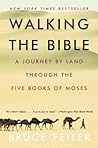
“...I had always believed that I left a bit of me wherever I went. I also believed that I took a bit of every place with me. I never felt that more than with this trip. It was as if the act of touching these places, walking these roads,and asking these questions had added another column to my being. And the only possible explanation I could find for that feeling was that a spirit existed in many of the places I visited, and a spirit existed in me and the two had somehow met in the course of my travels. It's as if the godliness of the land and the godliness of my being had fused.”
―
―
“Primed to expect that our lives will follow a predictable path, we’re thrown when they don’t. We have linear expectations but nonlinear realities... We’re all comparing ourselves to an ideal that no longer exists and beating ourselves up for not achieving it.”
― Life Is in the Transitions: Mastering Change at Any Age
― Life Is in the Transitions: Mastering Change at Any Age
“If you always read books, you'll always be happy.”
― The Council of Dads: My Daughters, My Illness, and the Men Who Could Be Me
― The Council of Dads: My Daughters, My Illness, and the Men Who Could Be Me
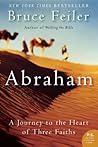
“At Abraham's burial, his two most prominent sons, rivals since before they were born, estranged since childhood, scions of rival nations, come together for the first time since they were rent apart nearly three-quarters of a century earlier. The text reports their union nearly without comment. "His sons Isaac and Ishmael buried him in the cave of Machpelah, in the field of Ephron son of Zohar the Hittite, facing Mamre, in the field that Abraham had bought from the Hittites."
But the meaning of this moment cannot be diminished. Abraham achieves in death what he could never achieve in life: a moment of reconciliation between his two sons, a peaceful, communal, side-by-side flicker of possibility in which they are not rivals, scions, warriors, adversaries, children, Jews, Christians, or Muslims. They are brothers. They are mourners.
In a sense they are us, forever weeping for the loss of our common father, shuffling through our bitter memories, reclaiming our childlike expectations, laughing, sobbing, furious and full of dreams, wondering about our orphaned future, and demanding the answers we all crave to hear: What did you want from me, Father? What did you leave me with, Father?
And what do I do now?”
― Abraham: A Journey to the Heart of Three Faiths
But the meaning of this moment cannot be diminished. Abraham achieves in death what he could never achieve in life: a moment of reconciliation between his two sons, a peaceful, communal, side-by-side flicker of possibility in which they are not rivals, scions, warriors, adversaries, children, Jews, Christians, or Muslims. They are brothers. They are mourners.
In a sense they are us, forever weeping for the loss of our common father, shuffling through our bitter memories, reclaiming our childlike expectations, laughing, sobbing, furious and full of dreams, wondering about our orphaned future, and demanding the answers we all crave to hear: What did you want from me, Father? What did you leave me with, Father?
And what do I do now?”
― Abraham: A Journey to the Heart of Three Faiths
“Just as people live life out of order, they go through transitions out of order. While some people experience these phases sequentially, others experience them in reverse; others start in the middle and work their way out. Some finish one stage before going on to a new one; others move on to a new phase, then double back to the one they thought they had finished. Many get stuck in one phase for a very long time.”
― Life Is in the Transitions: Mastering Change at Any Age
― Life Is in the Transitions: Mastering Change at Any Age
“In his work as a management consultant, Covey often asked his corporate clients to write a one-sentence answer to the question “What is this organization’s essential mission or purpose and what is its main strategy to accomplish that?”
― The Secrets of Happy Families: Improve Your Mornings, Rethink Family Dinner, Fight Smarter, Go Out and Play, and Much More
― The Secrets of Happy Families: Improve Your Mornings, Rethink Family Dinner, Fight Smarter, Go Out and Play, and Much More
“In the end I believe the essential spirit that animates those places animates me. If that spirit is God, then I found God...If that spirit is life, then I found life...If that spirit is awe, then I found awe. Part of me suspects it's all three...all I had to do to discover that spirit and the resulting feeling of humility and appreciation was not to look or listen or taste or feel. All I had to do was remember, for what I was looking for I somehow already knew.”
―
―
“There is profundity to explore, but also laundry to do.”
― The Council of Dads: My Daughters, My Illness, and the Men Who Could Be Me
― The Council of Dads: My Daughters, My Illness, and the Men Who Could Be Me
“Chaos is not noise, it’s signal; disorder is not a mistake, it’s a design element. If we view these periods as aberrations, we risk their becoming missed opportunities. If we view them as openings, we just might open up to them. Transitions are not going away; the key to benefiting from them is to not turn away. Don’t shield your eyes when the scary parts start; that’s when the heroes are made.”
― Life Is in the Transitions: Mastering Change at Any Age
― Life Is in the Transitions: Mastering Change at Any Age
“Create a safe zone. Every parent quickly learns that every child—and every adult—handles conflict differently. Some push back when criticized, some turn inward, some break down in tears.”
― The Secrets of Happy Families: Improve Your Mornings, Rethink Family Dinner, Fight Smarter, Go Out and Play, and Much More
― The Secrets of Happy Families: Improve Your Mornings, Rethink Family Dinner, Fight Smarter, Go Out and Play, and Much More
“Anybody can dream an impossible dream. But only a few find a dream that's possible.”
― The Council of Dads: My Daughters, My Illness, and the Men Who Could Be Me
― The Council of Dads: My Daughters, My Illness, and the Men Who Could Be Me
“The Starrs came up with a modified three questions for their family meeting. 1. What things went well in our family this week? 2. What things could we improve in our family? 3. What things will you commit to working on this week?”
― The Secrets of Happy Families: Improve Your Mornings, Rethink Family Dinner, Fight Smarter, Go Out and Play, and Much More
― The Secrets of Happy Families: Improve Your Mornings, Rethink Family Dinner, Fight Smarter, Go Out and Play, and Much More
“One of the things that happens in the world is that people try to avoid conflict. Whereas in the home, you can't. You'll end up getting divorced or becoming estranged from your kids. Keep in mind, the hardest part of any negotiation is agreeing to start it. Once you've gotten past that emotional barrier, the solutions usually present themselves.”
― The Secrets of Happy Families: Improve Your Mornings, Rethink Family Dinner, Fight Smarter, Go Out and Play, and Much More
― The Secrets of Happy Families: Improve Your Mornings, Rethink Family Dinner, Fight Smarter, Go Out and Play, and Much More
“Jung called this practice counterbalancing one-sidedness. Our lives become too tilted toward one aspect of our identity and too tilted away from others. We’re all familiar with these scenarios. We become so obsessed with our work we neglect our family; we become so consumed with caring for children we overlook ourselves; we become so focused on serving others we ignore our loved ones. The more purely one thing we are, the more in danger we are of overlooking other things.”
― Life Is in the Transitions: Mastering Change at Any Age
― Life Is in the Transitions: Mastering Change at Any Age
“As a rule, I found that each person is especially good at one of these three phases and especially bad at one. Each of us has a transition superpower, if you will, and a transition kryptonite. Our research suggests that people gravitate to the phase they’re naturally adept at and bog down in the one they’re weakest at. If you’re comfortable saying goodbye, you might knock that off quickly and move on to the next challenge; but if you’re conflict averse and don’t like to disappoint people, you might remain in a situation that’s toxic far longer than you should. The same applies to the messy middle: Some people thrive in chaos; others are paralyzed by it. As for new beginnings, some people embrace the novelty; others dread it—they like things the way they were.”
― Life Is in the Transitions: Mastering Change at Any Age
― Life Is in the Transitions: Mastering Change at Any Age
“The most healthful narrative,” he continued, “is the third one.” It’s called the oscillating family narrative. We’ve had ups and downs in our family. Your grandfather was vice president of the bank, but his house burned down. Your aunt was the first girl to go to college, but she got breast cancer. Children who know that lives take all different shapes are much better equipped to face life’s inevitable disruptions.”
― Life Is in the Transitions: Mastering Change at Any Age
― Life Is in the Transitions: Mastering Change at Any Age
“The future Harriet Tubman was born a slave in Dorchester County, Maryland, in 1822. In 1844 she married a free man, John Tubman. Five years later, fearing that she was about to be sold, Tubman tapped into a local network, received two names of safe houses from a white neighbor, and fled north toward Philadelphia. The journey was terrifying and mystical. She navigated using the North Star; she may have followed the drinkiri gourd, a code name for the Big Dipper; and in a clear homage to the Israelites’ flight from Egypt, she recalled that she felt led by an “invisible pillar of cloud by day, and of fire by night.”
― America's Prophet: Moses and the American Story
― America's Prophet: Moses and the American Story
“The A is agency—autonomy, freedom, creativity, mastery; the belief that you can impact the world around you. The B is belonging—relationships, community, friends, family; the people that surround and nurture you. The C is cause—a calling, a mission, a direction, a purpose; a transcendent commitment beyond yourself that makes your life worthwhile.”
― Life Is in the Transitions: Mastering Change at Any Age
― Life Is in the Transitions: Mastering Change at Any Age
“Life is the story you tell yourself. But how you tell that story—are you a hero, victim, lover, warrior, caretaker, believer—matters a great deal. How you adapt that story—how you revise, rethink, and rewrite your personal narrative as things change, lurch, or go wrong in your life—matters even more.”
― Life Is in the Transitions: Mastering Change at Any Age
― Life Is in the Transitions: Mastering Change at Any Age
“Primed to expect that our lives will follow a predictable path, we’re thrown when they don’t. We have linear expectations but nonlinear realities. Even people who are linear in one area (a stable career, say, or long-running marriage) are nonlinear in others (recurrent health problems or frequent changes in their religious identity).”
― Life Is in the Transitions: Mastering Change at Any Age
― Life Is in the Transitions: Mastering Change at Any Age
“These three essential ideas, as powerful as they are, aren’t the only means we use to live with harmony, fulfillment, and joy. They correspond to another set of tools: the three strands of our narrative identity. The first is our me story—the one in which we’re the hero, the doer, the creator; we exercise agency and, in return, feel fulfilled. The next is our we story—the one in which we’re part of a community, a family, a team; we belong to a group and, in turn, feel needed. The third is our thee story—the one in which we’re serving an ideal, a faith, a cause; we give of ourselves to others and, by extension, feel part of something larger.”
― Life Is in the Transitions: Mastering Change at Any Age
― Life Is in the Transitions: Mastering Change at Any Age
“What happens when we misplace the plot of our lives?”
― Life Is in the Transitions: Mastering Change at Any Age
― Life Is in the Transitions: Mastering Change at Any Age
“The higher the joy is not the light, it's the reflection. The greater pleasure is not climbing up; it's handing down”
― The Council of Dads: My Daughters, My Illness, and the Men Who Could Be Me
― The Council of Dads: My Daughters, My Illness, and the Men Who Could Be Me
“Each of us carries around an unspoken set of assumptions that dictate how we expect our lives will unfold. These expectations come from all corners and influence us more than we admit.”
― Life Is in the Transitions: Mastering Change at Any Age
― Life Is in the Transitions: Mastering Change at Any Age
“By picking their own punishments, children become more internally driven to avoid them. By choosing their own rewards, children become more intrinsically motivated to achieve them. Let your kids take a greater role in raising themselves.”
― The Secrets of Happy Families: Improve Your Mornings, Rethink Family Dinner, Fight Smarter, Go Out and Play, and Much More
― The Secrets of Happy Families: Improve Your Mornings, Rethink Family Dinner, Fight Smarter, Go Out and Play, and Much More
“An autobiographical occasion is any moment when we are encouraged or obliged to reimagine who we are. It’s a narrative event, when our existing life story is altered or redirected in some way, forcing us to revisit our preexisting identity and modify it for our life going forward. And nearly everyone goes through such moments.”
― Life Is in the Transitions: Mastering Change at Any Age
― Life Is in the Transitions: Mastering Change at Any Age
“A recent wave of research shows that children who eat dinner with their families are less likely to drink, smoke, do drugs, get pregnant, commit suicide, and develop eating disorders. Additional research found that children who enjoy family meals have larger vocabularies, better manners, healthier diets, and higher self-esteem.”
― The Secrets of Happy Families: Improve Your Mornings, Rethink Family Dinner, Fight Smarter, Go Out and Play, and Much More
― The Secrets of Happy Families: Improve Your Mornings, Rethink Family Dinner, Fight Smarter, Go Out and Play, and Much More
“The messy middle is all about what happens when we’re in the state of in between. It involves a complicated alchemy of giving up old ways and experimenting with new ones, moving beyond what’s past and beginning to define what’s coming. In butterfly-speak, it’s cocooning; in hero-speak, it’s getting lost.”
― Life Is in the Transitions: Mastering Change at Any Age
― Life Is in the Transitions: Mastering Change at Any Age
“them the ABCs of meaning. The A is agency—autonomy, freedom, creativity, mastery; the belief that you can impact the world around you. The B is belonging—relationships, community, friends, family; the people that surround and nurture you. The C is cause—a calling, a mission, a direction, a purpose; a transcendent commitment beyond yourself that makes your life worthwhile.”
― Life Is in the Transitions: Mastering Change at Any Age
― Life Is in the Transitions: Mastering Change at Any Age
“After a few more weeks of equally uninspired gatherings, I called David. “You’re focusing on the wrong thing,” he said. “The purpose of the meeting is not to talk about each of you as individuals. It’s to focus on how you’re functioning as a family.” He was right. When else did we discuss this most basic thing: how we were a family. We redesigned our questions: 1. What worked well in our family this week? 2. What went wrong in our family this week? 3. What will we work on this coming week?”
― The Secrets of Happy Families: Improve Your Mornings, Rethink Family Dinner, Fight Smarter, Go Out and Play, and Much More
― The Secrets of Happy Families: Improve Your Mornings, Rethink Family Dinner, Fight Smarter, Go Out and Play, and Much More