Goodreads helps you follow your favorite authors. Be the first to learn about new releases!
Start by following Jess Hill.

Showing 1-30 of 35
“In chronic abuse, incidents are just fragments: they rarely give precise shape to the whole. It's the atmosphere victims live in that keeps them in a state of high alert. Over time this climate of constant abuse and threat can end up shredding the nervous system.”
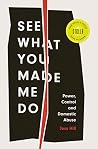
― See What You Made Me Do: Power, Control and Domestic Violence
― See What You Made Me Do: Power, Control and Domestic Violence
“This is what's known as the Cycle of Violence, where an explosion is followed by a period of remorse, then promises and pursuit, a false honeymoon stage, then a build-up in tension, a standover phase, and another explosion. Then kindness expressed during the false honeymoon stage may feel genuine to the abuser, but this reward phase - like every other part of the cycle - is still all about maintaining control.
Periods of kindness, no matter how short, bond the victim to her abuser.”
― See What You Made Me Do: Power, Control and Domestic Violence
Periods of kindness, no matter how short, bond the victim to her abuser.”
― See What You Made Me Do: Power, Control and Domestic Violence
“The reason she stayed with her abuser, said Walker, was because she was blind to the opportunities she had to leave.12”
― See What You Made Me Do: Power, Control and Domestic Violence
― See What You Made Me Do: Power, Control and Domestic Violence
“As Herman explains, a victim of domestic abuse doesn't have this advantage. She is 'taken prisoner gradually, by courtship'. Before she feels trapped by fear and control, it is love that first binds her to her abuser, and it's love that makes her forgive him when he says he won't abuse her again. Abusers are rarely simple thugs or sadists - if they were, they'd be far easier to avoid or apprehend. Instead, like all men, they can be loving, kind, charming and warm, and they struggle with personal pain and uncertainty. This is who the woman falls in love with.”
― See What You Made Me Do: Power, Control and Domestic Violence
― See What You Made Me Do: Power, Control and Domestic Violence
“His unpredictable responses lead her to 'walk on eggshells', endlessly hypervigilant, alert to the need to adapt her behaviour to prevent further abuse. Needless to say, the victim is left exhausted by constantly having to monitor her abuser's emotional state.”
― See What You Made Me Do: Power, Control and Domestic Violence
― See What You Made Me Do: Power, Control and Domestic Violence
“Since most women derive pride and self-esteem from their capacity to sustain relationships, the batterer is often able to entrap his victim by appealing to her most cherished values. It is not surprising, therefore, that battered women are often persuaded to return after trying to flee from their abusers.”
― See What You Made Me Do: Power, Control and Domestic Violence
― See What You Made Me Do: Power, Control and Domestic Violence
“What's even more confusing is that perpetrators commonly believe with all their heart that they are the victim, and will plead their case to police even as their partner stands bloody and bruised behind them. Their victimhood is what makes them feel their abuse is justified.”
― See What You Made Me Do: Power, Control and Domestic Violence
― See What You Made Me Do: Power, Control and Domestic Violence
“Domestic abuse occurs on a spectrum of power and control. At the highest end, perpetrators micromanage the lives of their victims, prevent them from seeing friends and family, track their movements and force them to obey a unique set of rules.”
― See What You Made Me Do: Power, Control and Domestic Violence
― See What You Made Me Do: Power, Control and Domestic Violence
“Whether perpetrators abuse strategically or on impulse, however, they usually have one thing in common: a supercharged sense of entitlement.”
― See What You Made Me Do: Power, Control and Domestic Violence
― See What You Made Me Do: Power, Control and Domestic Violence
“the perpetrator redirects his partner’s attention away from his abuse to her faults: if she wasn’t so this, he wouldn’t be so that.”
― See What You Made Me Do: Power, Control and Domestic Violence
― See What You Made Me Do: Power, Control and Domestic Violence
“The abuser’s most skilful trick is to make his abuse invisible.”
― See What You Made Me Do: Power, Control and Domestic Violence
― See What You Made Me Do: Power, Control and Domestic Violence
“Domestic abuse occurs on a spectrum of power and control.”
― See What You Made Me Do: Power, Control and Domestic Violence
― See What You Made Me Do: Power, Control and Domestic Violence
“Whether perpetrators abuse strategically or on impulse, however, they usually have one thing in common: a supercharged sense of entitlement. *”
― See What You Made Me Do: Power, Control and Domestic Violence
― See What You Made Me Do: Power, Control and Domestic Violence
“You must get so frustrated when you think a woman’s ready to leave and then she decides to go back,” I say. “No,” replies one phone counselor pointedly. “I’m frustrated that even though he promised to stop, he chose to abuse her again.”
― See What You Made Me Do: The Dangers of Domestic Abuse That We Ignore, Explain Away, or Refuse to See
― See What You Made Me Do: The Dangers of Domestic Abuse That We Ignore, Explain Away, or Refuse to See
“Give me a black eye any day. The bruise is gone in a fortnight. It’s the words that hurt, the words that stay,”
― See What You Made Me Do: Power, Control and Domestic Violence
― See What You Made Me Do: Power, Control and Domestic Violence
“Every day in the United States, four women are killed by a man they’ve been intimate with.2 These statistics tell us something that’s almost impossible to grapple with: it’s not the monster lurking in the dark women should fear, but the men they fall in love with.”
― See What You Made Me Do: The Dangers of Domestic Abuse That We Ignore, Explain Away, or Refuse to See
― See What You Made Me Do: The Dangers of Domestic Abuse That We Ignore, Explain Away, or Refuse to See
“You don’t have to be a monster or a madman to dehumanise others. You just have to be an ordinary human being.’25”
― See What You Made Me Do: Power, Control and Domestic Violence
― See What You Made Me Do: Power, Control and Domestic Violence
“determination. In the words of world-leading trauma expert Judith Herman, “It is very tempting to take the side of the perpetrator. All the perpetrator asks is that we do nothing. The victim, on the contrary, asks the bystander to share the burden of pain. The victim demands action, engagement, and remembering.”22 If we flinch and decide that’s too hard, domestic abuse”
― See What You Made Me Do: The Dangers of Domestic Abuse That We Ignore, Explain Away, or Refuse to See
― See What You Made Me Do: The Dangers of Domestic Abuse That We Ignore, Explain Away, or Refuse to See
“Abusers are notorious for rushing the first stage of intimacy, something that's often described by survivors as a kind of 'love-bombing'. This phase is electric and full of promise. Survivors commonly recall being swept off their feet by a man more passionately interested in them than anyone had ever been before.”
― See What You Made Me Do: Power, Control and Domestic Violence
― See What You Made Me Do: Power, Control and Domestic Violence
“She is ‘taken prisoner gradually, by courtship’. Before she feels trapped by fear and control, it is love that first binds her to her abuser, and it’s love that makes her forgive him when he says he won’t abuse her again. Abusers are rarely simple thugs or sadists – if they were, they’d be far easier to avoid or apprehend. Instead, like all men, they can be loving, kind, charming and warm, and they struggle with personal pain and uncertainty. This is who the woman falls in love with.”
― See What You Made Me Do: Power, Control and Domestic Violence
― See What You Made Me Do: Power, Control and Domestic Violence
“Generations of men are frustrated, angry and ashamed that, despite following the rules - and despite sacrificing the tender, emotionally connected boys inside of them - they're not getting what was promised to them.”
― See What You Made Me Do: Power, Control and Domestic Violence
― See What You Made Me Do: Power, Control and Domestic Violence
“We think of domestic abuse as something that happens ‘behind closed doors’. But it’s actually happening all around us – we just don’t know what it looks like.”
― See What You Made Me Do: Power, Control and Domestic Violence
― See What You Made Me Do: Power, Control and Domestic Violence
“I explain patriarchy as a dual system of power: men's power over women, and some men's power over other men. - Michael Kimmel”
― See What You Made Me Do: Power, Control and Domestic Violence
― See What You Made Me Do: Power, Control and Domestic Violence
“Mangan is adamant: women's violence may cause distress to men in abusive relationships, but men are almost never in danger of being killed.”
― See What You Made Me Do: Power, Control and Domestic Violence
― See What You Made Me Do: Power, Control and Domestic Violence
“It’s about all the questions we don’t ask, such as: “Why does he do it?” It’s about turning our stubborn beliefs and assumptions inside out and confronting one of the most complex—and urgent—issues of our time.”
― See What You Made Me Do: The Dangers of Domestic Abuse That We Ignore, Explain Away, or Refuse to See
― See What You Made Me Do: The Dangers of Domestic Abuse That We Ignore, Explain Away, or Refuse to See
“Resistance is a human instinct.”
― See What You Made Me Do: Power, Control and Domestic Violence
― See What You Made Me Do: Power, Control and Domestic Violence
“the act of calling out domestic violence in public and bringing consequences for offenders is a huge cultural change in itself. ‘In my opinion, psychological and culture change is calling a domestic violence offender into our City Hall and having all of these people say, “Your violence is unacceptable. She may love you and she may be afraid of you, but we are not. She may feel like she is powerless against you – we are not. This is no longer about her – this is about us and you.” That is very powerful.”
― See What You Made Me Do: Power, Control and Domestic Violence
― See What You Made Me Do: Power, Control and Domestic Violence
“I don't bash you with my fists, I bash you with my emotions, to keep you under control.”
― See What You Made Me Do: Power, Control and Domestic Violence
― See What You Made Me Do: Power, Control and Domestic Violence
“At the lower end of the power and control spectrum, we have abusers who are not so intent on dominating their partners, who better suit the term ‘insecure reactors’.”
― See What You Made Me Do: Power, Control and Domestic Violence
― See What You Made Me Do: Power, Control and Domestic Violence
“All the perpetrator asks is that we do nothing … The victim, on the contrary, asks the bystander to share the burden of pain. The victim demands action, engagement and remembering.”
― See What You Made Me Do: Power, Control and Domestic Violence
― See What You Made Me Do: Power, Control and Domestic Violence