Goodreads helps you follow your favorite authors. Be the first to learn about new releases!
Start by following Myron Magnet.

Showing 1-30 of 50
“So that’s why he came to Memphis—“to assert my right to think for myself, to refuse to have my ideas assigned to me as though I was an intellectual slave because I’m black. I come to state that I’m a man, free to think for myself and do as I please.… I will not be consigned the unquestioned opinions of others.”
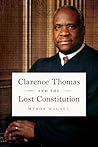
― Clarence Thomas and the Lost Constitution
― Clarence Thomas and the Lost Constitution
“Even fervent abolitionists, viewing blacks as equal in rights but inferior socially and culturally, didn’t relish having freedmen come north to live beside them but wanted them to stay down south.”
― Clarence Thomas and the Lost Constitution
― Clarence Thomas and the Lost Constitution
“Poet Walt Whitman, a Civil War hospital volunteer who later interviewed pardon-seeking Confederates, remarked that “in any other country on the globe, the whole batch of Confederate leaders would have had their heads cut off.”
― Clarence Thomas and the Lost Constitution
― Clarence Thomas and the Lost Constitution
“In his stint in the criminal appeals division, the young lawyer lost his last radical illusion about race. Jailed blacks were not political prisoners, suffering oppression by “the man,” he found. A black man who made a black woman submit to rape and sodomy by holding a blade to her little boy’s throat was just a thug. “This case, I later learned, was far from unusual: it turned out that blacks were responsible for almost 80 percent of violent crimes committed against blacks, and killed over 90 percent of black murder victims,” he writes.”
― Clarence Thomas and the Lost Constitution
― Clarence Thomas and the Lost Constitution
“For the “dirty little secret of freedom” is that, in many respects, “you’re on your own. You’re crossing the prairie of life at your own risk,” just like the American pioneers.6 No wonder Thomas loves to quote the charge of Thomas à Kempis—as much Stoic as Christian—“to ensure that in every place, action, and outward occupation you remain inwardly free and your own master. Control circumstances, and do not allow them to control you. Only so can you be a master and ruler of your actions, not their servant or slave; a free man.”
― Clarence Thomas and the Lost Constitution
― Clarence Thomas and the Lost Constitution
“We all learn about how the Constitution’s framers accomplished that delicate balance through the three branches of government and the separation of their powers: democratically elected representatives frame laws to do the voters’ will, which the elected president executes, unless the Supreme Court deems them unconstitutional.”
― Clarence Thomas and the Lost Constitution
― Clarence Thomas and the Lost Constitution
“For a half century, the Supreme Court, through increasingly fanciful legal reasoning, has handed the political Left victories in the culture wars—on race, sex, criminal justice, public order, schooling—that it would have found bruising, and sometimes impossible, to win through the constitutional legislative process.”
― Clarence Thomas and the Lost Constitution
― Clarence Thomas and the Lost Constitution
“This sets the wheels of government moving in reverse gear; the servant becomes the master, and the right to earn a living becomes subject to the servant’s whim and caprice as he professes to apply some vague and variable statutory standard.”
― Clarence Thomas and the Lost Constitution
― Clarence Thomas and the Lost Constitution
“It’s hard to count the ways in which the administrative or regulatory state overturns, abolishes, and usurps the Constitution.”
― Clarence Thomas and the Lost Constitution
― Clarence Thomas and the Lost Constitution
“The combination in the same hands of the power to make the laws and the power to carry them out is the essence of arbitrary rule by decree, the founders believed, guided by such writers as the Baron de Montesquieu, John Locke, and William Blackstone. For them, the separation of powers was key to the protection of liberty from such tyranny, Thomas writes. The Constitution vested all legislative power in Congress, all executive power in the president, and all judicial power in the Supreme Court and inferior courts, because the framers did not want to have those powers delegated to other hands, lest it bring about the “gradual concentration of the several powers in the same department,” as Madison put it in Federalist 51.”
― Clarence Thomas and the Lost Constitution
― Clarence Thomas and the Lost Constitution
“WILSON CONCOCTED and legitimized the magic elixir of judicial constitution-making and rule by administrative agencies, but Franklin D. Roosevelt employed it like an alchemist to transmute the American political system into a full-blown administrative state that resembled George III’s system of rulers and subjects as much as it did George Washington’s government.”
― Clarence Thomas and the Lost Constitution
― Clarence Thomas and the Lost Constitution
“As the American Revolution’s tutelary philosopher, John Locke, had pronounced, the legislative branch has the authority “only to make laws, and not to make legislators”—but that’s just what Congress has done in creating administrative-agency rule makers.”
― Clarence Thomas and the Lost Constitution
― Clarence Thomas and the Lost Constitution
“But since such an institution is made up of imperfect human beings with the same unruly passions as anyone else, “In framing a government of men over men, the great difficulty lies in this: You must first enable the government to control the governed; and in the next place, oblige it to control itself.”3”
― Clarence Thomas and the Lost Constitution
― Clarence Thomas and the Lost Constitution
“The end result may be trains that run on time (although I doubt it), but the cost is to our Constitution and the individual liberty it protects.”
― Clarence Thomas and the Lost Constitution
― Clarence Thomas and the Lost Constitution
“So too the race-conscious remedies that the Court has sanctioned or imposed have increased social tensions and distorted key civic institutions. Those liberties that the framers thought so absolute that they enshrined them in the Bill of Rights—freedom of speech, especially political speech, and the protection of private property—became negotiable, with the connivance of a Court established above all to protect those constitutional liberties that it would be tyranny to abridge.”
― Clarence Thomas and the Lost Constitution
― Clarence Thomas and the Lost Constitution
“Though citizens are safe from the government in their homes, the homes themselves are not.” By essentially abolishing the public use clause, the Court has subordinated individual rights to the arbitrary will of the government, Thomas remonstrated. “I do not believe that this Court can eliminate liberties expressly enumerated in the Constitution.”
― Clarence Thomas and the Lost Constitution
― Clarence Thomas and the Lost Constitution
“The serfdom was as much a cultural as an economic matter. “Slavery is so strong that it could exist, not only without law, but even against law,” Frederick Douglass lamented. “Customs, manners, morals, religion, are all on its side everywhere in the South.”
― Clarence Thomas and the Lost Constitution
― Clarence Thomas and the Lost Constitution
“The Court has “overseen and sanctioned the growth of an administrative system that concentrates the power to make laws and the power to enforce them in the hands of a vast and unaccountable administrative apparatus that finds no comfortable home in our constitutional structure,”
― Clarence Thomas and the Lost Constitution
― Clarence Thomas and the Lost Constitution
“Ever since the New Deal, those on the Right have sensed the American polity’s transformation with growing discomfort, but around 2009, when the Tea Party movement mobilized, that discomfort turned to anger.”
― Clarence Thomas and the Lost Constitution
― Clarence Thomas and the Lost Constitution
“What would George Washington—whom the Senate declared didn’t need its approval to dismiss Senate-confirmed executive-branch officers, since he alone was responsible to the voters for their actions—have to say about the civil service rules and union protections that make the whippersnappers so difficult, and often impossible, to fire? Even Franklin Roosevelt thought bureaucrat unions an absurdity.41”
― Clarence Thomas and the Lost Constitution
― Clarence Thomas and the Lost Constitution
“This was the ideology of the European enlightened despots of the eighteenth century, especially Prussia’s Frederick the Great, who ruled through a meritocratic class of efficient, educated, benevolent bureaucrats, who, more than ordinary citizens, could divine the spirit of the times and knew which way the arc of history bent, so they could speed it along in the right direction.”
― Clarence Thomas and the Lost Constitution
― Clarence Thomas and the Lost Constitution
“The Constitution lodges all legislative power in Congress, which therefore cannot delegate its lawmaking function elsewhere. So it’s forbidden for Congress to pass a law creating an independent or executive-branch agency that writes rules legally binding on citizens—for example, to set up an agency charged with making a clean environment and then to let it make rules with the force of law to accomplish that end as it sees fit.”
― Clarence Thomas and the Lost Constitution
― Clarence Thomas and the Lost Constitution
“But the ruined South—the war had cost it $13.6 billion—wanted its cotton, its only source of income and still the nation’s major export commodity, amounting to nearly two-thirds of U.S. exports by 1889 and three-quarters of the world’s supply.11”
― Clarence Thomas and the Lost Constitution
― Clarence Thomas and the Lost Constitution
“Thomas and his siblings constitute a natural experiment in the effects of such a caring, supervised, value-laden upbringing, compared with a more typical poor, fatherless childhood. It is the difference between freedom and victimhood.”
― Clarence Thomas and the Lost Constitution
― Clarence Thomas and the Lost Constitution
“But after a frustrated Franklin Roosevelt threatened to enlarge the high bench and pack it with his partisans, Justice Owen Roberts, in the infamous switch in time that saved nine, stopped finding New Deal legislation unconstitutional, so that 5–4 decisions against FDR became majority decisions allowing his schemes.”
― Clarence Thomas and the Lost Constitution
― Clarence Thomas and the Lost Constitution
“And if Congress can’t delegate the legislative power that the Constitution gives it, it certainly cannot delegate power that the Constitution doesn’t give it, such as the power to hand out selective exemptions from its laws, as agencies do when they grant waivers.35”
― Clarence Thomas and the Lost Constitution
― Clarence Thomas and the Lost Constitution
“There is nothing of democratic self-government in the “command” of this newly hatched, elitist administrative state, of course.”
― Clarence Thomas and the Lost Constitution
― Clarence Thomas and the Lost Constitution
“A political science professor and Princeton University president before his election as U.S. president, Wilson had fallen under the spell of a quite different political tradition from American republicanism. He had learned German to read philosopher G.W.F. Hegel and his followers, and he embraced their concept of the Rechtsstaat, whose ideology replaces “the contract theory of the origin of the state” with the idea that the function of the state is not to protect individual rights but rather to take “general care for the interests of the community,” as the University of Chicago’s hugely influential political science chairman Charles Merriam had put it in 1903.”
― Clarence Thomas and the Lost Constitution
― Clarence Thomas and the Lost Constitution
“The constitutional machinery of limited and enumerated powers, separation of powers, and checks and balances all aimed to prevent such an “improper or wicked project,” and America’s vast size, even in 1787, ensured that a multitude of factions—special interests—would bar any single one from tyrannizing over the others.”
― Clarence Thomas and the Lost Constitution
― Clarence Thomas and the Lost Constitution
“Busing, affirmative action, and abortion are but the three most glaring areas in which the justices have made law from the bench, with no constitutional license to do so.”
― Clarence Thomas and the Lost Constitution
― Clarence Thomas and the Lost Constitution