Goodreads helps you follow your favorite authors. Be the first to learn about new releases!
Start by following Layton E. Williams.

Showing 1-28 of 28
“But somehow, we must find our way to a place where we remember and acknowledge that every person bears the image of God and is loved by God. Wherever that distant place is, God is waiting for us, holding the hope for a better world.”
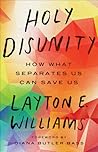
― Holy Disunity: How What Separates Us Can Save Us
“Perhaps the question for us is what to obey and how, and how to do it in ways that foster authentic relationship rather than rigid systems of decorum where people are bound by the strictures of civility or nicety and can therefore only offer some fractured and restrained insight into their convictions.”
― Holy Disunity: How What Separates Us Can Save Us
“each human being carries an imago Dei. We believe, astoundingly, that who we are reflects something of the truth of who God is. Believing in a God that contains difference within God’s own makeup means understanding that we may each carry the image of God in different ways.”
― Holy Disunity: How What Separates Us Can Save Us
“stark contrast to the previously established dialogue. In refusing to speak, Abraham essentially denies his sacred relationship with God.”
― Holy Disunity: How What Separates Us Can Save Us
“Difference isn’t what makes us hate each other. Fear does that. Our fear of the unknown, of risk, of what we cannot control because we do not fully understand it.”
― Holy Disunity: How What Separates Us Can Save Us
“At some point, we must examine our dogged commitment to civility and subsequent fear of argument. What compels these convictions? Is it truly our Christian faith? Or is it merely our human fear of discomfort, conflict, and upheaval?”
― Holy Disunity: How What Separates Us Can Save Us
“We attempt to justify our fear by demonizing those who are different. We transform our fear into hate. And then hate, too, becomes normalized.”
― Holy Disunity: How What Separates Us Can Save Us
“He is able to believe, somehow, that God is good and that God can allow terrible things to happen to him. That he can be righteous and still suffer. Job knows that he can be both faithful and angry, that God can hold both. In fact, what Job seems to understand inherently is made even clearer in God’s whirlwind speech: the universe is vast, God is complex, and the answers are rarely simple.”
― Holy Disunity: How What Separates Us Can Save Us
“Even with Abraham, before their covenant ritual, God simply commands Abraham to go to Canaan, leaving space for nothing other than obedience. However, through the covenant, God invites Abraham—and his descendants with him—into a new relationship.”
― Holy Disunity: How What Separates Us Can Save Us
“What I remember is sitting in my pew and watching this unfold, watching my creation and the grief that propelled it handled with care, respect, and honor. I remember understanding in that moment—with a sort of wondrous and unforgettable certainty that went all the way down to my bones—that I not only belonged in that community, but that I was recognized as someone who added to the church. That the very things that made me different and weird were received as a gift and offering. I suspect I will never forget that feeling. Nor will I forget how rarely in this world our differences are received in such a way.”
― Holy Disunity: How What Separates Us Can Save Us
“False binaries give us false certainty and false limits. They restrict what we’re capable of believing and understanding and even being.”
― Holy Disunity: How What Separates Us Can Save Us
“As long as civility is defined by the existing system of power, arguing or dissenting in any way that destabilizes the system is deemed uncivil.”
― Holy Disunity: How What Separates Us Can Save Us
“Though ultimately both are questioning the extent of Jesus’ power, Thomas’s doubts are primarily about what Jesus is capable of, while Peter’s doubts—at least in this instance—are about what his faith in Christ gives him the power to do.”
― Holy Disunity: How What Separates Us Can Save Us
“I have often thought that I was born missing some internal mechanism that tells a person what is socially appropriate and what will immediately launch you into the social exosphere. Even my best efforts to be cool, popular, or just plain palatable failed spectacularly.”
― Holy Disunity: How What Separates Us Can Save Us
“The solution, then, is to forbid doubt, or else sanitize it and allow it in only acceptable and incremental ways. So often, for the unity we’ve created to persist, any doubt about that which binds us together, be it belief, system, or person, must be avoided at all costs.”
― Holy Disunity: How What Separates Us Can Save Us
“Recognizing that differences exist, even saying that they’re good, doesn’t mean much if we’re not willing to recognize the systems and realities that still firmly disadvantage people of a different race or other identifier.”
― Holy Disunity: How What Separates Us Can Save Us
“My church community was no doubt imperfect—a lesson I would learn more than once in later years—but the message it unquestionably sent to me during the delicate years of my childhood was, “You are loved, exactly as you are.”
― Holy Disunity: How What Separates Us Can Save Us
“Nevertheless, Thomas’s doubts draw him into closer, tangible relationship with Christ and, ultimately, deeper knowing.”
― Holy Disunity: How What Separates Us Can Save Us
“So eager is Abraham to obey, so afraid is he of defiance, that he upholds God’s command even over all his other experiences of God’s nature and will. But God is living and dynamic and relational, and to relegate God to one single command is to create a static image of God.”
― Holy Disunity: How What Separates Us Can Save Us
“Doubt raises questions. And questions introduce the possibility that what has been accepted as truth might, in fact, be wrong.”
― Holy Disunity: How What Separates Us Can Save Us
“Although many of Paul’s words have been used to erect barriers and boundaries in the church that keep some disempowered or excluded entirely, the overarching message of Paul’s letters seems to be that what matters is not that we are all the same, but rather that our differences do not determine our worth in the eyes of God.”
― Holy Disunity: How What Separates Us Can Save Us
“You know, Anne Lamott says, ‘The opposite of faith isn’t doubt, it’s certainty.”
― Holy Disunity: How What Separates Us Can Save Us
“Surely, if the one who is without sin knows the pain of doubt, then we cannot ourselves be considered sinful for doubting too.”
― Holy Disunity: How What Separates Us Can Save Us
“It seems as if, rather than testing Abraham’s obedience, God was testing Abraham’s faith in their relationship.”
― Holy Disunity: How What Separates Us Can Save Us
“It’s worth asking whether normativity is really more myth than actual functional reality. And even if it’s not, it’s worth asking: is normal really better?”
― Holy Disunity: How What Separates Us Can Save Us
“Through this covenant, God and Abraham enter into a relationship not of master and slave, but of partners engaged in mutual participation and conversation.”
― Holy Disunity: How What Separates Us Can Save Us
“More deeply, the issue is that we not only value conformity and normativity and dislike difference. We fear difference. And in our fear, we cast out those who are different; we deny them place, belonging, safety, and sometimes equity and justice.”
― Holy Disunity: How What Separates Us Can Save Us
“In the Trinity, we find the divine gift of difference. The difference and distinction that exist between Creator, Christ, and Spirit also allow God to be in relationship with God’s own self.”
― Holy Disunity: How What Separates Us Can Save Us