Goodreads helps you follow your favorite authors. Be the first to learn about new releases!
Start by following Quentin Skinner.

Showing 1-9 of 9
“The history of philosophy, and perhaps especially of moral, social and political philosophy, is there to prevent us from becoming too readily bewitched. The intellectual historian can help us to appreciate how far the values embodied in our present way of life, and our present ways of thinking about those values, reflect a series of choices made at different times between different possible worlds. This awareness can help to liberate us from the grip of any one hegemonal account of those values and how they should be interpreted and understood. Equipped with a broader sense of possibility, we can stand back from the intellectual commitments we have inherited and ask ourselves in a new spirit of enquiry what we should think of them.”
― Liberty Before Liberalism
― Liberty Before Liberalism
“no such concepts can have definitions: they only have histories. But if they only have histories, then the only way to understand them is historically ― and that is what animates my work, the belief that if we are going to understand any of the concepts we use to organise our social, moral, and political world, we shall have to study them historically”
―
―
“Sometimes even the pretence that this is history is laid aside, and the writers of the past are simply praised or blamed according to how far they may seem to have aspired to the condition of being ourselves.”
― Meaning and Understanding in the History of Ideas
― Meaning and Understanding in the History of Ideas
“Political life sets the main problems for the political theorist, causing a certain range of issues to appear problematic, and a corresponding range of questions to become the leading subjects of debate. This view does not entails that theoretical ideas are to be treated as a straightforward outcome of their social base, but are certainly to be read in terms of their wider intellectual context”
― The Foundations of Modern Political Thought, Volume 1: The Renaissance
― The Foundations of Modern Political Thought, Volume 1: The Renaissance
“Özgürlüklerinin korunması için kralın iyi niyetine güvenmek zorunda bırakıldıkları ölçüde, özgür uyruklar olarak değil, tutsaklar olarak yaşamaya mahkûm olacaklar...”
― States and Citizens: History, Theory, Prospects
― States and Citizens: History, Theory, Prospects
“Харрингтон в Океании сходным
образом отсылает к «целому телу народа», а позже, в Поли-
тической системе, сообщает, что «форма правления соответ-
ствует образу человека». Особенно систематично применяет
эти традиционные образы Невилл, который создает из них
обрамление трех диалогов, образующих его Plato Redivivus.
Он начинает с того, что представляет нам трех персонажей,
один из которых — Благородный венецианец, член полити-
ческого тела, которое в данный момент наслаждается состоя-
нием наибольшего политического здоровья. Сам он, однако,
как мы узнаем, в последнее время несколько занемог и при-
ехал в Англию искать медицинского совета. Здесь мы пере-
ходим ко второму участнику диалогов — излечившему его
Доктору. Затем узнаем, что оба персонажа хотят выяснить у
третьего персонажа, Английского джентльмена, о расстрой-
ствах, которые беспокоят политическое тело его собственной
страны. Джентльмен честно им отвечает, что английское го-
сударство недавно пережило такую агонию, что едва не испу-
стило дух. Оставшаяся часть диалогов посвящена изложению
планов Джентльмена по восстановлению здоровья английс-
кого политического тела.”
― Liberty Before Liberalism
образом отсылает к «целому телу народа», а позже, в Поли-
тической системе, сообщает, что «форма правления соответ-
ствует образу человека». Особенно систематично применяет
эти традиционные образы Невилл, который создает из них
обрамление трех диалогов, образующих его Plato Redivivus.
Он начинает с того, что представляет нам трех персонажей,
один из которых — Благородный венецианец, член полити-
ческого тела, которое в данный момент наслаждается состоя-
нием наибольшего политического здоровья. Сам он, однако,
как мы узнаем, в последнее время несколько занемог и при-
ехал в Англию искать медицинского совета. Здесь мы пере-
ходим ко второму участнику диалогов — излечившему его
Доктору. Затем узнаем, что оба персонажа хотят выяснить у
третьего персонажа, Английского джентльмена, о расстрой-
ствах, которые беспокоят политическое тело его собственной
страны. Джентльмен честно им отвечает, что английское го-
сударство недавно пережило такую агонию, что едва не испу-
стило дух. Оставшаяся часть диалогов посвящена изложению
планов Джентльмена по восстановлению здоровья английс-
кого политического тела.”
― Liberty Before Liberalism
“The intellectual historian can help us to appreciate how far the values embodied in our present way of life, and our present ways of thinking about those values, reflect a series of choices made at different times between different possible worlds.”
― Liberty Before Liberalism
― Liberty Before Liberalism
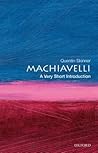
“By the time Machiavelli entered the chancery there was a well-established method of recruitment to its major offices. Besides giving evidence of diplomatic skills, aspiring officials were expected to display a high degree of competence in the so-called humane disciplines. This concept of the studia humanitatis had been derived from Roman sources, and especially from Cicero, whose pedagogic ideals were revived by the Italian humanists of the 14th century and came to exercise a powerful influence on the universities and the conduct of Italian public life. The humanists were distinguished by their commitment to a particular theory about the proper contents”
― Machiavelli: A Very Short Introduction
― Machiavelli: A Very Short Introduction
“the concepts of libertas and libertà came to be employed ‘almost as technical terms of Florentine politics and diplomacy’ in the course of the fourteenth century, and that they were almost invariably used in order to express the same ideas of independence and self-government”
― The Foundations of Modern Political Thought: Volume 1, The Renaissance
― The Foundations of Modern Political Thought: Volume 1, The Renaissance