Goodreads helps you follow your favorite authors. Be the first to learn about new releases!
Start by following Christopher R. Beha.

Showing 1-30 of 32
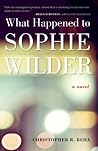
“There was something beautiful and timeless to her about a hardback without its jacket, a book that could be known in no way except by reading it.”
― What Happened to Sophie Wilder
― What Happened to Sophie Wilder
“Fans of the Peanuts comic strip may also remember Snoopy beginning his novel again and again, always starting with the line 'It was a dark and stormy night' ... In fact, since 1982, San Jose State University has run a writing contest inspired by 'It was a dark and stormy night' ... Charles Dickens opens stave one of A Christmas Carol with 'Once upon a time' ... Similarly, James Joyce's A Portrait of the Artist As a Young Man begins: 'Once upon a time' ... and Madeleine L'Engle begins A Wrinkle in Time with the very words 'It was a dark and stormy night.' (From Intro by Francine Prose)”
― The Writer's Notebook II: Craft Essays from Tin House
― The Writer's Notebook II: Craft Essays from Tin House
“In truth we were quickly reaching--had likely enough already reached--the age where it no longer made sense to talk about "promise." It was around this time that I remarked to Max that no matter what we now achieved no one would say, "He's so young." Precocity had passed us by.
"After twenty-eight," I sad sadly, "you're judged on your merits."
"Unless one of us dies," Max corrected me. "Then they'll all say, 'He was so young.”
― What Happened to Sophie Wilder
"After twenty-eight," I sad sadly, "you're judged on your merits."
"Unless one of us dies," Max corrected me. "Then they'll all say, 'He was so young.”
― What Happened to Sophie Wilder
“haven’t thought about it in a long time, but Bill James developed a stat. It adds up balks, hit batsmen, wild pitches, errors—all the things a pitcher does that are entirely in his control, that don’t require the batter to do anything at all. The Index of Self-Destructive Acts.”
― The Index of Self-Destructive Acts
― The Index of Self-Destructive Acts
“Perhaps the body was not a cage that held the soul, but a hand that gripped it like a cane, appearing to guide it, to command it, but all the while dependent upon it, gripping it all the tighter the more that it needed it, finally letting it go.”
― What Happened to Sophie Wilder
― What Happened to Sophie Wilder
“Procrastination had always seemed to Waxworth an obvious cognitive failure, either an inability to measure the passage of time or an overvaluing of the present relative to the future. Something more than the daily churn or the pressure of print kept him from this work. Strange thoughts distracted him whenever he sat down to it. He thought about Margo Doyle’s question: Haven’t you ever been transported by your wife? He couldn’t precisely remember his answer, which was something about poetry, about feeling one thing while knowing another, stuff he didn’t believe at all. She’d gotten”
― The Index of Self-Destructive Acts
― The Index of Self-Destructive Acts
“It is the liberal’s nature not to be disappointed by human failures but to remain hopeful. Not for us the tragic view of life. “We’ll get ’em next year” is the liberal’s natural rallying cry.”
― The Index of Self-Destructive Acts
― The Index of Self-Destructive Acts
“Why do we need to tell lies about the world in order to make it beautiful? What an impoverishing idea.”
― The Index of Self-Destructive Acts
― The Index of Self-Destructive Acts
“I’ve got news for you,” Frank said. “What you see as just extraneous bits of jingoism are secretly the purpose of the entire event. The game exists to be a ritual in the nation’s civic”
― The Index of Self-Destructive Acts
― The Index of Self-Destructive Acts
“I miss that about those days—the freedom to want; the belief that our desires could never disappoint us, so long as we remained loyal to them; the sense that we could choose our fate, as though the absence of choice weren’t exactly what made it fate.”
― What Happened to Sophie Wilder
― What Happened to Sophie Wilder
“As Kierkegaard tells us, life can only be lived forwards and understood backwards.”
― The Index of Self-Destructive Acts
― The Index of Self-Destructive Acts
“For centuries, the primary limit on human knowledge had been record-keeping. We couldn’t collect all the facts.”
― The Index of Self-Destructive Acts
― The Index of Self-Destructive Acts
“On the train, he took out The Crack of the Bat and started looking over it. The book included one of Doyle’s most famous columns, about how growing up a Brooklyn Dodgers fan had been “training for liberalism”: It is the liberal’s nature not to be disappointed by human failures but to remain hopeful. Not for us the tragic view of life. “We’ll get ’em next year” is the liberal’s natural rallying cry.”
― The Index of Self-Destructive Acts
― The Index of Self-Destructive Acts
“Research serves fiction best when it's dissolved entirely into the work, reprecipitated only to be embodied in characters, images, and the sensual details bringing the scene alive for the characters and hence for us. Research serves fiction best when it transcends the given facts and moves into the realm of the imagination. (Andrea Barrett)”
― The Writer's Notebook II: Craft Essays from Tin House
― The Writer's Notebook II: Craft Essays from Tin House
“She had all the neuroses that came from growing up rich, plus the added neurosis that only some had: the feeling that you weren’t quite entitled to your unhappiness. The Anxiety of Affluence, Richard had jokingly called it.”
― The Index of Self-Destructive Acts
― The Index of Self-Destructive Acts
“Men like Richard and her father used ideas rather than facts as their raw materials. They were interested in testing their notions against hers, arguing them out. They listened, but mostly they were listening for a point they could pick up and make their own. Attentive but impatient, they waited with arms outstretched for her to pass the conversational baton.”
― The Index of Self-Destructive Acts
― The Index of Self-Destructive Acts
“When it came to ethics, he was a strict consequentialist. Pacifism as an absolute stance didn’t make sense to him.”
― The Index of Self-Destructive Acts
― The Index of Self-Destructive Acts
“There's an exercise I'll do sometimes with a class in which we'll start with a word; I'll give everyone a word, and they'll write based on that word, and as they're writing I'll interrupt often and tell them to write more on the setting they're developing. I'll stop the process again and give intrusive instructions about developing the character in the setting, and on and on. The purpose of this is to allow the development of the fruit that is already in seedling form on the page. There can be an urge and an anxiety to skip ahead, to get to the action, to get to plot, or to go to the familiar. But plot is a process, and its beginnings can come from very subtle and unexpected places. Story movement and form are going to feel false if they do not happen from some kind of progression, even if (and this is important) the writer is not aware of this process in the moment, even if, as with the Nabokov excerpt, the events happen fast. (Aimee Bender, "On the Making of Orchards")”
― The Writer's Notebook II: Craft Essays from Tin House
― The Writer's Notebook II: Craft Essays from Tin House
“But polls couldn’t capture a mood. For that you needed to look around a bit.”
― The Index of Self-Destructive Acts
― The Index of Self-Destructive Acts
“If they had faith in anything, it was in the power of human reason to make the world a better place.”
― The Index of Self-Destructive Acts
― The Index of Self-Destructive Acts
“This is fairly heavy-duty stuff I’m giving you,” the doctor said as he handed Sophie two prescription sheets. “One is for pain and the other is to help him sleep. Read all the directions and administer them carefully.” “And these will make it better?” “Not entirely. So long as he’s alive, he’s going to be suffering.”
― What Happened to Sophie Wilder
― What Happened to Sophie Wilder
“His party had given up on liberalism. They didn’t even use the word anymore. They said instead that they were “progressives,” as if any movement into the future was necessarily better than the status quo. The Left had an illiberal streak that no one seemed willing to talk about, and Frank could see it in his colleagues’ reaction when he refused to join in the rending of garments over advocating invasion.”
― The Index of Self-Destructive Acts
― The Index of Self-Destructive Acts
“Looking at the book’s cover, she remembered how it had seemed to them that their lives were intertwined irrevocably no matter what else happened, like the paths of two characters in a novel.”
― What Happened to Sophie Wilder
― What Happened to Sophie Wilder
“A few years ago, I listened to a rabbi give a talk and she was explaining what a blessing is. It is a naming of something, she said. What you are blessing already has to be latent in the person, otherwise it doesn't mean anything. But if it is (latent), and you bless what hasn't yet come forth - the fruit - it is a very powerful action. Think of your writing as bestowing a blessing. I'll leave you with that. (Aimee Bender, "On the Making of Orchards")”
― The Writer's Notebook II: Craft Essays from Tin House
― The Writer's Notebook II: Craft Essays from Tin House
“The present couldn’t actually change the past, but it could change the meaning of the past, which amounted to the same thing.”
― The Index of Self-Destructive Acts
― The Index of Self-Destructive Acts
“Print, he’d heard Blakeman tell someone, was where quality went to die.”
― The Index of Self-Destructive Acts
― The Index of Self-Destructive Acts
“We weep for characters, and then we go brush our teeth and have to face the fact that the world is warming at such a rapid pace that a terrifying number of amphibians are vanishing every month. And so through plays, through soccer games, through novels, through movies, through video games, through political elections - through story - we rehearse feelings we might eventually need in our own lives. ... Through drama, in the moments of greatest suspense, when the hero is hanging by a support from above, swaying to and fro ... we rehearse anxiety and longing more profoundly than any other emotions. ... And longing is the reach, the extension, the wild desire to attain the next stable platform at the end of the high wire. It's the hope against hope that the water shooting out of the fountain will stay aloft forever. (Anthony Doerr, "The Sword of Damocles: On Suspense, Shower Murders, and Shooting People on the Beach")”
― The Writer's Notebook II: Craft Essays from Tin House
― The Writer's Notebook II: Craft Essays from Tin House
“He trusted that Margo knew of Richard Harvey’s reputation for romantic entanglements with his students. (Romantic Entanglements was the title of Richard’s groundbreaking study of Shelley; the kind of men Margo dated were never too jealous to hit on the proper allusion.)”
― The Index of Self-Destructive Acts
― The Index of Self-Destructive Acts
“A teenager’s joke that quickly stopped being funny but was repeated out of a kind of loyalty and eventually became funny again through the sheer power of this repetition”
― The Index of Self-Destructive Acts
― The Index of Self-Destructive Acts
“A historian has to do with the results of an event, the artist with the fact of the event. A historian, describing a battle, says: the left flank of such-and-such army was moved against such-and-such village, cut down the enemy, but was forced to retreat; then the cavalry, going into the attack, overthrew . . . and so on. The historian cannot speak otherwise. And yet these words have no meaning for an artist and do not even touch upon the event itself. The artist, using his own experience, or letters, memoirs, and accounts, derives for himself an image of the event that took place, and quite often (in a battle for example) the conclusion which the historian allows himself to draw about the activity of such-and-such army turns out to be the opposite of the artist’s conclusion.5 Despite that, though, Tolstoy also notes that”
― The Writer's Notebook II: Craft Essays from Tin House
― The Writer's Notebook II: Craft Essays from Tin House