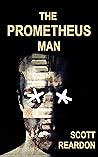
Goodreads helps you follow your favorite authors. Be the first to learn about new releases!
Start by following Scott Reardon.
Showing 1-12 of 12
“The corridor was so long he could barely see the galvanized steel door at the end. As he made his way down, a sense of deep unreality set in. The unrealness of the place was so intoxicating he could barely stand it. He glanced at the steel door. And he was overwhelmed by the feeling that he’d gone as far as a person could, that he’d left behind everything he’d ever known.
It was so silent in the hallway he could hear his own breath. And for a moment he was what a person really is: just the naked, frightened will to know. To finally understand.”
― The Prometheus Man
It was so silent in the hallway he could hear his own breath. And for a moment he was what a person really is: just the naked, frightened will to know. To finally understand.”
― The Prometheus Man
“Do you work in construction?”
“Deconstruction.”
“I’m sorry?”
“I work in deconstruction.”
“You mean demolition?”
“No.”
“I don’t understand. Is there a difference?”
“With demolition, you destroy something in order to rebuild it into something else. With deconstruction, you destroy something so that it can never exist again.”
― The Prometheus Man
“Deconstruction.”
“I’m sorry?”
“I work in deconstruction.”
“You mean demolition?”
“No.”
“I don’t understand. Is there a difference?”
“With demolition, you destroy something in order to rebuild it into something else. With deconstruction, you destroy something so that it can never exist again.”
― The Prometheus Man
“The rest of the world, meanwhile, was watching everything in real-time. Information didn't spread from one place to another. It was put online, and then it was everywhere. One day, a rumor spread that grocery store up the street might close. The next evening, when Tom drove by, he found the building completely empty. Every ounce of food had been taken, and every window had been smashed. And he realized the feedback loop was complete. It no longer mattered what the truth was. It only mattered what people thought it was.
The media fought disinformation the only way it knew how: with ideology. When the president launched a plan to suspend habeas corpus and began requisitioning private property, the media began its push to pass it. When that failed, academics and psychologists took to the airwaves to explain how, under duress, people become overcome by cognitive bias and bigotry. Studies emerged noting the correlation between obsession over keeping one's property and authoritarian political thought. When the government began confiscating weapons, other studies appeared showing the scientific link between private gun ownership and racist fear of minorities.
Then a report came out that federal employees has been seizing food from packaging centers in New York and Pennsylvania. They were shipping it out of starving communities. Everyone realized something then. Despite its claims otherwise, their government wasn't saving them. It was competing with them.”
―
The media fought disinformation the only way it knew how: with ideology. When the president launched a plan to suspend habeas corpus and began requisitioning private property, the media began its push to pass it. When that failed, academics and psychologists took to the airwaves to explain how, under duress, people become overcome by cognitive bias and bigotry. Studies emerged noting the correlation between obsession over keeping one's property and authoritarian political thought. When the government began confiscating weapons, other studies appeared showing the scientific link between private gun ownership and racist fear of minorities.
Then a report came out that federal employees has been seizing food from packaging centers in New York and Pennsylvania. They were shipping it out of starving communities. Everyone realized something then. Despite its claims otherwise, their government wasn't saving them. It was competing with them.”
―
“A disturbing look came into Karl’s eyes. “The man we’re looking for doesn’t care about money or power or some cause. He isn’t a part of society.”
“Then what’s he part of?”
“Whatever’s waiting for us all out there.” Karl stared off, indicating the darkness surrounding them. He was in another place now. “He’s part of the world whose strangeness is matched only by its hostility. The world that grew people 100,000 years ago and will grow something even worse to kill them off in another 100,000. You can still see it sometimes if you really look: the darkness we tell ourselves we’ve conquered. The horrors we inflict and the far bigger horror inflicted on us. And surrounding it all: the emptiness. The silence. And the oceans and oceans of absolutely nothing.”
― The Prometheus Man
“Then what’s he part of?”
“Whatever’s waiting for us all out there.” Karl stared off, indicating the darkness surrounding them. He was in another place now. “He’s part of the world whose strangeness is matched only by its hostility. The world that grew people 100,000 years ago and will grow something even worse to kill them off in another 100,000. You can still see it sometimes if you really look: the darkness we tell ourselves we’ve conquered. The horrors we inflict and the far bigger horror inflicted on us. And surrounding it all: the emptiness. The silence. And the oceans and oceans of absolutely nothing.”
― The Prometheus Man
“Without answering, the boy took aim. The man waited, but the boy never fired.
He took his eye off the scope as the buck disappeared from sight.
“Why didn’t you shoot?” the man asked.
“He was magnificent. I just couldn’t take that from him.”
― The Death of a 10-Year-Old Boy
He took his eye off the scope as the buck disappeared from sight.
“Why didn’t you shoot?” the man asked.
“He was magnificent. I just couldn’t take that from him.”
― The Death of a 10-Year-Old Boy
“I still think about Joe. I think about him and all the people like him who never got a chance. There are times where if I stop and listen hard enough, I can feel them. And for a moment, my heart trembles, and I know what the dead almost could have been.”
― Dead Kennedys
― Dead Kennedys
“The possibilities were so great they would scare you—they would ache in your heart—when you made that decision: save nothing for the fall down.”
― The Prometheus Man
― The Prometheus Man
“And as the man stood there, he realized he didn’t know anything anymore. He didn’t know what to believe in or what good cause he ought to serve. He was beyond everything he’d ever known. And he’d been laid bare. Stripped of every conceit, every fiction, of everything he desperately wished was true. And whatever was left over in a person after that, that was what he had become.”
― The Death of a 10-Year-Old Boy
― The Death of a 10-Year-Old Boy
“After he found the shirt, he saw what it might—just might—be possible to do. He wanted to rise up, above the smallness and powerlessness of his life, just for a moment. And be, for that moment, better than he actually was and higher than he had any right to be. He knew it wouldn’t last, just as he knew he wouldn’t be coming back. But the possibilities were so great they would scare you—they would ache in your heart—when you made that decision: save nothing for the fall down.”
― The Prometheus Man
― The Prometheus Man
“For a moment, he wondered what the human race really was. What was its true nature once you boiled off all the triumphant bullshit. And what he saw wasn’t creators or even murderers but slavers. For all of human history, one segment of the population kept another pressed into service. All the great empires were built on forced labor and tribute collected on pain of annihilation. The Romans conquered half the world because maintaining their life-style required a quarter million new slaves each year. The Portuguese and the British started the African slave trade and plundered the New World, killing millions of Africans and Indians. And what did they do it for? Sugar. Rum. Tobacco. Luxury goods.
Now the species had opened up a new frontier for itself: harvesting each other. The truth about the human race had always been obvious. Karl was staring right at it. There was nothing people wouldn’t seize, nothing they wouldn’t suck into their veins, to grow their own power and peace of mind.
This is hell, and we are its demons.”
― The Prometheus Man
Now the species had opened up a new frontier for itself: harvesting each other. The truth about the human race had always been obvious. Karl was staring right at it. There was nothing people wouldn’t seize, nothing they wouldn’t suck into their veins, to grow their own power and peace of mind.
This is hell, and we are its demons.”
― The Prometheus Man
“They crested the top, and when they looked down, the man’s breath caught in his throat. What he saw was so alien it could only be understood in installments. The strip mine was a crater that had been sunk a quarter mile into the ground. It was like a pit in the middle of the Amazon. Things were crawling all over it the way bees swarm a hive. And it took the man a moment to realize that these were people.
Hundreds of them.
The weather was warm, and the men laboring below had their shirts off. Each was covered head to toe in mud. The only part of them that seemed human were their teeth and the whites of their eyes. Gigantic ladders had been bolted to the walls of the crater, each the size of a football field. At any one time, at least a hundred men were scaling the ladders with sacks of dirt lashed to their backsides. The sacks were so heavy that when the men reached the top, some could no longer bear the weight and collapsed gradually with each step to the ground.
Something deep inside the man wanted to make it stop. And it all came to him in an instant. What he saw was the entire history of the human race. He saw the slave labor camps of the Nazis and the communists. He saw the seas of peasants chained and lashed by great empires—the Romans, the Greeks and all the others that people still spoke of with admiration. He saw the palace eunuchs in the Middle East, free people reengi- neered into model servants by their own biology. He saw the human chattel shipped to the new world, worked for a lifetime, then forced to breed their replacements. And he remembered there was no high-watermark of culture, no height of civilization, that didn’t stand on the back of a mass labor force.
And he thought, My god, this is it. This is all of us.”
― The Death of a 10-Year-Old Boy
Hundreds of them.
The weather was warm, and the men laboring below had their shirts off. Each was covered head to toe in mud. The only part of them that seemed human were their teeth and the whites of their eyes. Gigantic ladders had been bolted to the walls of the crater, each the size of a football field. At any one time, at least a hundred men were scaling the ladders with sacks of dirt lashed to their backsides. The sacks were so heavy that when the men reached the top, some could no longer bear the weight and collapsed gradually with each step to the ground.
Something deep inside the man wanted to make it stop. And it all came to him in an instant. What he saw was the entire history of the human race. He saw the slave labor camps of the Nazis and the communists. He saw the seas of peasants chained and lashed by great empires—the Romans, the Greeks and all the others that people still spoke of with admiration. He saw the palace eunuchs in the Middle East, free people reengi- neered into model servants by their own biology. He saw the human chattel shipped to the new world, worked for a lifetime, then forced to breed their replacements. And he remembered there was no high-watermark of culture, no height of civilization, that didn’t stand on the back of a mass labor force.
And he thought, My god, this is it. This is all of us.”
― The Death of a 10-Year-Old Boy