Goodreads helps you follow your favorite authors. Be the first to learn about new releases!
Start by following Bob Spitz.

Showing 1-26 of 26
“Julia dealt with rules the way she later dealt with vegetarians; she pretended they didn't exist.”
― Dearie: The Remarkable Life of Julia Child
― Dearie: The Remarkable Life of Julia Child
“The cooking was invigorating, joyous. For Julia, the cooking fulfilled the promises that Le Cordon Bleu had made but never kept. Where Le Cordon Bleu always remained rooted in the dogma of French cuisine, Julia strove to infuse its rigors with new possibilities and pleasures. It must have felt liberating for her to deconstruct Carême and Escoffier, respecting the traditions and technique while correcting the oversight. “To her,” as a noted food writer indicated, “French culinary tradition was a frontier, not a religion.” If a legendary recipe could be improved upon, then let the gods beware.”
― Dearie: The Remarkable Life of Julia Child
― Dearie: The Remarkable Life of Julia Child
“On the endive show, she offered a Yogi Berra-style malaprop: "Now don't wash endive-that is, unless it's dirty." And during an episode of forgetfulness: "I did not have my glasses on when I was thinking." Once, she sorted through a jungle of seaweed in search of a twenty-pound lobster lurking in its folds; another time, she lifted the veil over a platter hunting for the "big, bad artichoke" lying furtively underneath.”
― Dearie: The Remarkable Life of Julia Child
― Dearie: The Remarkable Life of Julia Child
“It existed almost by oversight, “far removed from reality,” as one of the “Kandy Kids” wrote, “where everyone had an academic interest in the war but found life far too pleasant to do anything too drastic about it.”
― Dearie: The Remarkable Life of Julia Child
― Dearie: The Remarkable Life of Julia Child
“Later, when the other Beatles arrived, the crowd in the street had swelled to an estimated twenty-thousand, some of whom were whipped up in a terrific heat. Others, many of them young girls who had been waiting since dawn, suffered from hunger and exhaustion. The police force, which had been monitoring the situation nervously, called in the army and navy to help maintain order, but it was short-lived. By late afternoon, with chants of "We want the Beatles!" ringing through the square, the shaken troops, now four-hundred strong, felt control slipping from their grasp. They didn't know where to look first: at the barricades being crushed, the girls fainting out of sight, the hooligans stomping on the roofs of cars or pushing through their lines. A fourteen-year-old "screamed so hard she burst a blood-vessel in her throat." It was "frightening, chaotic, and rather inhuman," according to a trooper on horseback. There most pressing concern was the hotels plate-glass windows bowing perilously against the violent crush of bodies. They threatened to explode in a cluster of razor-sharp shards at any moment. Ambulances screamed in the distance, preparing for the worst; a detachment of mounted infantry swung into position.”
― The Beatles: The Biography
― The Beatles: The Biography
“for that pent‑up ambition.”
― Dearie: The Remarkable Life of Julia Child
― Dearie: The Remarkable Life of Julia Child
“Even on TV, she was larger than life. At fifty, she was a vibrant, vivacious woman, not obviously pretty or delicate, but handsome, and never more so than when she encountered food and her eyes sparkled. Julia looked at food the way some people looked at their children, and when she cast her adoring gaze at three pounds of raw beef chuck, the folks at home knew something was up.”
―
―
“And yet at the center of this vortex was the desire to do something more with it. What or with whom, he wasn’t sure. But he sensed it was only a matter of time until it all came together and he put his own stamp on it. Eight months later, he met John Lennon.”
― The Beatles: The Biography
― The Beatles: The Biography
“where he was on a first-name basis with the pretty, long-legged usherettes who paraded along the aisles.”
― The Beatles: The Biography
― The Beatles: The Biography
“He based these anecdotes largely on stories he'd read in unverified accounts in small-town newspapers and crackpot magazines. It didn't matter that most of the facts and figures didn't check out. They stuck where it mattered: in the craw of hardworking taxpayers who felt cheated by so-called government entitlements. John Sears grew concerned that these yarns of Reagan's might come back to haunt him.”
― Reagan: An American Journey
― Reagan: An American Journey
“By mid-1966, an astounding eighty-eight Lennon-McCartney songs had been recorded in over 2,900 versions. Gershwin finally had competition.”
― The Beatles: The Biography
― The Beatles: The Biography
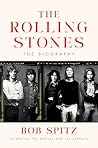
“One of Little Walter’s sidemen urged him to use cocaine from a needle. “Dip it in and put it on the head of your dick,” the guy explained, “you can fuck for three hours.” Marshall was twelve at the time. “I didn’t know what fucking was,” he says.”
― The Rolling Stones: The Biography
― The Rolling Stones: The Biography
“She not only brought fun headfirst into the modern American kitchen, a place that housewives equated with lifelong drudgery, but used it to launch public television into the spotlight,”
― Dearie: The Remarkable Life of Julia Child
― Dearie: The Remarkable Life of Julia Child
“That was him," Paul has said of his own opportune discovery of Elvis Presley, "that was the guru we'd been waiting for. The Messiah had arrived.”
― The Beatles: The Biography
― The Beatles: The Biography
“What had become of the saber-toothed rebels, the band that mined outrage and excess and caught the essential sound of the streets? They’d grown up and were on the verge of growing stale. The last three albums—Goats Head Soup, It’s Only Rock and Roll, and Black and Blue—failed to connect. The Stones seemed to be following trends rather than starting them. They’d grown rich and sated playing to distant audiences in arenas and stadiums, where the intensity was more dependent on the staging and the PA system than on the music.”
― The Rolling Stones: The Biography
― The Rolling Stones: The Biography
“Mick would never have countenanced a defeatist attitude. Even in the face of such an ordeal”
― The Rolling Stones: The Biography
― The Rolling Stones: The Biography
“There would be babies born to Beatles, to Beatles fans, millions of people who lived their lives to a soundtrack crafted by four Scouse boys who had either grown up or passed along.”
― The Beatles: The Biography
― The Beatles: The Biography
“To play a wrong note is insignificant,” he’d said. “To play without passion is inexcusable.”
― The Rolling Stones: The Biography
― The Rolling Stones: The Biography
“What to make of the singer, Mick Jagger? Giorgio thought the singer was atrocious—and fabulous. The kid’s voice wasn’t exactly soothing, he didn’t so much sing as “punch out words and syllables,” not quite holding notes. Really, it wasn’t even a voice. It landed just this side of offensive: a white boy imitating a Black man’s primal lament. When he threw his head back and bellowed “Oh, baby, Mama, please don’t dog me ’round,” it was all Giorgio could do to stop himself from howling. A pasty-faced kid from Dartford going on about paying a dollar for gas during “Too Much Monkey Business,” and phoning Memphis, Tennessee, from north Kent—it was a scream. Still, you had to hand it to the kid. He let it all hang out. Those skinny arms windmilling, hips jiggling, strutting like a rooster. How did he know how to do this? Was he hardwired to project himself, almost as if he were on strings, a marionette, with someone above at the controls? Maybe it was the showboat in him.”
― The Rolling Stones: The Biography
― The Rolling Stones: The Biography
“The whole process at the “Inny,” as it was known, imitated a grand and long-standing intellectual tradition, and nothing defined it better than the august school motto: No nobis solum set toti mundo nati—You’re born not for yourself but for the whole world.”
― The Beatles: The Biography
― The Beatles: The Biography
“they were now calling themselves the Beatles.”
― The Beatles: The Biography
― The Beatles: The Biography
“She sparked an interest and understanding of food that whet people’s appetites for a different kind of culinary experience. It takes a real nonconformist to start a revolution, and Julia Child started a corker, one that was to affect the nation’s behavior and change the way its people lived their daily lives.”
― Dearie: The Remarkable Life of Julia Child
― Dearie: The Remarkable Life of Julia Child
“The new repertoire, almost to a song, had lost its collaborative aspect. They were individual efforts—”
― The Beatles: The Biography
― The Beatles: The Biography
“Plant considered Robert Johnson the musician “to whom we all owe more or less our very existence.”
― Led Zeppelin: The Biography
― Led Zeppelin: The Biography
“The trouble with government as it is, is that it doesn’t represent the people. It controls them.” Uh-oh, the reporter thought. Topics like these, he knew, were strictly off-limits. But John persisted. “All they seem to want to do”
― The Beatles: The Biography
― The Beatles: The Biography
“Julia was determined to stand at the center of her own world, to express herself without following timeworn rules. Being a housewife—that is, the ideal of a housewife—wasn’t in the cards. The bounds of domesticity couldn’t contain her. Through cooking Julia found real purpose in her life, and through that purpose a greater meaning.”
― Dearie: The Remarkable Life of Julia Child
― Dearie: The Remarkable Life of Julia Child