Goodreads helps you follow your favorite authors. Be the first to learn about new releases!
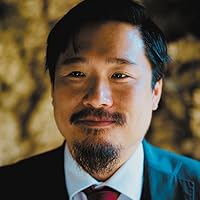
Start by following Aldrich Chan.
Showing 1-30 of 34
“...we are not seeing reality as it is; rather, we see the spectrum of light most useful to our survival." -Aldrich Chan”
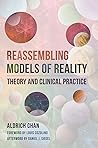
― Reassembling Models of Reality: Theory and Clinical Practice
― Reassembling Models of Reality: Theory and Clinical Practice
“We only experience a fraction of the reality we are a part of. What if we turn our eyes toward the interior of reality? Is it possible that the interior follows the patterns of the exterior? Might our state of consciousness reflect only a fraction of what may be potentially experienced?”
― Reassembling Models of Reality: Theory and Clinical Practice
― Reassembling Models of Reality: Theory and Clinical Practice
“The very act of perception is transformation; we transform the code of the universe to the world we see.”
― Reassembling Models of Reality: Theory and Clinical Practice
― Reassembling Models of Reality: Theory and Clinical Practice
“mirror neurons are active when a person is recognizing their own face...the very act of self-reflection may have been made possible via mirror neurons, which allow us to reflect on an internal representation of self.”
― Reassembling Models of Reality: Theory and Clinical Practice
― Reassembling Models of Reality: Theory and Clinical Practice
“Wisdom occurs when intelligence and experience combine into an effective and coherent spontaneous expression”
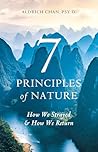
― 7 Principles of Nature: How We Strayed and How We Return
― 7 Principles of Nature: How We Strayed and How We Return
“Dreaming can be understood as another form of consciousness that requires its sibling, waking consciousness, to imbue it with meaning”
― Reassembling Models of Reality: Theory and Clinical Practice
― Reassembling Models of Reality: Theory and Clinical Practice
“The objective world around us extends far beyond what we can sense and perceive. Only a sliver of information is received and understood, and not passively so; in fact, we do so rather actively. That sliver of information is transformed and filtered through non- conscious processes that actively select what we end up perceiving consciously. We are always more than we are aware of and there is always more happening than we can be conscious of.”
― Reassembling Models of Reality: Theory and Clinical Practice
― Reassembling Models of Reality: Theory and Clinical Practice
“Humans perceive the world as subjects, yet we are also objects composed of the same material that we are perceiving from. Our attempts to sense the reality hidden behind veils, is very much like a game of hide and seek.”
― Reassembling Models of Reality: Theory and Clinical Practice
― Reassembling Models of Reality: Theory and Clinical Practice
“If we are to presuppose that the universe is inherently material, that we are emergent organisms from this universe and by nature we seek and generate meaning, meaning itself becomes a substructure of the universe. To think otherwise is to dissociate ourself from the universe, which contradicts the latter belief”
― Reassembling Models of Reality: Theory and Clinical Practice
― Reassembling Models of Reality: Theory and Clinical Practice
“What endures in states of extreme suffering and euphoria? Meaning.”
― Reassembling Models of Reality: Theory and Clinical Practice
― Reassembling Models of Reality: Theory and Clinical Practice
“To embrace a stance of certainty, is to be static, narrow, and rigid. Certainty is death of a question, whereas uncertainty allows both question and answer to remain alive.”
― 7 Principles of Nature: How We Strayed and How We Return
― 7 Principles of Nature: How We Strayed and How We Return
“the brain is not idle, passively receiving information, but produces perceptual expectations influencing how sensory information is ultimately interpreted”
― Reassembling Models of Reality: Theory and Clinical Practice
― Reassembling Models of Reality: Theory and Clinical Practice
“Nature may be seen as a continuity extending from moral intuitions in humans to the trees that populate a forest.”
― 7 Principles of Nature: How We Strayed and How We Return
― 7 Principles of Nature: How We Strayed and How We Return
“It only takes a few seconds to remember that our bodies are vibrant landscapes, worlds shaped by the forces of nature. Within each human are elements forged from ancient stars, rivers of blood reflecting the great waterways of earth, neural pathways branching like sprawling roots of forests, and electromagnetic waves humming in rhythm with invisible forces around us. We are simultaneously mountain, ocean, and sky; a microcosm, home to millions of organisms.”
― 7 Principles of Nature: How We Strayed and How We Return
― 7 Principles of Nature: How We Strayed and How We Return
“To be in Dao is to primarily exist in the fertile expanse where time stands still. Time loses meaning because primary identity shifts into alignment with the timeless principle itself. Distance in space loses felt degrees of separation, because of deep interconnectivity in its undifferentiated formless state. Death loses significance because it is perceived and experienced as another transformation of the Dao. Anxiety from change dissipates, as it is simply seen as part of Dao’s process of equilibrium. The intolerance of uncertainty fades, as it gives way to the adventure of potential and possibility. It is, in essence, alongside chance, the requirement for freedom. The Dao is self-generating, meaning it is root and branch. It is complete fulfillment, so temptations surrender their grasp to Dao’s quiescence. In a sense, to be with Dao is to favor loss over gain.”
― 7 Principles of Nature: How We Strayed and How We Return
― 7 Principles of Nature: How We Strayed and How We Return
“Artificial drugs or technological temptations hijack our natural reinforcement systems into believing we are meeting a goal that was important for survival. This deception increases their value and presence while reducing the importance of more beneficial interests. We can be like moths swarming an artificial light, believing it is the moon.”
― 7 Principles of Nature: How We Strayed and How We Return
― 7 Principles of Nature: How We Strayed and How We Return
“Nevertheless, what is possible is always greater than what can be realized, which is why the frontier of human potential seems to endlessly recede as soon as something is achieved”
― 7 Principles of Nature: How We Strayed and How We Return
― 7 Principles of Nature: How We Strayed and How We Return
“When the conceptual world of the intellect acts as a gravity well, it collapses the present moment into duality, which is not the actual nature of experience. We start to live farther away from the facts, resulting in a narrowing of vision, further concealing truths that may not benefit from being hidden.”
― 7 Principles of Nature: How We Strayed and How We Return
― 7 Principles of Nature: How We Strayed and How We Return
“From another perspective, death is necessary to sustain the living. In our everyday lives, cells die; indeed, their death is necessary for life. Apoptosis, or selective cell death, is a developmental process that occurs throughout our lives especially in the initial stages. One of the primary risk factors of developing autism is the failure of apoptosis. This is also reflected psychologically; as we get older there are behaviors that must “die” before new psychological structures and behaviors can emerge. Alternatively, too much life can bring death. In adulthood, cells continue to proliferate, and when there is not the added component of death or apoptosis, cancer emerges.”
― 7 Principles of Nature: How We Strayed and How We Return
― 7 Principles of Nature: How We Strayed and How We Return
“Rather than a linear evolutionary progression, the trajectory is like a spiral, the end eventually incorporates the beginning, though it also extends beyond it. One unlearns to learn, and by letting go we gain.”
― 7 Principles of Nature: How We Strayed and How We Return
― 7 Principles of Nature: How We Strayed and How We Return
“Every free choice collapses an infinite set of other choices that could be made. In fact, one reason people suffer is precisely this sacrifice. We cannot be everything all at once, and once we choose a way of being, the only direction left is forward. We have to take responsibility for our becoming. Every choice made leads to a meeting with an alternate self, why not consider one over another? When we choose, we also sacrifice”
― 7 Principles of Nature: How We Strayed and How We Return
― 7 Principles of Nature: How We Strayed and How We Return
“In the enigma of existence, nature becomes a wordless teacher whose very process serves as a path toward deeper knowledge and insight. Science seeks to understand nature through observation and measurement. Daoism seeks a way of life that is most natural (自然, Ziran), guided by an attunement to nature, the discernment of its patterns and the expression that follows.”
― 7 Principles of Nature: How We Strayed and How We Return
― 7 Principles of Nature: How We Strayed and How We Return
“First, we recognize that thoughts are options, not commands. Our heart pumps blood throughout the body, like how thoughts arise in relation to our brain activity. It is easy to be swayed by the illusion that you are just the content of your thoughts, but you are also the process that can transcend and guide them. They are options, just information to be considered, not who you are.”
― 7 Principles of Nature: How We Strayed and How We Return
― 7 Principles of Nature: How We Strayed and How We Return
“I adopt a different path, one that unfolds horizontally.... Rather than framing humankind’s condition as a “fall”, I consider it a “straying”—a term whose roots can be traced back to the vulgar latin word “estragare” which translates to “wander out of bounds.” Language, as Daoism observes, deepens this estrangement by carving out distinctions, magnifying the sense of multiplicity and separateness. By systematically dissolving these conceptual edifices, we traverse the horizontal continuum, potentially unveiling a primordial state known as the uncarved wood(樸).”
― 7 Principles of Nature: How We Strayed and How We Return
― 7 Principles of Nature: How We Strayed and How We Return
“Wisdom occurs when intelligence and experience combine into an effective and coherent spontaneous expression.”
― 7 Principles of Nature: How We Strayed and How We Return
― 7 Principles of Nature: How We Strayed and How We Return
“Organicity is the natural intelligence and wisdom our bodies are born with, outside of awareness. It is … communicated through our intuition—the old-growth forest of the mind, a non-linear, dynamic, complex medium through which nature’s potential is unveiled.”
― 7 Principles of Nature: How We Strayed and How We Return
― 7 Principles of Nature: How We Strayed and How We Return
“Science attempts to “shed light” over unknowns to improve our understanding of the world, whereas Daoistic practices are aimed at “eclipsing light” in order to amplify nature’s autonomous illumination (明) within.”
― 7 Principles of Nature: How We Strayed and How We Return
― 7 Principles of Nature: How We Strayed and How We Return
“To be spontaneous does not mean to simply express any urge and indulge every desire. That would be impulsivity. Impulsivity neglects complexity and context, whereas spontaneity considers them.”
― 7 Principles of Nature: How We Strayed and How We Return
― 7 Principles of Nature: How We Strayed and How We Return
“Unlike the West, the “true self” is not created over time but discovered, which is why Daoist and Zen writings may refer to it as “original nature.” Our original nature is a primordial melody, and to hear it, one must silence all the extraneous noise.”
― 7 Principles of Nature: How We Strayed and How We Return
― 7 Principles of Nature: How We Strayed and How We Return
“2. It only takes a few seconds to remember that our bodies are vibrant landscapes, worlds shaped by the forces of nature. Within each human are elements forged from ancient stars, rivers of blood reflecting the great waterways of earth, neural pathways branching like sprawling roots of forests, and electromagnetic waves humming in rhythm with invisible forces around us. We are simultaneously mountain, ocean, and sky; a microcosm, home to millions of organisms.”
― 7 Principles of Nature: How We Strayed and How We Return
― 7 Principles of Nature: How We Strayed and How We Return