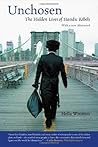
Goodreads helps you follow your favorite authors. Be the first to learn about new releases!
Start by following Hella Winston.

Showing 1-30 of 36
“Young Hasidim are formally taught almost nothing about sex until the weeks immediately before their wedding, when young men and women attend classes taught by specially designated members of the community. Those who have had the advantage of an especially savvy older or married sibling, had access to pornography, or, tragically, been the victims of sexual abuse may have some prior knowledge of the subject. But many are shaken by what they learn, and some—especially the most sheltered boys—actually faint on the spot after hearing what they will have to do on their wedding nights.”
― Unchosen: The Hidden Lives of Hasidic Rebels
― Unchosen: The Hidden Lives of Hasidic Rebels
“Didn’t Jews thrive on open discussion and debate? Indeed, wasn’t debate at the very heart of the tradition? Didn’t Jews also value education and ideas, pride themselves on producing and consuming culture? Not just contemporary secular Jews, of course, but Jews throughout history? In fact, wasn’t it the great Jewish thinker Maimonides who, in the Middle Ages, strove to reconcile the philosophy and science of Aristotle with the Bible, engaging the writings of Arab Muslim philosophers? And he did all of this while also working as a physician! And today, these young Hasidim were not even allowed to read Aristotle, let alone go to college or medical school—or to the movies, or even to a Broadway musical, like Fiddler on the Roof. After all, this was a community that prohibited men from hearing women sing because the sound of their voices could be sexually arousing. How did it come to this?”
― Unchosen: The Hidden Lives of Hasidic Rebels
― Unchosen: The Hidden Lives of Hasidic Rebels
“Perhaps the most unexpected reaction (although I know better now) came from a modern Orthodox friend. He told me that, as a religious Jew and a Zionist, he felt no identification with the Hasidim at all—not with their withdrawal from the larger world, not with their use of Yiddish, not even with their devotion to religious study, despite his own love of learning Talmud. To his mind, Yiddish is a language of the Diaspora. It is the linguistic marker of a community in exile and, as such, is not something to be celebrated or even preserved. As long as Jews spoke Yiddish, he told me, they were perpetuating their own ghettoization. “I would rather see those guys go become cops in Tel Aviv,” he declared, referring to the Hasidim, “than sit and learn all day in Williamsburg.”
― Unchosen: The Hidden Lives of Hasidic Rebels
― Unchosen: The Hidden Lives of Hasidic Rebels
“Also, unlike the girls from Yossi’s community, she wasn’t shomer negiah, meaning that she didn’t refrain from physical contact during dating. This meant that Jessica/Zahava would hold Yossi’s hand when they went out and, after she had a little to drink, kiss him. On some nights, depending on her mood, she would even invite Yossi back to her small apartment, where she was willing to do almost anything with him—now that she was religious, there were some limits—although she always made sure to cover all of the religious books on her bedroom bookshelves with towels, so they wouldn’t have to witness the profanity of these encounters. Someone she had studied with when she was becoming religious had told her this was necessary. Yossi found it hilarious.”
― Unchosen: The Hidden Lives of Hasidic Rebels
― Unchosen: The Hidden Lives of Hasidic Rebels
“In fact, Yossi has been thinking a lot about starting his own movement, a kind of neo-Hasidic society, where Hasidim—men and women—who feel as he does, and anyone else who wants to, could come to participate in and enjoy the “great” things about Hasidic culture, without the pressure and the judgment, the need for hiding and secrecy. His movement would celebrate the music, the wild dancing and singing, the mystical philosophy, the Eastern European and also Sephardic food, the tales and stories, perhaps even some of the funkier garb, like the shtreimels and the bekishes, and maybe even the women’s wigs, for those who are into dressing up. He would find a space and fix it up, make it stylish and swank, with comfortable seating, nice lights, and a big, well-stocked bar. And he would build a dance floor where men and women could dance together, and maybe there would even be space somewhere for kids. And everyone else would be welcome, too: other types of Jews, Gentiles—blacks, whites, browns, gays, straights, questionings, you name it. It wouldn’t be about trying to convince anyone to remain religious, or to become religious, or even to reject religion. In fact, it wouldn’t be about convincing anyone of anything at all. It would just be about being with people and celebrating the good things in life, the happy things that make everyone feel that they belong and have a place. Indeed, to Yossi, this would be the realization of his own American dream.”
― Unchosen: The Hidden Lives of Hasidic Rebels
― Unchosen: The Hidden Lives of Hasidic Rebels
“Yossi felt that this was particularly ironic, given that the Ba’al Shem Tov, an eighteenth-century storyteller and folk healer in Central Europe (also known as the Besht), founded the Hasidic movement as a reaction against what he perceived to be the overly hierarchical, rigid, and legalistic Judaism of his day. Drawing on sophisticated Jewish mystical (Kabbalistic) teachings, the Besht based his movement on two theoretical concepts: religious panentheism, or the omnipresence of God, and the communion between God and man. In this view, God is present everywhere, not just in the spiritual realm but in the material world as well, and, while He surely influences the behavior of human beings, by focusing their thoughts, actions, and utterances on Him, human beings can also influence God.”
― Unchosen: The Hidden Lives of Hasidic Rebels
― Unchosen: The Hidden Lives of Hasidic Rebels
“When I try to hand the owner a twenty-dollar bill, he refuses to take the money, and I quickly realize I have committed a major faux pas. Hasidic codes of modesty prohibit this man from touching any woman who is not his wife, and, though he certainly could have taken the money without touching my hand, people often take extra precautions when even accidental contact could occur. This is known as “putting a fence around the law.”
― Unchosen: The Hidden Lives of Hasidic Rebels
― Unchosen: The Hidden Lives of Hasidic Rebels
“Near the bookstore we pass a shatnes “lab”—a place that determines whether garments contain the halachically prohibited mixture of linen and wool. According to Yossi, people routinely bring their clothes to a shatnes tester because, while labels will usually tell what a suit or dress is made of, they often don’t contain information about the material used in the collars or seams. A shatnes tester is trained to determine the precise makeup of the fabric, and he is also skilled at separating the linen from the wool, or the wool from the linen, so that, if he does discover that such a mixture is present, he can repair the garment, and its owner can wear it without violating Jewish law. Nobody knows exactly why this prohibition exists.”
― Unchosen: The Hidden Lives of Hasidic Rebels
― Unchosen: The Hidden Lives of Hasidic Rebels
“In the end, however, the Hasidim are not a community defined exclusively by the fact that they live much of their lives within certain physical borders. On the contrary, they form a primarily ideological community, which, despite a premodern worldview, is bound together by a very postmodern concern with identity. The Hasidic identity, however, is not one that is determined or defined solely by religious belief or even practice, but also by a sense—both real and imagined—of a shared history and potential future fate.”
― Unchosen: The Hidden Lives of Hasidic Rebels
― Unchosen: The Hidden Lives of Hasidic Rebels
“Yossi explains to me that the Torah is divided into three categories: Mishpatim (Laws), Eidus (Testament to God), and Chukim (Statutes). Authoritative opinion on the Talmud holds that Mishpatim are rational laws—that is, laws that would have been created by people on their own, even if God had not commanded them, such as laws against stealing or killing. Chukim are laws that cannot be understood within a rational context, and are observed only because God has commanded their observance. Shatnes is understood to be a Chok, and to strictly religious Jews, it is no less binding than the dietary laws.”
― Unchosen: The Hidden Lives of Hasidic Rebels
― Unchosen: The Hidden Lives of Hasidic Rebels
“Ironically, what began as a poignant and heroic effort in the face of utter devastation and loss has led, generations later, to communities in which nonconformity can subject members to the kinds of stigmatization and ostracism that have, throughout history, characterized the treatment of Jews by the outside world.”
― Unchosen: The Hidden Lives of Hasidic Rebels
― Unchosen: The Hidden Lives of Hasidic Rebels
“Deeply traumatized by their wartime experiences, and mostly poor and with almost no knowledge of English and the American way of life, these newly arrived Hasidim had immediately set about recreating the world that had existed for them in Europe before the Holocaust. Many considered this an obligation to those who had been murdered. It was also a clear affirmation of their refusal to be annihilated.”
― Unchosen: The Hidden Lives of Hasidic Rebels
― Unchosen: The Hidden Lives of Hasidic Rebels
“With its history of religious tolerance and commitment to pluralism, America was an ideal place for these refugees to set about re-creating their way of life. However, as it has turned out, the very same American values that allowed these communities to flourish also enabled them to become increasingly closed and insular, shutting themselves off from the larger world and its concerns, living in fear of bringing about another Holocaust through assimilation and the abandonment of a “Torah life.”
― Unchosen: The Hidden Lives of Hasidic Rebels
― Unchosen: The Hidden Lives of Hasidic Rebels
“While the Hasidic understanding of God’s presence in the physical world encourages a respect for animals and nature, in practice, the Hasidim tend not to have pets. Some scholars claim that this is because Jews are an urban people, unused to living among animals. Others maintain that, because certain animals—like dogs—were not sacrificed in Jerusalem’s holy temple, Jews should not bring them, or any other nonkosher animal, into their homes. Indeed, many Hasidim are afraid of dogs, which saddens Chaim.”
― Unchosen: The Hidden Lives of Hasidic Rebels
― Unchosen: The Hidden Lives of Hasidic Rebels
“When it became clear to his father that Yossi had nothing more to say, he began an all too familiar rant that Yossi had heard at home and in school and in the larger community for as long as he could remember: Yossi was worse than Hitler. Didn’t he see that shaving his beard was like killing his Jewish identity? He was carrying out Hitler’s work, destroying himself and, with him, the whole of the Jewish people. And he was a Jew! Yossi was a Nazi and a murderer, and his father ordered him to pack up his clothes and get out of the house right now.”
― Unchosen: The Hidden Lives of Hasidic Rebels
― Unchosen: The Hidden Lives of Hasidic Rebels
“For Dini, obeying the laws of tznius also meant that immediately after her wedding, a woman’s head was shorn of its sexually tempting hair, and that thereafter she wore a head covering—a scarf; a wig, or shaitel; or a shpitzel, a partial wig consisting only of a front piece, typically covered by a small pillbox hat. To ensure that not a strand of her own hair was visible in public, she would likely also tweeze any stray hairs on her face, near her hairline.”
― Unchosen: The Hidden Lives of Hasidic Rebels
― Unchosen: The Hidden Lives of Hasidic Rebels
“In fact, Yossi tells me that in 1927 Rosenblatt was offered $100,000 by Warner Brothers to play Al Jolson’s father in The Jazz Singer. He refused the role, however, because it would have required him to sing Kol nidrei—the opening words for the cancellation of vows, recited on the eve of Yom Kippur—in a stage setting.”
― Unchosen: The Hidden Lives of Hasidic Rebels
― Unchosen: The Hidden Lives of Hasidic Rebels
“Yossi had heard and seen this tactic used on people many times before, even in small ways. In school, when kids ran around and misbehaved, the teachers would yell at them, declaring that they were obviously not good little Jewish boys but evil Gestapo soldiers. And if anyone—even a Jew—said something people didn’t like about the community, that person was also “a Nazi.”
― Unchosen: The Hidden Lives of Hasidic Rebels
― Unchosen: The Hidden Lives of Hasidic Rebels
“In schools and lectures,1 teachers often support this association between femaleness and the private realm with the idea that men create by giving up a part of themselves, while women do so by taking something in. This fact of reproductive anatomy is then used to explain why it is that men must go out to pray together, while women, left to develop their inner qualities—the nurturing tendencies and intuition, which apparently exist naturally within them—can pray alone, at home, while minding the house and children.”
― Unchosen: The Hidden Lives of Hasidic Rebels
― Unchosen: The Hidden Lives of Hasidic Rebels
“Yitzchak remembers once asking his father why, on Shabbos, he always cut off the end of the challah and gave it to his mother. Assuming that it was probably because his mother liked crusty bread, he was horrified to learn that there is actually a superstition that eating the edge of the challah causes people to become forgetful. Yitzchak interpreted his father’s act as an implicit endorsement of the view that, while a man surely cannot risk forgetting all that he has learned, there is little serious harm that could come to a woman from losing a bit of her memory. “After all, what does a woman know?” Yitzchak asks me, rolling his eyes, “A few recipes, maybe, or how to wash the floor?”
― Unchosen: The Hidden Lives of Hasidic Rebels
― Unchosen: The Hidden Lives of Hasidic Rebels
“In fact, it was only when he took an accounting class outside of the community and, for the first time in his life, befriended women that Avi realized they could in fact be as intellectually oriented as men. It was also through that class that he realized he very much enjoyed the company of these women, taking them out to dinner and hoping that one might even become his girlfriend. As a divorced older man in the community, he gets only the dregs from the matchmakers, people with deformities or mental illnesses. Or those notoriously unstable baalei teshuvah whose lack of background often blinds them to the nuances of community life and who, with the zeal of the newly converted, can be even more fanatic than the most religious Hasid born into the community.”
― Unchosen: The Hidden Lives of Hasidic Rebels
― Unchosen: The Hidden Lives of Hasidic Rebels
“Chaim knows many Hasidim who, having married at nineteen and had children soon after, later came to realize that they had never had time for exploration, for adolescence. This can cause something like a midlife crisis—except that, in this case, the crisis happens at the age of twenty-eight or twenty-nine.”
― Unchosen: The Hidden Lives of Hasidic Rebels
― Unchosen: The Hidden Lives of Hasidic Rebels
“Evidently, it is currently popular among the modern Orthodox to have what they call “tefillin dates,” meaning that, when a man goes out at night with a woman, he brings his tefillin (the leather phylacteries men bind to their arms during prayer) with him, so as to have them the next day, when he says his morning prayers. “Who has heard of such a thing? A Jewish man doesn’t sleep with a Jewish woman before they are married.”
― Unchosen: The Hidden Lives of Hasidic Rebels
― Unchosen: The Hidden Lives of Hasidic Rebels
“Motti was often disciplined physically by his teachers and neglected by his overwhelmed parents. As a little boy, he had been very attached to his mother, but as he grew older, the enforced separation of the sexes, as well the prohibition against any physical expression of affection between members of the opposite sex, made him feel all the more isolated and alone—a situation that he believes made him particularly easy prey for some of the older men in the community. On many occasions, these men would grope and fondle him in the men’s mikvah, where Hasidic men are supposed to go to purify themselves before the Sabbath.”
― Unchosen: The Hidden Lives of Hasidic Rebels
― Unchosen: The Hidden Lives of Hasidic Rebels
“And there was also the fact that most of the pretty girls he tried to talk to seemed to relate to him as if he were either an alien from another galaxy or some rare exotic species (Homo hasidus), too holy for mundane thoughts or conversation.”
― Unchosen: The Hidden Lives of Hasidic Rebels
― Unchosen: The Hidden Lives of Hasidic Rebels
“Leah thinks that, to some extent, all human beings live for other people, and that life for most of us is about gaining and keeping the approval and acceptance of others. Growing up in the Hasidic community, however, magnifies that natural tendency, almost to the point, Leah believes, that people become more concerned with what others think than even with what God thinks—maybe because it’s easier to know that other people actually exist.”
― Unchosen: The Hidden Lives of Hasidic Rebels
― Unchosen: The Hidden Lives of Hasidic Rebels
“Coming from a life in which God’s laws literally governed which shoe to put on and tie first, Malkie quickly came to realize that the outside world had a completely different set of rules, and that their logic was often difficult to penetrate. When you ate out at a restaurant, for example, did you clean your own table when you were finished eating? If a boy spoke to you, did it mean he wanted to have sex, or that he assumed that you did? Why was it that everyone in her grandmother’s apartment house had copies of the New York Times outside their front doors in the morning?”
― Unchosen: The Hidden Lives of Hasidic Rebels
― Unchosen: The Hidden Lives of Hasidic Rebels
“Large Hasidic families can often benefit from more square footage than many of these dwellings originally possessed, and some people have found architecturally creative ways to add rooms to their typically overcrowded homes. Yossi claims that some people who run out of money before the additions are completed have developed creative solutions to that problem as well—like the man who dealt with his inability to pay his mortgage by changing his name, putting his house in the new name, and then obtaining a death certificate for his old self. He was reborn a few days later with a new Social Security number, but without his old financial troubles. Some people who are pressed financially will legally designate their basements or other parts of their houses as shtieblech, or small synagogues, and receive tax breaks because their homes are houses of worship. Someone who temporarily moves in with a friend whose home is designated a shtiebl can claim that he himself is homeless and sleeping in a synagogue, thus becoming eligible for Section 8 housing vouchers from the government.”
― Unchosen: The Hidden Lives of Hasidic Rebels
― Unchosen: The Hidden Lives of Hasidic Rebels
“Religion was particularly confusing for many, because in the Hasidic world, it was a black or white issue. Officially, one was either religious or not, and if anyone stopped observing the Sabbath or keeping kosher, it was as if he or she were no longer a Jew.”
― Unchosen: The Hidden Lives of Hasidic Rebels
― Unchosen: The Hidden Lives of Hasidic Rebels
“But the people in his community did not believe in love, or not in romantic love, at least. First and foremost, marriage was a partnership, a division of labor organized to ensure the perpetuation of the Jewish family and community. Over time, and in the common pursuit of this goal, the bond between man and wife would grow, even if openly expressing affection in public would always be considered too immodest, and thus inappropriate.”
― Unchosen: The Hidden Lives of Hasidic Rebels
― Unchosen: The Hidden Lives of Hasidic Rebels