Goodreads helps you follow your favorite authors. Be the first to learn about new releases!
Start by following David P. Celani.

Showing 1-28 of 28
“Despite the fact that our failed developmental history was our parents’ “fault,” each of us has the ultimate responsibility for our own life. Those of us who have been victimized by indifference, neglect, or abuse are responsible for the rest of our lives. We must work to understand our histories, to separate as best as we can from those who have hurt us, and to pursue gratifying relationships in the future.”
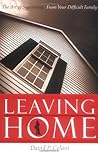
― Leaving Home: The Art of Separating from Your Difficult Family
― Leaving Home: The Art of Separating from Your Difficult Family
“Neglect and abuse are two different but closely related factors, both of which can delay development. Neglect can occur independently or it can occur as a by-product of abuse. When a child is abused, he is suffering from two damaging developmental events occurring at the same time. Returning to the example of the family dynamic between George and his mother, we see that during the time that George and his sister were being forced to eat (abuse), they were also being deprived of the support and emotional nurturing (neglect) that they should have been receiving at the dinner table. When George shifted into his wounded self at the dinner table, he was not only filled with anger and humiliation, but also felt extremely alone because his bond to his mother was broken.”
― Leaving Home: The Art of Separating from Your Difficult Family
― Leaving Home: The Art of Separating from Your Difficult Family
“When they look at themselves they see nothing that was valued by their parents.”
― Leaving Home: The Art of Separating from Your Difficult Family
― Leaving Home: The Art of Separating from Your Difficult Family
“Simply stated, our identity keeps us stable, organized, and functional when we are alone—when there is no one to supply us with feedback as to who we are. Those adults who emerged from faulty families without intact identities have to cling to others in order to keep their personality organized, just like Freda and Greta. Secondly, and equally importantly, our identity serves as our measuring stick of the universe around us. It acts as a stable point of reference that allows us to define who we are in relation to other people, to the world of work, to our community, and to our families and loved ones. Without a firm identity, we don’t know what to believe, where to go, or what to do. Comedy is often based on mistaken identities, concealed identities, or individuals who misunderstand their own identity.”
― Leaving Home: The Art of Separating from Your Difficult Family
― Leaving Home: The Art of Separating from Your Difficult Family
“Only psychologically mature young adults can tolerate the reality that their parents failed them in certain areas, because their maturity frees them from needing false but comforting illusions about their parents. That is, their identity is firm enough to allow them to stand on their own without needing the support of their parents.”
― Leaving Home: The Art of Separating from Your Difficult Family
― Leaving Home: The Art of Separating from Your Difficult Family
“Repetition Compulsion”: Doing “It” Over and Over Again”
― Leaving Home: The Art of Separating from Your Difficult Family
― Leaving Home: The Art of Separating from Your Difficult Family
“The same phenomenon can be observed when young adults with underformed personalities who join cults and fringe groups. These groups attract hordes of “adults” who never had the type of early care that resulted in a solid identity, and they eagerly give up what little personality structure they have and allow the cult to dominate their life.”
― Leaving Home: The Art of Separating from Your Difficult Family
― Leaving Home: The Art of Separating from Your Difficult Family
“we all must reach to free ourselves from the bondage of our illusions and defenses.”
― Leaving Home: The Art of Separating from Your Difficult Family
― Leaving Home: The Art of Separating from Your Difficult Family
“Our culture seems incapable of connecting cause and effect when the two events do not occur within easy recall of each other. The parents of these young adults have failed them totally, yet we as a culture refuse to connect cause and effect because we have no stomach for punishing the innocent-appearing parents.”
― Leaving Home: The Art of Separating from Your Difficult Family
― Leaving Home: The Art of Separating from Your Difficult Family
“Not surprisingly, his father (who was unaware of how abusive he had been), took credit for Richard’s high entrance exam scores, noting how successful his educational program had been. Richard’s father’s poorly controlled wounded self, which acted out sadistically toward him, was never openly acknowledged and thus both father and son were prevented from seeing how badly the father had undermined his son’s sense of self.”
― Leaving Home: The Art of Separating from Your Difficult Family
― Leaving Home: The Art of Separating from Your Difficult Family
“Children do not experience neglect as a neutral void. Instead, neglect produces a state of need and intense longing for the emotionally missing parent. This has enormous consequences in the future development of their personality. Neglecting a child is like starving it: the longer the child goes without food, the more the child focuses on his hunger, and the more he tries to meet his needs with fantasy. The very presence of a parent who neglects a child is like showing a starving child a banquet that is sealed off by a glass wall.”
― Leaving Home: The Art of Separating from Your Difficult Family
― Leaving Home: The Art of Separating from Your Difficult Family
“She, like so many other patients, was looking backward to her childhood, instead of forward. Not surprisingly, her neglected marriage dissolved.”
― Leaving Home: The Art of Separating from Your Difficult Family
― Leaving Home: The Art of Separating from Your Difficult Family
“Often, these fantasies are barely based on reality and no longer involve an emotional attachment to others, since these young adults were so deeply disappointed in their parents. In effect, the young adult has given up hope of emotional support from the human community and has substituted grandiose fantasies of unlimited power or fame.”
― Leaving Home: The Art of Separating from Your Difficult Family
― Leaving Home: The Art of Separating from Your Difficult Family
“As time goes on, she falls further behind in terms of social skills and achievements. As she gets older and her body continues to grow, she is placed in an ever more frightening position with increasing social expectations. Instead of allowing a complex, rich, and confident identity to emerge, she is left with a mostly unconscious wounded self and a childlike, need-driven personality.”
― Leaving Home: The Art of Separating from Your Difficult Family
― Leaving Home: The Art of Separating from Your Difficult Family
“This is the great paradox of defense mechanisms: they protect us from crushing anxiety during our childhoods, but then become an integral part of our personality that often damages us in adulthood.”
― Leaving Home: The Art of Separating from Your Difficult Family
― Leaving Home: The Art of Separating from Your Difficult Family
“The undernurtured young adult simply cannot afford to recognize that the parents he relies on are incapable of offering the support that he desperately needs.”
― Leaving Home: The Art of Separating from Your Difficult Family
― Leaving Home: The Art of Separating from Your Difficult Family
“Don’t complain, and don’t explain.” That is, don’t complain about your emotionally impoverished history to your parents, because they will never validate your perspective of your childhood. Second, don’t explain your quiet withdrawal from the family scene. Simply slip away as gracefully as possible and concentrate your efforts at developing relationships with people who support and embrace you.”
― Leaving Home: The Art of Separating from Your Difficult Family
― Leaving Home: The Art of Separating from Your Difficult Family
“He or she cannot clearly remember what happened when they were two, three, or four years of age. Worse, the reality of their developmental history has been clouded and denied by the effects of both the splitting and moral defenses. The result of this psychological conspiracy leaves one and only one recourse open for the victim: to unconsciously act out the same destructive pattern with the next generation of child-victims.”
― Leaving Home: The Art of Separating from Your Difficult Family
― Leaving Home: The Art of Separating from Your Difficult Family
“In many cases, their sole purpose in life was focused on winning the love of people who appeared to hurt them endlessly. From my perspective, my patients were being rejected by parents or new relational partners who, compared with them, were blatantly manipulative and intellectually inferior. Despite this, these individuals seemed to have an almost magical grip over my patients. The most common and most frustrating clinical event that I saw in my practice (and one largely ignored in the psychoanalytic literature) was the borderline patient’s hope-filled, frantic return to the rejecting object, despite having been rejected dozens of times previously. It appeared that emotional fixation and the resulting primitive dependency on frustrating and rejecting object(s) was the very core of many characterological disorders. Many of my patients’ self-defeating and self-destructive behaviors were secondary consequences to intolerable frustration from long-term unmet dependency needs that were exclusively focused on the parental object(s) who failed the patients in their childhood.”
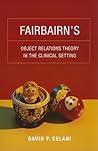
― Fairbairn’s Object Relations Theory in the Clinical Setting
― Fairbairn’s Object Relations Theory in the Clinical Setting
“The missing link between reading a self-help book and actually achieving positive personality growth is a network of long-term give-and-take relationships with concerned others. Human beings simply cannot develop into mature adults (regardless of their chronological age) without the love and support of people around them. When I say “love,” I am speaking in the general sense of the word meaning those who appreciate, enjoy, support, and show interest in others.”
― Leaving Home: The Art of Separating from Your Difficult Family
― Leaving Home: The Art of Separating from Your Difficult Family
“developmentally unhelpful families who have been able to leave the actual family home, but are unable to prevent the severity of their defenses from disrupting their adult friendships. In effect, Sandy carried such intense and powerful images of her family in her head that she reacted to others as if they were from her family of origin.”
― Leaving Home: The Art of Separating from Your Difficult Family
― Leaving Home: The Art of Separating from Your Difficult Family
“Healthy individuals are not interested in rescuing desperate peers, nor do they feel guilty about leaving or avoiding excessively demanding acquaintances.”
― Leaving Home: The Art of Separating from Your Difficult Family
― Leaving Home: The Art of Separating from Your Difficult Family
“When they no longer need parental support, they also no longer need the defense mechanisms that blinded them (in order to keep them feeling secure) to their parents’ failings.”
― Leaving Home: The Art of Separating from Your Difficult Family
― Leaving Home: The Art of Separating from Your Difficult Family
“The loss for all adults who remain loyal to ungiving parents is the loss of time. Living with the attitudes and identity of a child in an adult body is a guaranteed way of wasting time that could be used toward developing a more mature and satisfying way of life. The lost time is simply that—lost—and every passing year reduces the probability that the adult child who remains attached to failed parents will be able to emerge into adulthood.”
― Leaving Home: The Art of Separating from Your Difficult Family
― Leaving Home: The Art of Separating from Your Difficult Family
“The hopeful self serves as a lifesaving antidote to the bitter and envious wounded self, which often becomes committed to destroying the rejecting aspects of the parents or other adults in positions of authority.”
― Leaving Home: The Art of Separating from Your Difficult Family
― Leaving Home: The Art of Separating from Your Difficult Family
“If I do not destroy the “family,” the “family” will destroy me. —R. D. Laing”
― Leaving Home: The Art of Separating from Your Difficult Family
― Leaving Home: The Art of Separating from Your Difficult Family
“However, neither the previously neglectful parents nor the defense-blinded child can identify the source of the problem. These parents had no idea why their daughter fell in love with this unsuitable young man. Their illusion that they provided their daughter with a “good” childhood hid the personality damage they did to her during her developmental years. The young woman is blinded by both the splitting and moral defenses and so she too is unable to locate the source of her problems.”
― Leaving Home: The Art of Separating from Your Difficult Family
― Leaving Home: The Art of Separating from Your Difficult Family
“it is the essential and self-preserving act that must be taken if we intend to lead a better life. This bold and courageous step can only occur after we conquer our defensive illusions—both about our parents and about ourselves.”
― Leaving Home: The Art of Separating from Your Difficult Family
― Leaving Home: The Art of Separating from Your Difficult Family