Goodreads helps you follow your favorite authors. Be the first to learn about new releases!
Start by following Anka Muhlstein.

Showing 1-4 of 4
“Proust is even harsher on the same subject with the university professor Brichot. Like Françoise, Brichot never connects his reading to his inner life, and therefore fails to grasp the universal beauty and truth of certain texts. His being a professor of literature makes the posturing, petty criticism, and lack of insight particularly shocking.”
― Monsieur Proust's Library
― Monsieur Proust's Library
“When military strategy is not involved, Françoise, for her part, understands what she reads, but fails to make the necessary connection between what she has just learned and real life, thus revealing a form of heartlessness: “The tears that flowed from her in torrents when she read in a newspaper of the misfortunes of persons unknown to her were quickly stemmed once she had been able to form a more precise mental picture of the victims.”c”
― Monsieur Proust's Library
― Monsieur Proust's Library
“He senses that the effort would be wasted on a pedant obsessed with etymology and grammar, ignorant of life, and willing to sacrifice the true affection he had for a modest laundress in order to please the despotic Mme Verdurin, who feels insulted by the lowly and in her eyes shameful connection. Her soirees are the only social pleasure he knows. How could he capture the beauty and complexity of a great book?”
― Monsieur Proust's Library
― Monsieur Proust's Library
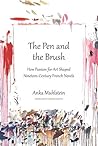
“I have often wondered why nineteenth-century French novelists were so often obsessed with painters and painting, while in the 1700s Diderot was the only writer of his generation to take an interest in art criticism. What a striking contrast that not one well-known novelist of the 1800s failed to include a painter as a character in his work. This is fair enough for Balzac and Zola, who had ambitions to bring every aspect of society to life, but read Stendhal, Flaubert, the Goncourt brothers, Anatole France, Huysmans, Maupassant, Mirbeau, and of course Proust, and you enter a world in which painting is surprisingly important. What is more, all these novelists explored not only how a painter sees things but also how he looks at them, and this produced a new way of writing. “I would just have liked to see you dismantle the mechanism of my eye. I enhance the image, that much is sure, but I don’t enhance it as Balzac does, any more than Balzac enhances it as Hugo does,” Émile Zola told his protégé Henry Céard, highlighting the visual nature of novels at the time. This was essentially a French phenomenon; it has no real equivalent in England, Germany, or Russia. In the United States, it was not until the end of the century that painting became a literary subject in the work of Henry James. In England, Woolf would be the first to write about the influence painting had on literature. Why the sudden, widespread interest in France?
I believe that this new way of seeing and writing was facilitated by the creation of museums in France after the French Revolution. Frequent long visits to the Louvre gave a whole cohort of young writers a genuine knowledge of painting, a shared language with their painter friends, and a desire to enrich their own works with this newly acquired erudition. The visual novel dates from this period.”
― The Pen and the Brush: How Passion for Art Shaped Nineteenth-Century French Novels
I believe that this new way of seeing and writing was facilitated by the creation of museums in France after the French Revolution. Frequent long visits to the Louvre gave a whole cohort of young writers a genuine knowledge of painting, a shared language with their painter friends, and a desire to enrich their own works with this newly acquired erudition. The visual novel dates from this period.”
― The Pen and the Brush: How Passion for Art Shaped Nineteenth-Century French Novels