Goodreads helps you follow your favorite authors. Be the first to learn about new releases!
Start by following Andrew Stephen Damick.
Showing 1-21 of 21
“Orthodoxy is marked by sobriety, not by emotional enthusiasm. It is also marked by a quite “ordinary” persistence in living the humble, consistent life of Christ, not by seeking out extraordinary experiences, especially supernatural ones.”
― Orthodoxy and Heterodoxy: Exploring Belief Systems through the Lens of the Ancient Christian Faith
― Orthodoxy and Heterodoxy: Exploring Belief Systems through the Lens of the Ancient Christian Faith
“Most of the time, we are concerned with the truth. A cashier has to make sure he knows the exact change he's giving. A nurse has to apply just the right amount of medication to a patient. A mathematician checks and rechecks his proofs. A jury listens closely to all the facts to sort out the truth in a trial. A history teacher has to get the names and dates right. A scientists publishes work for peer review to make sure everyone gets the same results. In all of these cases and more, what's important is not opinion. What's important is the truth. Yet it seems that when it comes to questions of religion and spirituality and the accompanying moral questions, we suddenly become relativists. The truth doesn't matter. Instead of asking who God really is, we say, 'Who is God to you?' Instead of asking what it means that God became a man, we say that it's okay for some people to believe if they want. Instead of asking whether God expects something from us or has any divine commands for us, we judge religious expectations by what we want, by whether a religion fits into our lifestyle. The pursuit of objectivity goes out the window, and subjectivity reigns.”
― Orthodoxy and Heterodoxy: Finding the Way to Christ in a Complicated Religious Landscape
― Orthodoxy and Heterodoxy: Finding the Way to Christ in a Complicated Religious Landscape
“Repentance is an existential change that helps one become more like God,”
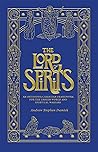
― The Lord of Spirits: An Orthodox Christian Framework for the Unseen World and Spiritual Warfare
― The Lord of Spirits: An Orthodox Christian Framework for the Unseen World and Spiritual Warfare
“So I would like to suggest that the great spiritual battle of our time is not a struggle between believers and atheists. Rather, it is a struggle between pride and humility. We expect and even demand humility in most areas of life—what really matters is what is objectively true, not what any of us might think is true. Our opinions are not what is important. Yet when it comes to ultimate questions about ourselves and the nature of existence, about the meaning of life, we set aside humility and place ourselves at the center of the universe.”
― Orthodoxy and Heterodoxy: Finding the Way to Christ in a Complicated Religious Landscape
― Orthodoxy and Heterodoxy: Finding the Way to Christ in a Complicated Religious Landscape
“Because of the divorce from the historic Church, Evangelicalism has sought for a new way to satisfy the need for materiality. This is why such believers have welcomed pop music and rock-n-roll into their churches. It is why emotion is mistaken for spirituality. It is why sentiment is substituted for holiness. Sincere feeling is the authenticator. Instead of icons of Christ, whose piercing stare calls you to repentance, the Evangelical can go to a Christian bookstore and buy a soft-focus, long-haired picture of Jesus. He’s a “nice” Jesus, but it is hard to believe that He is God.”
― Orthodoxy and Heterodoxy: Finding the Way to Christ in a Complicated Religious Landscape
― Orthodoxy and Heterodoxy: Finding the Way to Christ in a Complicated Religious Landscape
“If the true Church was really lost at some point, how can you know that your version of it is a true restoration? Falling back on sola scriptura does not solve this problem, since all the descendants of the Reformation, divided into hundreds of denominations and tens of thousands of independent congregations, all claim to be simply teaching the Bible.”
― Orthodoxy and Heterodoxy: Finding the Way to Christ in a Complicated Religious Landscape
― Orthodoxy and Heterodoxy: Finding the Way to Christ in a Complicated Religious Landscape
“As an Orthodox Christian who is trying to love his brothers and sisters and wishes them to know the love and salvation of God, I do what I can to nudge folks into that border country. But I also try to remember that the critical part is played by both God and the person himself. The only authenticator of the Gospel is the One to whom it points. And once it is authenticated within the human person, it is up to him either to act on it or not. Conversion is always an act of the human will and also always a miracle. The truth of the Gospel is made apparent through divine intervention.”
― Orthodoxy and Heterodoxy: Finding the Way to Christ in a Complicated Religious Landscape
― Orthodoxy and Heterodoxy: Finding the Way to Christ in a Complicated Religious Landscape
“The category of validity allows for ecclesiastical lines to be crossed, even if there is no communion between ecclesial bodies. It allows Rome to recognize “valid” sacraments even outside its own self-understanding of the Church (i.e., the Church is only the Roman Catholic Church): Eastern Christians who are in fact separated in good faith from the Catholic Church, if they ask of their own accord and have the right dispositions, may be admitted to the sacraments of Penance, the Eucharist and the Anointing of the Sick. Further, Catholics may ask for these same sacraments from those non-Catholic ministers whose churches possess valid sacraments, as often as necessity or a genuine spiritual benefit recommends such a course and access to a Catholic priest is physically or morally impossible. (Vatican II, Orientalium Ecclesiarium, 1964) For the Orthodox, communion and all the sacraments exist only within one ecclesiastical communion. That is, Orthodox Christians may only receive the sacraments from Orthodox clergy. Likewise, Orthodox clergy may only give the sacraments to Orthodox Christians. (In cases of emergency, non-Orthodox are welcome to convert in order to receive the sacraments.)”
― Orthodoxy and Heterodoxy: Exploring Belief Systems through the Lens of the Ancient Christian Faith
― Orthodoxy and Heterodoxy: Exploring Belief Systems through the Lens of the Ancient Christian Faith
“I think one of the mistakes many of us (including myself) make when speaking with atheists, agnostics, or any person who does not share our faith is to believe that we can argue them into seeing the truth. I do not believe this is possible. I have never known anyone who was successfully argued into a true, lasting faith.”
― Orthodoxy and Heterodoxy: Finding the Way to Christ in a Complicated Religious Landscape
― Orthodoxy and Heterodoxy: Finding the Way to Christ in a Complicated Religious Landscape
“The most damning charge against the doctrine is that it changes the words of Christ Himself: “But when the Helper comes, whom I shall send to you from the Father, the Spirit of truth who proceeds from the Father, He will testify of Me” (John 15:26). Jesus did not say, “who proceeds from the Father and the Son,” but only, “who proceeds from the Father.”
― Orthodoxy and Heterodoxy: Finding the Way to Christ in a Complicated Religious Landscape
― Orthodoxy and Heterodoxy: Finding the Way to Christ in a Complicated Religious Landscape
“Abba Lot went to see Abba Joseph and said to him, “Abba, as far as I can, I say my [daily prayers], I fast a little, I pray and meditate. I live in peace as far as I can. I purify my thoughts. What else can I do?” Then the old man stood up, stretched his arms towards heaven. His fingers became like ten lamps of fire and he said to him, “If you want, you can be all flame.”18”
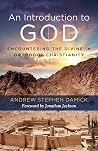
― An Introduction to God: Encountering the Divine in Orthodox Christianity
― An Introduction to God: Encountering the Divine in Orthodox Christianity
“Humility is a critical element in our salvation, both in our communion with God and in our communion with other people. In practical terms, this means that if we want to be transformed by God, we can’t do it on our own terms. Our acceptance of God’s proposal must be voluntary, but we must accept it. We cannot dictate the terms of our salvation. We also cannot dictate the terms of someone else’s salvation. No matter what someone else’s temptation or sin is, if we lay down judgment on that person—including forcing him out of the community, shunning him, or speaking evil of him—then we ourselves have departed from the path of salvation. If we compare ourselves to others, then we should always come away with the conclusion that, should we make it into the Kingdom, we will go in last. I am the worst of sinners (1 Tim. 1:15). I may not have the particular sin I see in my brother, but my sins collectively are much worse. My brother may be repenting, but I am not. I am usurping Christ’s place if I judge him.”
― An Introduction to God: Encountering the Divine in Orthodox Christianity
― An Introduction to God: Encountering the Divine in Orthodox Christianity
“One of the principal problems with sola gratia is that grace is understood as something other than God Himself. In Reformation theology, grace is “unmerited favor,” an attitude in God, often contrasted with His wrath. For Orthodoxy, grace is uncreated—that is, grace is God, His actual presence and activity—His energies. But if grace is merely “favor,” then union with God (theosis) is precluded. The distance from God sometimes found in Roman Catholic theology is retained in Protestantism.”
― Orthodoxy and Heterodoxy: Finding the Way to Christ in a Complicated Religious Landscape
― Orthodoxy and Heterodoxy: Finding the Way to Christ in a Complicated Religious Landscape
“Even if he or she does not consciously worship demons, every sinful thing a person does puts him or her into union with demonic forces. Likewise, whenever he or she does a work that belongs to God—not just “good deeds” or “religious acts” like prayer or fasting but every creative act of beauty, order, love, humility, kindness, and justice—it puts him or her into union with God. Every good thing we do is a pledge or renewal of allegiance to Yahweh our God. We may therefore understand the life of Christian faithfulness as an extended exorcism, banishing away all that is evil and uniting us with all that is good.”
― The Lord of Spirits: An Orthodox Christian Framework for the Unseen World and Spiritual Warfare
― The Lord of Spirits: An Orthodox Christian Framework for the Unseen World and Spiritual Warfare
“Of the doctrines and injunctions kept by the Church, some we have from instruction. But some we have received, from Apostolic Tradition, by succession in private [i.e., unwritten tradition]. Both the former and the latter have one and the same force for piety, and this will be contradicted by no one who has ever so little knowledge in the ordinances of the Church; for were we to dare to reject unwritten customs, as if they had no great importance, we should insensibly mutilate the Gospel, even in the most essential points, or, rather, for the teaching of the Apostles leave but an empty name.17”
― An Introduction to God: Encountering the Divine in Orthodox Christianity
― An Introduction to God: Encountering the Divine in Orthodox Christianity
“The greatest weakness of solus Christus is that it subtracts from the fullness of Christ in His Body, the Church, not only by pitting the clergy against the laity and ignoring the role of the departed members of the Church (the saints), but by suggesting a disjunction even between the Head (Christ) and the Body (the Church). If we isolate Christ “alone” and pay no attention to how He saves us through and with other members of the Body, then we are in essence discarding ecclesiology, or at least greatly reducing it.”
― Orthodoxy and Heterodoxy: Finding the Way to Christ in a Complicated Religious Landscape
― Orthodoxy and Heterodoxy: Finding the Way to Christ in a Complicated Religious Landscape
“Hidden under that English translation blessed is the Greek word makarios. This is not the usual word, evlogitos, which literally means “blessed” (as in having a blessing pronounced on one). Makarios is a word from the ancient world that instead referred to the blissful life of the gods in their heavenly realm. It is also used in the Scripture to refer to the joy, the glory, the happiness, the unity, and the love that the faithful angels share with God. Thus, the part of the Lord’s prayer that prays that His will should be done “on earth as it is in heaven” is precisely a prayer that He would extend this same blissful happiness to those on earth.”
― Arise O God: The Gospel of Christ’s Defeat of Demons, Sin, and Death
― Arise O God: The Gospel of Christ’s Defeat of Demons, Sin, and Death
“Justin Martyr in the second century makes this same argument, saying that these truths come via the prophets: For Moses is more ancient than all the Greek writers. And whatever both philosophers and poets have said concerning the immortality of the soul, or punishments after death, or contemplation of things heavenly, or doctrines of the like kind, they have received such suggestions from the prophets as have enabled them to understand and interpret these things. And hence there seem to be seeds of truth [spermatikos logos] among all men; but they are charged with not accurately understanding [the truth] when they assert contradictories.”
― The Lord of Spirits: An Orthodox Christian Framework for the Unseen World and Spiritual Warfare
― The Lord of Spirits: An Orthodox Christian Framework for the Unseen World and Spiritual Warfare
“In the 1970s, the Russian Orthodox hieromonk Fr. Seraphim Rose famously said that he believed that there was a spirit in the Charismatic movement (which was then having a small impact in a handful of places in Orthodoxy), but that he believed that it was not the Holy Spirit. That is, he suggested that its origins were demonic: The “charismatic” texts themselves make it quite clear that what is involved in these experiences—when they are genuine and not merely the product of suggestion—is not merely the development of some mediumistic ability, but actual possession by a spirit. These people would seem to be correct in calling themselves “spirit-filled”—but it is certainly not the Holy Spirit with which they are filled! (Fr. Seraphim Rose, Orthodoxy and the Religion of the Future, 157)”
― Orthodoxy and Heterodoxy: Finding the Way to Christ in a Complicated Religious Landscape
― Orthodoxy and Heterodoxy: Finding the Way to Christ in a Complicated Religious Landscape
“Sola scriptura is the most important defining and distinctive doctrine for all of Protestantism. With this principle, any doctrine or practice may be “proven” from Scripture, depending on how one reads it. On this principle all the Protestant denominations were founded. Without it, the question of ecclesiastical authority comes into play, and the believer finds that he has to be obedient to someone else’s interpretation of the Scripture.”
― Orthodoxy and Heterodoxy: Finding the Way to Christ in a Complicated Religious Landscape
― Orthodoxy and Heterodoxy: Finding the Way to Christ in a Complicated Religious Landscape
“More often, belief falls away after participation falls away, showing that conviction flows from conditioning.”
― The Lord of Spirits: An Orthodox Christian Framework for the Unseen World and Spiritual Warfare
― The Lord of Spirits: An Orthodox Christian Framework for the Unseen World and Spiritual Warfare