Goodreads helps you follow your favorite authors. Be the first to learn about new releases!
Start by following Éva Pócs.
Showing 1-21 of 21
“These witches are experts in magic or sorcery; they may be healers, sorcerers, seers, or midwives; or they may be everyday people who practiced household magic and increased their fortunes through magic, to the detriment of a neighboring household.”
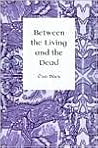
― Between the Living and the Dead: A Perspective on Witches and Seers in the Early Modern Age
― Between the Living and the Dead: A Perspective on Witches and Seers in the Early Modern Age
“(táltos are a characteristically Hungarian type of magician that a number of researchers regard as the Modern Age descendant of the pre-Christian Hungarian shaman),”
― Between the Living and the Dead: A Perspective on Witches and Seers in the Early Modern Age
― Between the Living and the Dead: A Perspective on Witches and Seers in the Early Modern Age
“Contacting the supernatural through trance techniques in order to accomplish community tasks was common among mediators connected with the system of witchcraft. This activity was aided and abetted by a helping spirit and corresponds to the criteria that are generally accepted for shamanism”
― Between the Living and the Dead: A Perspective on Witches and Seers in the Early Modern Age
― Between the Living and the Dead: A Perspective on Witches and Seers in the Early Modern Age
“As in Western, Northern, and Southern Europe, mora creatures contributed to the belief figure of the witch. In Eastern Europe this creature was the werewolf, and the Hungarian situation is peculiar in that the Hungarian witch was enriched by both.”
― Between the Living and the Dead: A Perspective on Witches and Seers in the Early Modern Age
― Between the Living and the Dead: A Perspective on Witches and Seers in the Early Modern Age
“In connection with this, it seems appropriate to apply Eliade's (1957, 1987) differentiation between shamanism in general and shamanism in the strict sense, i.e., characteristic of Siberia and Central Asia. This means that in these places the religious life of the society was organized around the shaman, or the institution of shamanism. This is in contrast to Europe where, with respect to Germanic or Slavic shamanism, the function was not central, or at least this is not apparent from the data at our disposal. Consequently, using Lewis's (1971) definition of cults of possession, shamanism can be viewed as peripheral, in comparison to the phenomenon of "classical shamanism," which was central.”
― Between the Living and the Dead: A Perspective on Witches and Seers in the Early Modern Age
― Between the Living and the Dead: A Perspective on Witches and Seers in the Early Modern Age
“In this sense village witchcraft was already known at the beginning of the European witch hunt in the Jura Mountain region of the fifteenth century. The time of its inception is, of course, unclear; however, it is certain that the modern institution of village witchcraft has historical and geographical borders.”
― Between the Living and the Dead: A Perspective on Witches and Seers in the Early Modern Age
― Between the Living and the Dead: A Perspective on Witches and Seers in the Early Modern Age
“The most important roles of the village magical specialists were healing, fortune-telling, finding lost objects or animals, exposing thieves, "seeing" buried treasure or money, and communicating messages from the dead. However, there does seem to be some variety in the roles of the weather magicians and the fertility magicians. Generally speaking, the community magicians' tasks of obtaining rain and warding off hail seem to have been important in the central southeastern European highlands: the Alps, the Carpathians, and the Balkans.{7} In many more cases and aspects than research had generally assumed, and beyond their manipulation of supernatural powers as magicians, these village specialists were also mediators who contacted the other world through the technique of trance.”
― Between the Living and the Dead: A Perspective on Witches and Seers in the Early Modern Age
― Between the Living and the Dead: A Perspective on Witches and Seers in the Early Modern Age
“The mara/mahr/mora and werewolf creatures have to be mentioned in several contexts: first, when referring to general characteristics; second, with the fundaments of the common belief system of the European witch; and also in the context of the conditions for supernatural communication. Mara/ mahr/mora creatures are the characteristic embodiments of double images, as well as of the creatures that have doubles—for example, the seers who are capable of trance. Slav researchers write about the assumed Indo-European relationship between the Germanic maralmahrlmare, the French cauchemar, the southern Slavic moralmuralzmoralmorinalmorava, the eastern Slavic (kiki)mora, the Romanian moroi, and so forth; one probable source of origin is related to the Indo-European word *moros (death).{50} The same creatures can be known under different names—for example, the German Alp or Trut.”
― Between the Living and the Dead: A Perspective on Witches and Seers in the Early Modern Age
― Between the Living and the Dead: A Perspective on Witches and Seers in the Early Modern Age
“The archaic, kindred characteristics of the guardians of the good dead remain apparent in many peripheral areas of Europe to this day. (For example, in Eastern and Southeastern Europe storm-demon spirits protect the agricultural fertility of their villages. They are thought to fight battles in the clouds with the guardians of neighboring communities).{46} In several European regions— in the Balkans, Ireland, and Scandinavia—a few attributes of the good dead have endured even into the Modern Age in a characteristic fairy mythology connected with death”
― Between the Living and the Dead: A Perspective on Witches and Seers in the Early Modern Age
― Between the Living and the Dead: A Perspective on Witches and Seers in the Early Modern Age
“Some twenty years later, in Hexensabbat, his second book on the subject, Ginzburg made an attempt to outline the totality of the systems of European shamanism (which also embrace the Hungarian táltos) and, using archaeological and history of religion sources, to mark out the place of European witchcraft in the development of shamanism over time. Also worthy of mention here is Gábor Klaniczay, who expanded the circle of European sorcerers that can be called "shamanistic" and linked the Hungarian táltos with these systems on the basis of research on the southern Slavs.”
― Between the Living and the Dead: A Perspective on Witches and Seers in the Early Modern Age
― Between the Living and the Dead: A Perspective on Witches and Seers in the Early Modern Age
“An exception is that the task of protecting the town or village was characteristic only of the táltos; some Hungarian female táltos virtually ftilfilled the role of a guardian spirit. Twentieth-century táltos legends often contain the motif of a shamanistic battle for rain”
― Between the Living and the Dead: A Perspective on Witches and Seers in the Early Modern Age
― Between the Living and the Dead: A Perspective on Witches and Seers in the Early Modern Age
“Among the other types of seers that emerge in the research from the line of shamanistic fertility magicians, the so-called fairy magicians have a significant role from the perspective of our subject matter. These were charismatic healers who maintained a ritual connection with a supernatural fairy world.”
― Between the Living and the Dead: A Perspective on Witches and Seers in the Early Modern Age
― Between the Living and the Dead: A Perspective on Witches and Seers in the Early Modern Age
“In Richard Kieckhefer's summary of European witch hunts, which examines the traits of those falling victim to accusation, three categories are defined. These are persons caught in the act of actual (positive or negative) sorcery; well-meaning sorcerers or healers who lost either the authorities' or their clients' trust; and a third group who did nothing and in whose cases the accusation of maleficium was merely an outlet for tensions that had arisen between neighbors.{13} Christina Larner, in summarizing information derived from the Scottish witch trials, expands this list by adding people reputed to be witches, that is, individuals surrounded by an aura of witch beliefs.{14} In my view, especially in the present context, the importance of the latter has to be emphasized: in European belief systems they are the witches par excellence, supernatural witches who, according to the beliefs traditionally attributed to them, are capable of maleficium in a supernatural way.”
― Between the Living and the Dead: A Perspective on Witches and Seers in the Early Modern Age
― Between the Living and the Dead: A Perspective on Witches and Seers in the Early Modern Age
“From the Celts to the people of the Baltic, the outlines of a common Indo-European inheritance seem to emerge. This is connected to the cult of the dead, the dead bringing fertility, to sorcery, and shamanism in relation to the different gods of the dead, which are linked to shamanism that ensured fertility by way of the dead.”
― Between the Living and the Dead: A Perspective on Witches and Seers in the Early Modern Age
― Between the Living and the Dead: A Perspective on Witches and Seers in the Early Modern Age
“These creatures (the term "mora creatures" is used from here on to refer to all European versions) are in close relationship with the images of doubles mentioned above: mora creatures are generally human beings who are able to send their souls out at night while in a trance. Thus they can make journeys by assuming the shapes of animals (snakes”
― Between the Living and the Dead: A Perspective on Witches and Seers in the Early Modern Age
― Between the Living and the Dead: A Perspective on Witches and Seers in the Early Modern Age
“The Hungarian term for witch”
― Between the Living and the Dead: A Perspective on Witches and Seers in the Early Modern Age
― Between the Living and the Dead: A Perspective on Witches and Seers in the Early Modern Age
“The image of a soul that departs from its body is familiar in all European cultures, as is the belief in alter egos, or doubles, that appear during altered states of consciousness. Although the richest sources for this are Germanic and Celtic (from the Middle Ages), and from our perspective the most extensive studies are also based upon those sources,{47} we are actually talking about common Indo-European (and similarly Hungarian) beliefs. In essence these are that humans have a double (to use one of the most frequently applied European terms, "shadow"; also ancient Nordic fylgja and Gaelic co-choisiche, and so forth) that can detach from, leave, or during a trance be sent by its owner, and after death live on as a dead soul. It can have physical and spiritual (soul) variants: the material variant being the "second body," an exact physical replica of the human; and the spiritual variant being a phantom body, a haunting figure visible during dreams or trances. It has permanent "escorting soul" variants too; it can also fulfill the role of a "fate soul.”
― Between the Living and the Dead: A Perspective on Witches and Seers in the Early Modern Age
― Between the Living and the Dead: A Perspective on Witches and Seers in the Early Modern Age
“According to the social-anthropological interpretation of the concept, witchcraft is both an ideology that explains human misfortune and an institution that regulates communal conflicts.”
― Between the Living and the Dead: A Perspective on Witches and Seers in the Early Modern Age
― Between the Living and the Dead: A Perspective on Witches and Seers in the Early Modern Age
“This connection is an additional characteristic of professional seers”
― Between the Living and the Dead: A Perspective on Witches and Seers in the Early Modern Age
― Between the Living and the Dead: A Perspective on Witches and Seers in the Early Modern Age