Goodreads helps you follow your favorite authors. Be the first to learn about new releases!
Start by following Francis Crick.

Showing 1-24 of 24
“There is no scientific study more vital to man than the study of his own brain. Our entire view of the universe depends on it.”
―
―
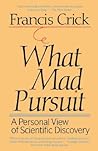
“It is not easy to convey, unless one has experienced it, the dramatic feeling of sudden enlightenment that floods the mind when the right idea finally clicks into place. One immediately sees how many previously puzzling facts are neatly explained by the new hypothesis. One could kick oneself for not having the idea earlier, it now seems so obvious. Yet before, everything was in a fog.”
― What Mad Pursuit: A Personal View of Scientific Discovery
― What Mad Pursuit: A Personal View of Scientific Discovery
“The dangerous man is the one who has only one idea, because then he'll fight and die for it."
[As quoted in The New Yorker, April 25, 2011]”
―
[As quoted in The New Yorker, April 25, 2011]”
―
“Christianity may be OK between consenting adults in private but should not be taught to young children.”
―
―
“How do I know what I think until I hear what I say?”
―
―
“Human beings... are far too prone to generalize from one instance. The technical word for this, interestingly enough, is superstition.”
―
―
“It is essential to understand our brains in some detail if we are to assess correctly our place in this vast and complicated universe we see all around us.”
― What Mad Pursuit: A Personal View of Scientific Discovery
― What Mad Pursuit: A Personal View of Scientific Discovery
“It is one of the striking generalizations of biochemistry—which surprisingly is hardly ever mentioned in the biochemical text-books—that the twenty amino acids and the four bases, are, with minor reservations, the same throughout Nature. As far as I am aware the presently accepted set of twenty amino acids was first drawn up by Watson and myself in the summer of 1953 in response to a letter of Gamow's.”
―
―
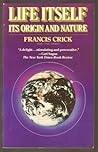
“An honest man, armed with all the knowledge available to us now, could only state that in some sense, the origin of life appears at the moment to be almost a miracle, so many are the conditions which would have had to have been satisfied to get it going.”
― Life Itself: Its Origin and Nature
― Life Itself: Its Origin and Nature
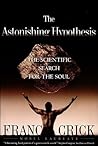
“A person's mental activities are entirely due to the behavior of nerve cells, glial cells, and the atoms, ions, and molecules that make them up and influence them.”
― Astonishing Hypothesis: The Scientific Search for the Soul
― Astonishing Hypothesis: The Scientific Search for the Soul
“All approaches at a higher level are suspect until confirmed at the molecular level.”
― What Mad Pursuit
― What Mad Pursuit
“It is amateurs who have one big bright beautiful idea that they can never abandon. Professionals know that they have to produce theory after theory before they are likely to hit the jackpot.”
―
―
“I had discovered the gossip test—what you are really interested in is what you gossip about.”
― What Mad Pursuit
― What Mad Pursuit
“Only gradually did I realize that this lack of qualification could be an advantage. By the time most scientists have reached age thirty they are trapped by their own expertise. They have invested so much effort in one particular field that it is often extremely difficult, at that time in their careers, to make a radical change. I, on the other hand, knew nothing, except for a basic training in somewhat old-fashioned physics and mathematics and an ability to turn my hand to new things. I”
― What Mad Pursuit
― What Mad Pursuit
“Whatever has a beginning must have an ending.”
―
―
“The major credit I think Jim and I deserve . . . is for selecting the right problem and sticking to it. It’s true that by blundering about we stumbled on gold, but the fact remains that we were looking for gold.”
―
―
“It has not escaped our notice that the specific pairing we have postulated immediately suggests a possible copying mechanism for the genetic material.”
―
―
“The hallmark of a successful theory is that it predicts correctly facts that were not known when the theory was presented, or, better still, which were then known incorrectly. A good theory should have at least two characteristics: it should be in sharp contrast to at least one alternative idea and it should make predictions which are testable.”
― Life Itself: Its Origin and Nature
― Life Itself: Its Origin and Nature
“An honest man, armed with all the knowledge available to us now, could only state that in some sense, the origin of life appears at the moment to be almost a miracle, so many are the conditions which would have had to have been satisfied to get it going. But this should not be taken to imply that there are good reasons to believe that it could not have started on the earth by a perfectly reasonable sequence of fairly ordinary chemical reactions. The plain fact is that the time available was too long, the many microenvironments on the earth's surface too diverse, the various chemical possibilities too numerous and our own knowledge and imagination too feeble to allow us to be able to unravel exactly how it might or might not have happened such a long time ago, especially as we have no experimental evidence from that era to check our ideas against. Perhaps in the future we may know enough to make a considered guess, but at the present time we can only say that we cannot decide whether the origin of life on earth was an extremely unlikely event or almost a certainty—or any possibility in between these two extremes.”
― Life Itself: Its Origin and Nature
― Life Itself: Its Origin and Nature
“The problem of the origin of life is, at bottom, a problem in organic chemistry—the chemistry of carbon compounds—but organic chemistry within an unusual framework. Living things, as we shall see, are specified in detail at the level of atoms and molecules, with incredible delicacy and precision. At the beginning it must have been molecules that evolved to form the first living system. Because life started on earth such a long time ago—perhaps as much as four billion years ago—it is very difficult for us to discover what the first living things were like. All living things on earth, without exception, are based on organic chemistry, and such chemicals are usually not stable over very long periods of time at the range of temperatures which exist on the earth's surface. The constant buffeting of thermal motion over hundreds of millions of years eventually disrupts the strong chemical bonds which hold the atoms of an organic molecule firmly together over shorter periods; over our own lifetime, for example. For this reason it is almost impossible to find "molecular fossils" from these very early times.”
― Life Itself: Its Origin and Nature
― Life Itself: Its Origin and Nature
“Life, as we know it on earth, appears as a synthesis of two macromolecular systems. The proteins, because of their versatility and chemical reactivity, do all the work but are unable to replicate themselves in any simple way. The nucleic acids seem tailor-made for replication but can achieve rather little else compared with the more elaborate and better equipped proteins. RNA and DNA are the dumb blondes of the biomolecular world, fit mainly for reproduction (with a little help from proteins) but of little use for much of the really demanding work. The problem of the origin of life would be a great deal easier to approach if there were only one family of macromolecules, capable of doing both jobs, replication and catalysis, but life as we know it employs two families. This may well be due to the fact that no macromolecule exists which could conveniently carry out both functions, because of the limitations of organic chemistry; because, that is, of the nature of things.”
― Life Itself: Its Origin and Nature
― Life Itself: Its Origin and Nature
“Susan Blackmore: Filozofların rolünden bahsettin, sence filozofların bundaki yeri ne veya bu noktada bugüne kadar nasıl bir rol oynadılar?
Francis Crick: Filozoflarla alakalı bir sürü espri yapılır, burada onları yapmayacağım. İşin özü, filozoflar güzel sorular sorsalar da cevapları gösterecek teknikten yoksunlar. O nedenle tartışmalarına çok da rağbet etmemek lazım. Nasıl bir ilerleme katettiklerini sorarak da cevaplayabiliriz bu soruyu. Örneğin atomun mahiyeti gibi, zamanında felsefi addedilen birçok sorun artık fiziğin bir parçası haline geldi. Bazıları, filozofların esas amacının, çözülemeyen sorunlarla uğraşmak olduğunu öne sürse de, sorunlar nihayetinde çözüme ulaşıyor ve bu da bilimsel bir yolla gerçekleşiyor. Bir filozofun bir sorunu çözmede başarıya ulaştığı kaç tane örnek var diye soracak olursanız, bildiğim kadarıyla hiçbir örnek yok.
Temelde filozofların kullandıkları esas teknik, düşünce deneyidir ve burada sonsuz tartışmalar yürütebilirsiniz. Mesela John Searle'ün Çince odasını ele alalım. Bence burada da aynı dezavantajlar söz konusu. Bu düşünce deneyine göre, yalnızca sentaks işini görebilen bir sistemin semantik işini görmesi mümkün değildir. Bunu söylediğinde artık ileri doğru atılacak bir adım kalmıyor ve zaten herhangi bir şekilde kanıtlamış da olmuyorsun. Bunun tek istisnası iki örnektir ki o da normalde filozof olarak addedilmeyen, filozoflar gibi de düşünmeyen ama eşitlikler ve görsel imgeler üzerinden düşünen biri tarafından, yani Einstein tarafından gerçekleştirildi.”
―
Francis Crick: Filozoflarla alakalı bir sürü espri yapılır, burada onları yapmayacağım. İşin özü, filozoflar güzel sorular sorsalar da cevapları gösterecek teknikten yoksunlar. O nedenle tartışmalarına çok da rağbet etmemek lazım. Nasıl bir ilerleme katettiklerini sorarak da cevaplayabiliriz bu soruyu. Örneğin atomun mahiyeti gibi, zamanında felsefi addedilen birçok sorun artık fiziğin bir parçası haline geldi. Bazıları, filozofların esas amacının, çözülemeyen sorunlarla uğraşmak olduğunu öne sürse de, sorunlar nihayetinde çözüme ulaşıyor ve bu da bilimsel bir yolla gerçekleşiyor. Bir filozofun bir sorunu çözmede başarıya ulaştığı kaç tane örnek var diye soracak olursanız, bildiğim kadarıyla hiçbir örnek yok.
Temelde filozofların kullandıkları esas teknik, düşünce deneyidir ve burada sonsuz tartışmalar yürütebilirsiniz. Mesela John Searle'ün Çince odasını ele alalım. Bence burada da aynı dezavantajlar söz konusu. Bu düşünce deneyine göre, yalnızca sentaks işini görebilen bir sistemin semantik işini görmesi mümkün değildir. Bunu söylediğinde artık ileri doğru atılacak bir adım kalmıyor ve zaten herhangi bir şekilde kanıtlamış da olmuyorsun. Bunun tek istisnası iki örnektir ki o da normalde filozof olarak addedilmeyen, filozoflar gibi de düşünmeyen ama eşitlikler ve görsel imgeler üzerinden düşünen biri tarafından, yani Einstein tarafından gerçekleştirildi.”
―
“It took over twenty-five years for our model of DNA to go from being only rather plausible, to being very plausible (as a result of the detailed work on DNA fibers), and from there to being virtually certainly correct. Even then it was correct only in outline, not in”
― What Mad Pursuit
― What Mad Pursuit
“A theory should not attempt to explain all the facts, because some of the facts are wrong.”
―
―