Goodreads helps you follow your favorite authors. Be the first to learn about new releases!
Start by following Richard Hanania.

Showing 1-4 of 4
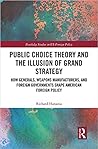
“The United States has not consciously chosen a grand strategy over the last several decades; rather it has made a series of policy decisions that have largely resulted from political motivations while being sold as part of a coherent plan after the fact, or more precisely, as a collection of coherent plans that are advocated for or forgotten about depending on the needs of the moment. Thus, those who want to change American foreign policy should not expect to succeed primarily by making arguments as to why the United States is implementing the wrong grand strategy. Rather, one would have to work to change the incentive structures that lead some ideas to gain currency, and government officials to make certain decisions but not others.”
― Public Choice Theory and the Illusion of Grand Strategy: How Generals, Weapons Manufacturers, and Foreign Governments Shape American Foreign Policy
― Public Choice Theory and the Illusion of Grand Strategy: How Generals, Weapons Manufacturers, and Foreign Governments Shape American Foreign Policy
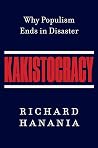
“A smaller but still significant risk of taking the neoliberal pill is you get more misguided adventures like the wars in Afghanistan and Iraq. Indeed, there’s no way that elites could get us into another Iraq today. This at first glance appears to be a good thing, but it’s been at the cost of our culture becoming more neurotic, cynical, parochial, and fearful. Americans wouldn’t go off and die by the thousands in Iraq today because they don’t think anything is worth fighting for or believing in. Young people aren’t even leaving the house. I’d rather be a country that occasionally fights stupid wars than one that shuts itself off from the rest of the world and gives up on any idealistic vision of the future.”
―
―
“this book claims two important points: that leaders will tend to behave in a way that is consistent with what concentrated interests desire, and one must look at behavior, rather than directly at what people say or even what they truly "believe," to achieve a nontrivial conclusion about causation in the case of any particular decision. Regardless of what leaders believe, and no matter how cynical or idealistic they are, America does not have anything that we can reasonably call a grand strategy, but leaders who are motivated by a combination of ideas and short-term political goals in a system in which their incentive structure is shaped by concentrated interests.”
― Public Choice Theory and the Illusion of Grand Strategy: How Generals, Weapons Manufacturers, and Foreign Governments Shape American Foreign Policy
― Public Choice Theory and the Illusion of Grand Strategy: How Generals, Weapons Manufacturers, and Foreign Governments Shape American Foreign Policy
“Today, the number of individuals killed by sanctions actually rivals and in some cases surpasses those killed as a result of American
military intervention. Yet the use of sanctions as a tool is puzzling from a strategic perspective, given the academic consensus that they do not work”
― Public Choice Theory and the Illusion of Grand Strategy: How Generals, Weapons Manufacturers, and Foreign Governments Shape American Foreign Policy
military intervention. Yet the use of sanctions as a tool is puzzling from a strategic perspective, given the academic consensus that they do not work”
― Public Choice Theory and the Illusion of Grand Strategy: How Generals, Weapons Manufacturers, and Foreign Governments Shape American Foreign Policy