Goodreads helps you follow your favorite authors. Be the first to learn about new releases!
Start by following Michael Reisch.

Showing 1-10 of 10
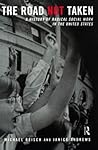
“social workers today are hardly radicals; few engage in social and political action even of a reformist nature. In 1996, when President Bill Clinton signed legislation that “end[ed] welfare as we know it,” there was little organized protest from the social work profession. Although the act terminated a 60-year-old entitlement to assistance for low-income children and their caretakers that social workers had helped to create and had defended vigorously for decades, NASW endorsed Clinton for reelection with little reference to the issue. In marked contrast to past generations, the protests of radical social workers received scant attention inside and outside the profession.”
― The Road Not Taken: A History of Radical Social Work in the United States
― The Road Not Taken: A History of Radical Social Work in the United States
“Reflecting a long-standing schism within the profession, which persists into the twenty-first century, RASSW argued that “a dichotomy exists within NASW between” social activists and clinical practitioners, which is exacerbated by the promotion of licensing. When all social services are threatened by the conservative political and ideological climate, a focus on licensing undermines the profession’s efforts to fight for “the survival and well-being of millions” (RASSW, February 1,1976, p. 3). Citing the opposition to licensing by such groups as the National Association of Black Social Workers (NABSW), RASSW asserted that efforts by NASW to promote licensing contradict its stated intent to fight racism within the social service field and were destructive of professional unity. Promoting licensing, in lieu of uniting around this struggle “is to fiddle while Rome burns” (p. 3). The paper also disputed the linkage between licensing and service quality. It added an interesting twist to the growing debate over professionalization by arguing that “under current political conditions licensure may actually decrease the accountability of social workers to their clients” (RASSW, February 1,1976, p. 5). The paper concluded that licensure neither protected nor improved service quality; rather, it divided workers and undermined their job security, as the recent attack on public education in New York City had demonstrated. Instead of fighting for licensure, RASSW proposed an alternative strategy that focused on building worker-client-labor-community coalitions and combating racism in social service agencies and other institutions.”
― The Road Not Taken: A History of Radical Social Work in the United States
― The Road Not Taken: A History of Radical Social Work in the United States
“The name of the JPHS exemplified how the more politically acceptable term, “progressive,” came to replace the label radical. Whereas in the 1940s and 1950s the term progressive was used to connote someone associated with the Communist Party or its support organizations, by the 1980s it came to mean anyone with views to the left of center. Within this parlance, by 1992 a centrist politician like Bill Clinton could refer to himself as a progressive.”
― The Road Not Taken: A History of Radical Social Work in the United States
― The Road Not Taken: A History of Radical Social Work in the United States
“RASSW published its first public position paper in February 1976 on the issue of licensure. Placing the issue in the broader context of the economic crisis, the paper addressed three questions: (1) the role of NASW; (2) whether licensing of social workers was racist; and (3) the relationship of licensure to service quality and accountability.”
― The Road Not Taken: A History of Radical Social Work in the United States
― The Road Not Taken: A History of Radical Social Work in the United States
“believe consciousness raising and community work are social work, while clinical practice is a flaccid permutation of psychiatry. Community work is constructive, assertive, and empowering; clinical work is a palliative that subordinates social work and social workers to a medical model which is foreign, even antagonistic, to my view of social work… . Sometimes I feel clinicians are unethical because they are waiting for a crisis to happen so they can fix it, rather than promoting healthy communities.”
― The Road Not Taken: A History of Radical Social Work in the United States
― The Road Not Taken: A History of Radical Social Work in the United States
“Further evidence of the repressive climate these attacks produced can be found in the reluctance of Lathrop and Abbott to ally themselves with Margaret Sanger and use the clinics established by Sheppard-Towner to promote birth control education. Fear of incurring further attacks by the AM A lay at the heart of this decision (Rosenberg, 1992). On a broader scale, the repressive political climate and a slew of reactionary lawsuits combined with the promotion of a consumer culture and sexual freedom by mass advertising to channel the energies of many women away from social justice issues toward self-liberation and sexual freedom, a trend with remarkable similarities to contemporary events (Addams, 1935; Faludi, 1991; Ryan, 1979).”
― The Road Not Taken: A History of Radical Social Work in the United States
― The Road Not Taken: A History of Radical Social Work in the United States
“As they debated the ethics and efficacy of activism, social workers were under attack from both conservative politicians and organized client groups. At the 1970 National Conference on Social Welfare conference, Johnnie Tillmon, the leader of the NWRO, blamed social workers (rather than the socio-economic system) for the problems welfare recipients faced. At the other end of the political spectrum the Nixon administration frequently trumpeted the view that social workers promoted community programs out of self-interest. Given this climate, it was no surprise that a popular book of the time referred to social work as “The Unloved Profession” (Richan & Mendelsohn, 1973). Social workers, in Tom Wolfes (1970) memorable phrase, had become one of the “flak catchers” of a turbulent society—bombarded with criticisms from ideological opponents of the left and the right. Despite the presence of radical”
― The Road Not Taken: A History of Radical Social Work in the United States
― The Road Not Taken: A History of Radical Social Work in the United States
“Withorn asserted that the concept of professionalism itself was based on capitalist premises about work and social status. The “ideology of professionalization” (Wenocur & Reisch, 1983) led social workers to establish a form of monopoly control of the helping process and, inevitably, to hierarchical relationships between workers and clients and the rejection of collective forms of organization such as unions. Unionization of social workers had, in fact, slowed dramatically since the early 1970s. Radical social work unions had virtually disappeared since the early 1950s despite intermittent efforts of groups like RASSW and the Radical Social Work Collective in Philadelphia to organize them (Radical Social Work Collective, April 26,1978; RASSW, October 20,1979; Tambor, 1981, 1973). Calls by radical social workers to form or collaborate with unions continued to fall on deaf ears into the 1990s (Epstein, 1991).”
― The Road Not Taken: A History of Radical Social Work in the United States
― The Road Not Taken: A History of Radical Social Work in the United States
“Social workers must be educated on the major political and economic issues to fight effectively for clients’ needs. Major social welfare issues and programs must be examined from a class point of view. Human services are a right, not a privilege. Social welfare needs should be a government priority, not military spending or corporate profits. Social action, in concert with others, is necessary to bring about basic changes. Racism, sexism, and other divisive tools must be exposed and eliminated (RASSW, 1974).”
― The Road Not Taken: A History of Radical Social Work in the United States
― The Road Not Taken: A History of Radical Social Work in the United States
“After 1955, the AASW’s successor, the National Association of Social Workers (NASW) assisted the FBI in the investigation of suspected radicals such as Meyer Schreiber and Margaret Wheeler.”
― The Road Not Taken: A History of Radical Social Work in the United States
― The Road Not Taken: A History of Radical Social Work in the United States