Goodreads helps you follow your favorite authors. Be the first to learn about new releases!
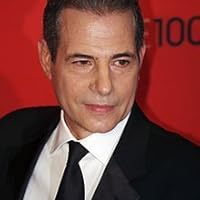
Start by following Richard Stengel.
Showing 1-26 of 26
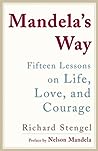
“Conditions plus principles determine strategy.”
― Mandela's Way: Lessons for an Uncertain Age
― Mandela's Way: Lessons for an Uncertain Age
“And that is how he would describe courage: pretending to be brave. Fearlessness is stupidity. Courage is not letting the fear defeat you.”
― Mandela's Way: Lessons for an Uncertain Age
― Mandela's Way: Lessons for an Uncertain Age
“By maturity, he meant that he learned to control those more youthful impulses, not that he was no longer stung or hurt or angry. It is not that you always know what to do or how to do it, it is that you are able to tamp down the emotions and anxieties that get in the way of seeing the world as it is. You can see through them, and that will see you through.”
― Mandela's Way: Lessons for an Uncertain Age
― Mandela's Way: Lessons for an Uncertain Age
“leadership at its most fundamental is about moving people in a certain direction—usually through changing the direction of their thinking and their actions. And the way to do that is not necessarily by charging out front and saying, “Follow me,” but by empowering or pushing others to move forward ahead of you. It is through empowering others”
― Mandela's Way: Lessons for an Uncertain Age
― Mandela's Way: Lessons for an Uncertain Age
“Yes, emotions may be authentic, and authenticity is a modern virtue, but one can be authentic without being unnecessarily revealing.”
― Mandela's Way: Lessons for an Uncertain Age
― Mandela's Way: Lessons for an Uncertain Age
“Courage is not the absence of fear, he taught me. It’s learning to overcome it.”
― Mandela's Way: Lessons for an Uncertain Age
― Mandela's Way: Lessons for an Uncertain Age
“leadership often means having to choose between two bad options and that good men have to make decisions that have bad consequences.”
― Mandela's Way: Lessons for an Uncertain Age
― Mandela's Way: Lessons for an Uncertain Age
“The Renaissance idea of individualism never penetrated Africa like it did Europe and America. The African model of leadership is better expressed as ubuntu, the idea that people are empowered by other people, that we become our best selves through unselfish interaction with others.”
― Mandela's Way: Lessons for an Uncertain Age
― Mandela's Way: Lessons for an Uncertain Age
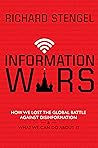
“Disinformation is in part the cause for what Hannah Arendt once called the curious mixture of “gullibility and cynicism” of voters in modern politics. Disinformation, she suggests, helps create the strange circumstance in which people “believe everything and nothing, think that everything was possible and nothing was true.” That is the goal—that there’s no empirical reality that we can all agree on. The ultimate danger is not that lies will replace truth, or that disinformation will substitute for factual information, but rather that the distinction between the two will evaporate—that the very idea of trying to discriminate between fact and fiction will no longer be a feature of our mental landscape. Then we would truly be living in a world where everything was possible and nothing was true.”
― Information Wars: How We Lost the Global Battle Against Disinformation and What We Can Do About It
― Information Wars: How We Lost the Global Battle Against Disinformation and What We Can Do About It
“Even after emerging from prison and becoming South Africa’s first democratically elected president, he continued”
― Mandela's Way: Lessons for an Uncertain Age
― Mandela's Way: Lessons for an Uncertain Age
“Trust is a foundation of leadership. We trust that a leader is honest, able, and has a vision of where to go. But trust operates on an even deeper level. We trust that a leader is who he appears to be, that the public person and the private one are the same.”
― Mandela's Way: Lessons for an Uncertain Age
― Mandela's Way: Lessons for an Uncertain Age
“With the dozens of prisoners I spoke to and got to know, one of the only things, perhaps the only thing they missed about prison was that intimate, daily, powerful connection to prisoner number 46664. I missed it too. But I knew also,as those men knew, that it could not be restored, that it was born of a certain time and place.”
―
―
“Zuckerberg launched into a discussion about the potential of artificial intelligence to spot violent-extremist content and disinformation. He actually got excited. It was clear that Zuckerberg thought AI was the critical tool in combating extremist messaging or any undesirable content. He said it was still years away, but he thought that artificial intelligence would eventually be able to flag about 80 percent of the dangerous content that’s out there, and humans would find the remaining 20 percent. This would be much more efficient than methods today, he said. He was confident that this was a solvable problem and added that we need to use computers for what computers are good at, and people for what people are good at. This seemed to be his mantra, and it wasn’t a bad one.”
― Information Wars: How We Lost the Global Battle Against Disinformation and What We Can Do About It
― Information Wars: How We Lost the Global Battle Against Disinformation and What We Can Do About It
“That was the moment when I understood more clearly than ever before that the liberation struggle was not so much about liberating blacks from bondage, it was about liberating white people from fear.”
― Mandela's Way: Lessons for an Uncertain Age
― Mandela's Way: Lessons for an Uncertain Age
“There is nothing beneath a leader.”
― Mandela's Way: Lessons for an Uncertain Age
― Mandela's Way: Lessons for an Uncertain Age
“Our adversaries are fighting to prevent people from having agency over their own lives. They are fighting to have autocrats and ideologies make decisions for us. They are fighting to dismantle the infrastructure of truth. They are fighting to undermine the idea that human beings can be moved by fact and reason. They are fighting for relativism, the idea that no idea is worth fighting for. When I was in government, I felt my job was to help people here and around the world determine their own destiny. At the heart of that fight was the idea that people could use information - factual information - to decide what was best for them. That idea is still worth fighting for.”
― Information Wars: How We Lost the Global Battle Against Disinformation and What We Can Do About It
― Information Wars: How We Lost the Global Battle Against Disinformation and What We Can Do About It
“Trump's election was also an enormous challenge to American public diplomacy and to the American brand. So much of what we believed and promoted as part of the American Brand --free speech, freedom of religion, the power of diversity, equality before the law, a level playing field -- was challenged by brand Trump.”
― Information Wars: How We Lost the Global Battle Against Disinformation and What We Can Do About It
― Information Wars: How We Lost the Global Battle Against Disinformation and What We Can Do About It
“truth. Some people will choose a categorical yes or no simply because they think it appears strong. But if we cultivate the habit of considering both—or even several—sides of a question, as Mandela did, of holding both good and bad in our minds, we may see solutions that would not otherwise have occurred to us. This way of thinking is demanding. Even if we remain wedded to our point of view, it requires us to put ourselves in the shoes of those with whom we disagree. That takes an effort of will, and it requires empathy and imagination. But the reward, as we can see in the case of Mandela, is something that can fairly be described as wisdom.”
― Mandela's Way: Lessons for an Uncertain Age
― Mandela's Way: Lessons for an Uncertain Age
“Mandela genuinely believed in the virtues of the team, and he knew that to get the best out of his own people, he had to make sure that they partook of the glory and, even more important, that they felt they were influencing his decisions.”
― Mandela's Way: Lessons for an Uncertain Age
― Mandela's Way: Lessons for an Uncertain Age
“He believes that, just as pretending to be brave can lead to acts of real bravery, seeing the good in other people improves the chances that they will reveal their better selves.”
― Mandela's Way: Lessons for an Uncertain Age
― Mandela's Way: Lessons for an Uncertain Age
“EVEN ON A REMOTE but beautiful island, Mandela needed a place apart. A place where he could lose himself to find himself.”
― Mandela's Way: Lessons for an Uncertain Age
― Mandela's Way: Lessons for an Uncertain Age
“With the dozens of prisoners I spoke to and got to know, one of the only things, perhaps the only thing they missed about prison was that intimate, daily, powerful connection to prisoner number 46664. I missed it too. But I knew also, as those men knew, that it could not be restored, that it was born of a certain time and place.”
―
―
“Just as pretending to be brave can become real courage, we may find that outfitting ourselves as the person we want to be brings us closer to becoming that person.”
― Mandela's Way: Lessons for an Uncertain Age
― Mandela's Way: Lessons for an Uncertain Age
“By behaving honorably, even to people who may not deserve it, he believes you can influence them to behave more honorably than they otherwise would. This”
― Mandela's Way: Lessons for an Uncertain Age
― Mandela's Way: Lessons for an Uncertain Age
“Unseen wounds are very painful, even more painful than the wounds you can see.” It was clear to me that he was talking about himself too.”
― Mandela's Way: Lessons for an Uncertain Age
― Mandela's Way: Lessons for an Uncertain Age
“We tend to think of risk as physical daring, like attempting a dangerous climb, or as making a decision with an uncertain outcome, like putting our money into an investment that is not a sure thing. But Mandela believes in and takes emotional risks. He goes out on a limb and makes himself vulnerable by trusting others. We sometimes do that by confiding in others we don’t know well. Yet we rarely equate risk with trying to see what is decent, honest, and good in the people in our daily lives. “People will feel I see too much good in people,” Mandela once told me. “So it’s a criticism I have to put up with, and I’ve tried to adjust because whether it is so or not, it is something I think is profitable. It’s a good thing to assume, to act on the basis that others are men of integrity and honor, because you tend to attract integrity and honor if that”
― Mandela's Way: Lessons for an Uncertain Age
― Mandela's Way: Lessons for an Uncertain Age