Goodreads helps you follow your favorite authors. Be the first to learn about new releases!
Start by following Elizabeth Speller.

Showing 1-30 of 96
“He had long been indifferent to which side won; he wished only that one or the other would do so decisively while he was still alive.”
―
―
“Think not lightly, therefore, O Hadrian, of what I am saying. Boast not that you alone have encircled the world in your travels, for it is only the moon and stars that really make the journey around it. Moreover, do not think of yourself as beautiful and great and rich and the ruler of the inhabited world. Know you not that, being a man, you were born to be Life’s plaything, helpless in the hands of fortune and destiny, sometimes exalted, sometimes humbled lower than the grave. Will you not be able to learn what life is, Hadrian, in the light of many examples? Consider how rich with his golden nails was the king of the Lydians. Great as a commander of armies was the king of the Danaans, Agamemnon; daring and hardy was Alexander, king of the Macedonians. Heracles was fearless, the Cyclops wild and untamed, Odysseus shrewd and subtle, and Achilles beautiful to look upon. If fortune took away from these men the distinctions that were peculiarly their own, how much more likely is she to take them away from you?”
― Following Hadrian: A Second-Century Journey through the Roman Empire
― Following Hadrian: A Second-Century Journey through the Roman Empire
“The Romans learned what European armies were to discover hundreds of years later: that the best-trained and best-equipped fighting force in the world might come to grief against partisans fighting on their own territory and for a cause for which they would willingly sacrifice themselves and their families.”
― Following Hadrian: A Second-Century Journey through the Roman Empire
― Following Hadrian: A Second-Century Journey through the Roman Empire
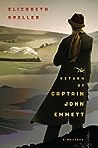
“When the shot came, the rooks rose outward from their roost with coarse cries of alarm, but in a few minutes they returned, settling back into the bare branches until the first light of dawn.”
― The Return of Captain John Emmett
― The Return of Captain John Emmett
“The always suspicious Tiberius was given an enormous fish and promptly beat the fisherman about the face with it. The fisherman, in thoughtless simplicity, responded with the comment that he was glad he hadn’t given the emperor the oversize lobster he had also collected.”
― Following Hadrian: A Second-Century Journey through the Roman Empire
― Following Hadrian: A Second-Century Journey through the Roman Empire
“History and speculation have placed Antinous at Hadrian’s side as the one great attachment of the emperor’s life, the loss of whom caused this mature, sophisticated and highly experienced ruler to allow himself to be subsumed by grief.”
― Following Hadrian: A Second-Century Journey through the Roman Empire
― Following Hadrian: A Second-Century Journey through the Roman Empire
“My friends who have seen Egypt say that these people would sell a story as easily as they would an ass. More easily, in fact, because the stock of stories is dependent only on imagination and a tongue to utter them, whereas oats are in finite supply. They stand by their monuments, inscribed in a language which no ordinary man can read, and, seeing that the weary visitor, dirty and far from home, appears a very ordinary man indeed, gush forth a farrago of rubbish about heroes and magical birds. He who revisits may find quite a different story attaches to this inscription or that.”
― Following Hadrian: A Second-Century Journey through the Roman Empire
― Following Hadrian: A Second-Century Journey through the Roman Empire
“As Rome was broadly tolerant of other religions, the token act of submission and recognition of Rome and the emperor was usually performed. This degree of pragmatism was inconceivable to Judea. They had one god and he was not a Roman emperor. Almost every aspect of Roman civic life was at war with Jewish beliefs. Jewish worship of a single god brought them into immediate conflict with the tolerant paganism of Greeks and Romans. Jews could not join the Roman army because they were unable to perform military duties on the Sabbath; Romans recalled with contempt the ease with which Pompey had originally taken Jerusalem, citing the Jews’ prioritising of religious observation over self-defence. The Romans were uneasy about Jewish circumcision, echoing the abhorrence of the practice felt by the Greeks, who disliked it largely on aesthetic grounds.”
― Following Hadrian: A Second-Century Journey through the Roman Empire
― Following Hadrian: A Second-Century Journey through the Roman Empire
“Domitian is an important figure in Hadrian’s life primarily because the choices and assumptions Hadrian was to make about how to be an emperor were undoubtedly influenced by the experience of living within the tensions of Domitian’s reign.”
― Following Hadrian: A Second-Century Journey through the Roman Empire
― Following Hadrian: A Second-Century Journey through the Roman Empire
“Today, without its exotic carapace, the exterior is a reddish brick within which the arches and buttresses that made such a feat of engineering possible are clearly visible. They have their own beauty; through such structural expertise the Pantheon has been in constant use for 1,875 years.”
― Following Hadrian: A Second-Century Journey through the Roman Empire
― Following Hadrian: A Second-Century Journey through the Roman Empire
“He built public buildings in all places and without number, but he inscribed his own name on none of them except the temple of his father Trajan. At Rome he restored the Pantheon, the voting enclosure, the Basilica of Neptune, very many Temples, the forum of Augustus, the baths of Agrippa . . . Also he constructed the bridge named after himself, a tomb on the bank of the Tiber and the temple of the Bona Dea.”
― Following Hadrian: A Second-Century Journey through the Roman Empire
― Following Hadrian: A Second-Century Journey through the Roman Empire
“Poetry, architecture, music, philosophy and mathematics all intrigued him and he was patron of them all, surrounding himself with men of genius: the poet and satirist Juvenal, the architect Apollodorus, the historians Tacitus, Suetonius and Arrian, the writers Pliny the Younger, Pausanias and Plutarch.”
― Following Hadrian: A Second-Century Journey through the Roman Empire
― Following Hadrian: A Second-Century Journey through the Roman Empire
“Within weeks of Trajan’s death the senate was coerced into agreeing to the summary execution of four alleged plotters against Hadrian’s life. Neither he nor the senate ever forgot it, and the senate never forgave him. The deaths also appeared to contradict the new emperor’s own stated intentions for his reign.”
― Following Hadrian: A Second-Century Journey through the Roman Empire
― Following Hadrian: A Second-Century Journey through the Roman Empire
“Caligula was not noticeably antisemitic; he treated the Jews no worse than he did other envoys. Nevertheless, as the emissaries traipsed after the emperor while he amused himself by asking them why they refused to eat pork and demanding they set up a statue to him in the Temple in Jerusalem and recognise him as a god, they cannot have felt optimistic that their arguments would be given full consideration.”
― Following Hadrian: A Second-Century Journey through the Roman Empire
― Following Hadrian: A Second-Century Journey through the Roman Empire
“Animula vagula blandula Hospes comesque corporis Quae nunc abibis in loca Pallidula, rigida, nudula, Nec, et ut soles, dabis iocos. Little wandering soul, Guest and companion of my body, Where are you going to now? Away, into bare, bleak places, Never again to share a joke.”
― Following Hadrian: A Second-Century Journey through the Roman Empire
― Following Hadrian: A Second-Century Journey through the Roman Empire
“Hadrian finds a man scratching his back against a post in the public baths and donates a slave to perform the duty for him, and money to keep him; on his next visit the emperor finds a whole group of old men hopefully rubbing their backs on posts, and confounds them by genially suggesting that they scratch each other.”
― Following Hadrian: A Second-Century Journey through the Roman Empire
― Following Hadrian: A Second-Century Journey through the Roman Empire
“Near this spot are deposited the remains of one who possessed Beauty without Vanity, Strength without Insolence, Courage without Ferocity, and all the Virtues of Man without his Vices. This praise, which would be unmeaning Flattery, if inscribed over human ashes, is but a just Tribute to the Memory of BOATSWAIN, a Dog.”
― Following Hadrian: A Second-Century Journey through the Roman Empire
― Following Hadrian: A Second-Century Journey through the Roman Empire
“Martial was among many who extolled the healthy life in the country, but he, at least, retained his sense of irony. My orchard isn’t the Hesperides There’s no Massylian dragon at the gate, Nor is it King Alcinous’ estate; It’s in Nomentum, where the apple-trees, Perfectly unmolested, bear a crop So tasteless that no guard needs be kept.”
― Following Hadrian: A Second-Century Journey through the Roman Empire
― Following Hadrian: A Second-Century Journey through the Roman Empire
“In the end, the historians record rather vaguely, he pursued a course of slow suicide, embarking on a bout of massive over-indulgence which brought about first oblivion and then the death he sought – a death whose timing he had himself predicted years before.”
― Following Hadrian: A Second-Century Journey through the Roman Empire
― Following Hadrian: A Second-Century Journey through the Roman Empire
“The emperor became increasingly vulnerable and isolated, and his personality deteriorated further. He did, however, act wisely in his second adoption, made from his sickbed, this time choosing the apparently impregnable combination of an heir and an heir-apparent. He chose two men whose virtues were evident and uncontentious: the stolid Antoninus Pius, who became, in the words of one modern historian, ‘one of the dullest figures in Roman political history’;13 and, to follow him, the worthy and bookish young Marcus Aurelius, whose Meditations are the one great surviving work of literature and philosophy by a Roman emperor.”
― Following Hadrian: A Second-Century Journey through the Roman Empire
― Following Hadrian: A Second-Century Journey through the Roman Empire
“Pliny the Elder, the indefatigable encyclopedist of the Natural History, has barely a good word to say for them, and even that is expressed in the negative, as when he comments that ‘Of the Greek sciences, it is only medicine that the Romans have not followed, thanks to their good sense,’ or that ‘amber provides an opportunity for exposing the false accounts of the Greeks. My readers should bear with me patiently, since it is important to realize that not everything handed down by the Greeks merits admiration.”
― Following Hadrian: A Second-Century Journey through the Roman Empire
― Following Hadrian: A Second-Century Journey through the Roman Empire
“For Hadrian, important journeys were made as the principal representative of Rome and Rome’s power. They ensured a permanent place for himself within the landscape of the empire and within history. But from the incessant nature of his travelling it can be assumed that his was probably also a personal search for an exemplary, inspiring past, a hope of revelation and a prospect of transformation. He collected things, particularly beautiful things; but he was also an almost compulsive collector of ideas and experiences. Any journey is a set within the greater journey from birth to the grave, and Hadrian was not the first to use travel as an illusion of evaded mortality.”
― Following Hadrian: A Second-Century Journey through the Roman Empire
― Following Hadrian: A Second-Century Journey through the Roman Empire
“Political life was defined by money. Having it, taking it and giving it were the principal concerns of the powerful. It was not just a matter of lavish expenditure on public shows or comfortable living in the innumerable houses that one man might possess; set amounts of capital were required for a man to become an equestrian – a knight – or a senator.”
― Following Hadrian: A Second-Century Journey through the Roman Empire
― Following Hadrian: A Second-Century Journey through the Roman Empire
“There is something magnificent in the performance and the inexorability of ceremony. However tired, however long the journey, he walks with dignity and, when all is said and done, majesty. So it will be here, entering by the Gate of the Sun between the trumpets and the troops, the prefect at his side, the guard and the priests accompanying him: he will enter his city, coming like a bridegroom to an unfamiliar bride. He will see her with the certainty of possession, she him with wonder, curiosity and fear. So Hadrian will walk up the dizzying white steps to the temple, slowly but without pausing for breath, always standing forward of his retinue so that the crowds may see him – not so far forward that they may reach him, but near enough that they feel they could.”
― Following Hadrian: A Second-Century Journey through the Roman Empire
― Following Hadrian: A Second-Century Journey through the Roman Empire
“That Hadrian’s profound Hellenophilia and his love of travelling, the two major driving impulses of his reign, were closely linked is clear. That his early experiences of Greece were formative in a different way – one which was to have considerable resonances for his spiritual curiosity and what was perhaps an innate predisposition to melancholy – is less well known.”
― Following Hadrian: A Second-Century Journey through the Roman Empire
― Following Hadrian: A Second-Century Journey through the Roman Empire
“Trust no one, Julius said, and live without fear; love and torture make betrayers of us all.”
― Following Hadrian: A Second-Century Journey through the Roman Empire
― Following Hadrian: A Second-Century Journey through the Roman Empire
“Like a helpless maiden from Ovid’s Metamorphoses, Antinous, pursued by a proto-god – Hadrian – slipped into a river and was transformed. His life became incidental; his death in the waters of the Nile and his resurrection as a god, as a star, as (possibly) saviour of Hadrian, as the inspiration of a city, was his whole story. He gazed out implacably over the empire; still gazes, passively, in art collections throughout the Western world, a Galatea turned to stone. The mystery of Antinous will always be more powerful in his absence than it could ever have been in his presence. But if one attempts to examine the story more closely, to move behind the placid beauty, behind the unforgettable image, Antinous starts to slip away.”
― Following Hadrian: A Second-Century Journey through the Roman Empire
― Following Hadrian: A Second-Century Journey through the Roman Empire
“Alexandria’s buildings reflected the breadth of its intellectual life. Here were the magnificent library and the Mouseion – in effect a great academy, unequalled throughout the empire, with its four faculties of medicine, literature, astronomy and mathematics; the obtaining of dining rights here was a fiercely contested honour. Among the presidents of the Mouseion had been Julia Balbilla’s grandfather, Claudius Balbillus. The library contained half a million books and at its zenith it was said that it held a copy of every available manuscript in the world.”
― Following Hadrian: A Second-Century Journey through the Roman Empire
― Following Hadrian: A Second-Century Journey through the Roman Empire
“Who knows not to what monstrous gods, my friend, The mad inhabitants of Egypt tend? The river-fish, cat, ibis some enshrine; Some think the crocodile alone divine; Others where Thebes’ vast ruins strew the ground, And shattered Memnon yields a magic sound, Set up a glittering brute of uncouth shape And bow before the image of an ape! Thousands regard the hound with holy fear; No one Diana. And ’tis dangerous here To violate an onion or to stain The sanctity of leeks with tooth profane. Oh, holy nation! Sacrosanct abodes Where every garden propagates its gods! They spare the fleecy tribe andthink it ill The blood of lambkins or of kids to spill; But human flesh – oh that is lawful fare, And you may eat it without scandal there.”
― Following Hadrian: A Second-Century Journey through the Roman Empire
― Following Hadrian: A Second-Century Journey through the Roman Empire
“Hadrian was fortunate that for much of his reign he had an indispensable and indefatigable supporter in the Rome city prefect, Marcius Turbo. Turbo, who replaced the equally sound Annius Verus in this crucial role, occupied it for over fifteen years. As guardian of Hadrian’s interests in Rome, Turbo impressed all who saw him as a man of the greatest generalship . . . Prefect or commander of the Praetorians. He displayed neither softness nor haughtiness in anything that he did, but lived like one of the multitude; among other things, he spent the entire day near the palace and often he would go there even before midnight, when some of the others were just beginning to sleep.”
― Following Hadrian: A Second-Century Journey through the Roman Empire
― Following Hadrian: A Second-Century Journey through the Roman Empire