Goodreads helps you follow your favorite authors. Be the first to learn about new releases!
Start by following Mei-Ling Hopgood.

Showing 1-4 of 4
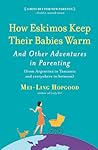
“The experience of looking at parenthood through the eyes of parents in different cultures has opened my mind and challenged some of the beliefs and practices that I’d held pretty tightly. Hearing and seeing what others do differently made me rethink what I thought was right. Sometimes it reinforced what I thought, and sometimes it changed me completely.”
― How Eskimos Keep Their Babies Warm: And Other Adventures in Parenting
― How Eskimos Keep Their Babies Warm: And Other Adventures in Parenting
“Ultimately, I think people tend to forget that on a basic level our relationships with our adopted parents are normal parent-child relationships. The only difference is how we became parent and child.”
― Lucky Girl: A Memoir
― Lucky Girl: A Memoir
“There are countless factors that influence the way we view our families, our adoptions, and ourselves - and they are the same factors that impact how other children see themselves. No one adoptee's view is more right or wrong than another's.”
―
―
“Sleeping Arrangements In many societies, children sleep with their parents at least through infancy and sometimes much longer. Some do so because they don’t have much space, but also because they believe co-sleeping to be an essential way to feed, comfort, protect, and bond with their babies and children. Here is a sampling of sleep arrangements in some traditional communities compiled by Carol Worthman and Melissa Melby: • In the leaf huts of Efe foragers of Africa, no one sleeps alone. Two adults, a baby, other children, a set of grandparents, and even a visitor routinely crash in the same small space. • Gebusi women in Papua New Guinea sleep together in a narrow area, about seven and a half feet wide, packed like sardines along with infants and children of varying ages. Men and older boys lie on sleeping platforms in a nearby space. • For the Gabra nomads in northern Kenya and southern Ethiopia, sleeping arrangements include separate beds for husband (and small boys) and wife (with infant and small children) in the sleeping portion of the tent. • The Balinese in Indonesia are social, even in sleep: “Being alone for even five minutes is undesirable, even when asleep, so widows and widowers who sleep alone are viewed as unfortunate and even socio-spiritually vulnerable,” Worthman and Melby wrote. • The Swat Pathan in Afghanistan and Pakistan allow a bed for each person, but no one gets his own room.”
― How Eskimos Keep Their Babies Warm: And Other Adventures in Parenting
― How Eskimos Keep Their Babies Warm: And Other Adventures in Parenting