Goodreads helps you follow your favorite authors. Be the first to learn about new releases!
Start by following Leonard Gross.

Showing 1-7 of 7
“Richard Grunberger points out in The Twelve-Year Reich, the Jew served a necessary psychological function. “Just as primitive man’s concept of God supposed the existence of the Devil, so the German’s progressive self-deification during the Third Reich depended upon the demonization of the Jew.”
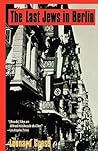
― The Last Jews in Berlin
― The Last Jews in Berlin
“The decision to leave Germany after the advent of Hitler would seem an easy and obvious one now, but the prospect of abandoning one’s traditions, relationships and possessions for the hazards of a foreign land and tongue, with little or no capital to begin life anew, could not have seemed attractive at the time.”
― The Last Jews in Berlin
― The Last Jews in Berlin
“When misery is the greatest, God is the closest,”
― The Last Jews in Berlin
― The Last Jews in Berlin
“Catholics had always been a minority in Protestant Germany, often an uncomfortable one, but the period since the assumption of power by the Nazis in January 1933 had been particularly difficult.”
― The Last Jews in Berlin
― The Last Jews in Berlin
“Hitler had been sworn in as Chancellor two months earlier by Paul von Hindenburg, President of the German Republic, on the supposition that only he and his National Socialists—by then the largest party in the country, with one-third the popular vote—could deal with the paralysis that had immobilized the government for months. Hitler took power legally; there followed immediately a series of illegal acts designed to consolidate his power and intimidate the opposition. A fire set in the Reichstag, blamed on a Dutch pyromaniac, who may have been used by the National Socialists, gave Hitler his excuse to begin a pseudolegal process of abolishing all constitutional guarantees of individual freedom. The party’s infamous storm troopers assaulted the political opposition, trade union leaders and Jews. Sheer terror purged the Reichstag of so many opposition deputies that Hitler had no trouble in pushing through the Enabling Act that gave him dictatorial powers. The boycott of Jewish businesses on April 1, 1933, which simply institutionalized storm trooper violence against Jewish professionals and businesses, was Hitler’s first formal effort against the people he believed to be at the heart of a Bolshevik conspiracy to destroy Germany. That”
― The Last Jews in Berlin
― The Last Jews in Berlin
“Now all notions of the good life were compressed into a single word: survival.”
― The Last Jews in Berlin
― The Last Jews in Berlin
“craftsman.”
― The Last Jews in Berlin
― The Last Jews in Berlin