Goodreads helps you follow your favorite authors. Be the first to learn about new releases!
Start by following James Romm.

Showing 1-16 of 16
“Alexander’s top generals were about to tangle with one of history’s toughest teenage girls.”
― Ghost on the Throne: The Death of Alexander the Great and the Bloody Fight for His Empire
― Ghost on the Throne: The Death of Alexander the Great and the Bloody Fight for His Empire
“Diogenes the Cynic was an ascetic by choice. He rejected his family's bourgeois status, got himself exiled from his native city, and went about in a threadbare cloak with only the barest possessions, a bag for his crust of bread and a cup for scooping water from fountains. When one day he saw a boy drinking from his hands, he smashed the cup, disgusted by his own love of luxury.”
― Dying Every Day: Seneca at the Court of Nero
― Dying Every Day: Seneca at the Court of Nero
“Life, properly regarded, is only a journey toward death”
― Dying Every Day: Seneca at the Court of Nero
― Dying Every Day: Seneca at the Court of Nero
“The Rome he has been trained to serve, the Rome of Augustus and Germanicus, was gone. In its place stood Neronopolis, ruled by a megalomaniac brat.”
― Dying Every Day: Seneca at the Court of Nero
― Dying Every Day: Seneca at the Court of Nero
“Marcia’s grief, for Seneca, exemplifies a universal human blindness. We assume that we own things—family, wealth, position—whereas we have only borrowed them from Fortune.”
― Dying Every Day: Seneca at the Court of Nero
― Dying Every Day: Seneca at the Court of Nero
“Seneca had made the bargain that many good men have made when agreeing to aid bad regimes. On the one hand, their presence strengthens the regime and helps it endure. But their moral influence may also improve the regime's behavior or save the lives of its enemies. For many, this has been a bargain worth making, even if it has cost them—as it may have cost Seneca—their immortal soul.”
― Dying Every Day: Seneca at the Court of Nero
― Dying Every Day: Seneca at the Court of Nero
“And they say to us that we're never at risk,
sheltered at home, while they fight with spears.
How wrong they are: I'd rather three times over
stand behind a shield than give birth once.”
― The Greek Plays: Sixteen Plays by Aeschylus, Sophocles, and Euripedes
sheltered at home, while they fight with spears.
How wrong they are: I'd rather three times over
stand behind a shield than give birth once.”
― The Greek Plays: Sixteen Plays by Aeschylus, Sophocles, and Euripedes
“Let them hate, as long as they fear.”
― Dying Every Day: Seneca at the Court of Nero
― Dying Every Day: Seneca at the Court of Nero
“blows. Execution should be only a last, desperate resort, for those who are so morally “ill” that death is, in effect, euthanasia.”
― Dying Every Day: Seneca at the Court of Nero
― Dying Every Day: Seneca at the Court of Nero
“If you lament a dead son, his crime belongs to the hour in which he was born. A death sentence was passed on him then.”
― Dying Every Day: Seneca at the Court of Nero
― Dying Every Day: Seneca at the Court of Nero
“To fight against an equal is risky; against a higher-up, insane; against someone beneath you, degrading,” Seneca wrote in De Ira. He gave the example of Cato, that Stoic nonpareil who, when spat upon in public by an adversary, merely wiped his face and returned a good-natured quip. If one could not turn a blind eye, one could at least forgive, knowing that all human beings are prone to do wrong.”
― Dying Every Day: Seneca at the Court of Nero
― Dying Every Day: Seneca at the Court of Nero
“But moves made by aging emperors do not always accord with logic.”
― Dying Every Day: Seneca at the Court of Nero
― Dying Every Day: Seneca at the Court of Nero
“«Ενώ εμείς αναβάλλουμε τη ζωή, εκείνη προσπερνάει.»”
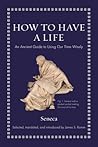
― How to Have a Life: An Ancient Guide to Using Our Time Wisely
― How to Have a Life: An Ancient Guide to Using Our Time Wisely
“Perdiccas had brought the joint kings with him as a reminder of their cause, but these hardly commanded reverence: the vacant Philip with his sharp-tongued teenage wife, the toddler Alexander with his babbling barbarian mother. It was a pathetically shaky platform on which Perdiccas rested his authority, yet it was the only source of legitimacy in the post-Alexander world.”
―
―
“Whatever existed before us was death. What does it matter whether you cease to be, or never begin? The outcome of either is just this, that you don’t exist.”
― How to Die: An Ancient Guide to the End of Life
― How to Die: An Ancient Guide to the End of Life
“See how the sleek bodies of bulls are felled by a small wound, and the blow of a human hand dispatches animals of great strength.”
― How to Die: An Ancient Guide to the End of Life
― How to Die: An Ancient Guide to the End of Life