Goodreads helps you follow your favorite authors. Be the first to learn about new releases!
Start by following David Bergen.

Showing 1-15 of 15
“The most difficult part of being a mother was to observe the mistakes of one's children: the foolish loves, the desperate solitude and alienation, the lack of will, the gullibility, the joyous and naive leaps into the unknown, the ignorance, the panicky choices and the utter determination.”
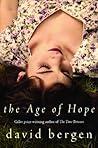
― The Age of Hope
― The Age of Hope
“Books were seen as a waste of time. What was the point, unless you were reading for information? To lose oneself in a book was to be slightly wacky, a little greedy and ultimately slothful. There was no value. You couldn't make money from reading a book. A book did not clean bathrooms and waxed floors. It did not put the garden in. You couldn't have a conversation while reading. It was arrogant and alienated others. In short, those who read were wasteful and haughty and incapable of living in the real world. They were dreamers.”
― The Age of Hope
― The Age of Hope
“Her mother had once told her that one could run away from home, from husband, from children, from trouble, but it was impossible to run away from oneself. "You always have to take yourself with you," she said. And now, bending towards her mother, Hope wondered if in death you were finally able to run away from yourself. This might be death's gift. She knew that the thought wasn't terribly profound, but she was moved by the notion of completion and of escape.”
― The Age of Hope
― The Age of Hope
“Hope had finally learned to live in the present. Often, when she found herself in a space of tremendous comfort, usually out in nature, or when her children were safe all around her and on the verge of going to bed, she forced herself to take stock. Here you are, Hope, she told herself. What a beautiful moment. You may never again be here at this spot, enjoying the calm. This habit of hers, to acknowledge the immediate and elusive joy of the present, kept her sane.”
― The Age of Hope
― The Age of Hope
“Words mean nothing. They are like the husks of the coffee Bean. They cover what is essential, which is the bean itself, and when the husks are discarded, they lie on the road and rot and disappear. Actions are what lie inside, like the bean.”
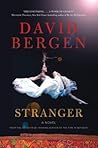
― Stranger: A Novel
― Stranger: A Novel
“Hope knew that her thinking regarding books went contrary to the general sentiment of the people of Eden. Books were seen as a waste of time. What was the point, unless you were reading for information? To lose oneself in a book was to be slightly wacky, a little greedy, and ultimately slothful. There was no value. You couldn't make money from reading a book. A book did not give you clean bathrooms and waxed floors. It did not put the garden in. You couldn't have a conversation while reading. It was arrogant and alienated others. In short, those who read were wasteful and haughty and incapable of living in the real world. They were dreamers.”
― The Age of Hope
― The Age of Hope
“She left feeling dirty, and on the bus ride home she knew that what her uncles told her had come true: she had been attracted to an object that was beautiful, and she had become spellbound, and then its shape had changed, and what had appeared beautiful had turned ugly.”
― Stranger: A Novel
― Stranger: A Novel
“Morris had been raised a Mennonite stoic in a tribe that wasn't a tribe at all, but more a failed cult whose main sources of entertainment were music, wordplay, and suffering.”
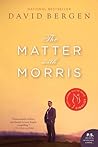
― The Matter With Morris
― The Matter With Morris
“Keep the fire in the kitchen to see if it outlasts the storms and rain outside.”
― The Time In Between
― The Time In Between
“-And what would you do if you lost a child?
-I would think I was going to die, Elena said. But I wouldn't. I learned long ago that I must give up my child to the earth, to God, to the world, to death, to the possibility of death, to the possibility of disease, and in doing so I became at peace. Because I had let my child go. And in letting the child go, I became colder, more distant, and more at peace. But I still loved the child, don't be wrong. As you love your child. I am sorry.”
― Stranger: A Novel
-I would think I was going to die, Elena said. But I wouldn't. I learned long ago that I must give up my child to the earth, to God, to the world, to death, to the possibility of death, to the possibility of disease, and in doing so I became at peace. Because I had let my child go. And in letting the child go, I became colder, more distant, and more at peace. But I still loved the child, don't be wrong. As you love your child. I am sorry.”
― Stranger: A Novel
“Marcie talked about her life, and she talked about the courses she was taking. She told Lily that she was a feminist and she said that women had to take back the space that men had stolen from them. She talked about her body. She talked about ownership. She said that she was proud of her period, and Lily thought that this was the oddest thing to be proud of. She herself wasn't ashamed of it, but she hadn't ever thought it worth discussing.”
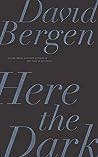
― Here the Dark: A Novella and Stories
― Here the Dark: A Novella and Stories
“I believe we are most alive when we are being thought about by others who love us.”
― The Time In Between
― The Time In Between
“-Because they're free.
-They might look free, but they aren't. Believe me. You're free.
-How am I free?
-You're free to be modest. You're free to not smoke up. You're free to be here and listen and not respond to the nonsense that Hanna spouts. You're very calm, and you're very comfortable with yourself.”
― Stranger
-They might look free, but they aren't. Believe me. You're free.
-How am I free?
-You're free to be modest. You're free to not smoke up. You're free to be here and listen and not respond to the nonsense that Hanna spouts. You're very calm, and you're very comfortable with yourself.”
― Stranger
“You have to be colder. Then he will come to you. The more you pull, she said, the more he'll run. A boy, a man, he is like an untrained dog who thinks that because you don't allow him to sniff the pole over there, that pole is the most precious spot in the world. Let him go, she said. And he will come running back.”
―
―
“They saw the world in different ways. For him, life was like a story that had answers, or a conclusion that made sense. For her, the story was sinuous and unclear, and if there was happiness to be had, it might arrive announced, or it might land in the arms of another person.”
― Stranger: A Novel
― Stranger: A Novel