Goodreads helps you follow your favorite authors. Be the first to learn about new releases!
Start by following Matthew Becklo.

Showing 1-19 of 19
“So the cross is an altar where an offering is made; it is also a throne from which a King reigns. Spreading the news of this kingship was precisely the work of St. Paul, who refers, again and again, to “Jesus the Lord,” Iesous Kyrios, an intentional play on Kaiser kyrios (Caesar is Lord), a common acknowledgment of the authority of the Roman emperor. Like Pilate, Paul announced to the dominant cultures of his time that a new allegiance was owed.”
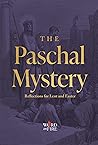
― The Paschal Mystery: Reflections for Lent and Easter
― The Paschal Mystery: Reflections for Lent and Easter
“Metanoia, soul transformation, is Jesus’ first recommendation: open your eyes; see the coming together of the divine and the human; learn to live in the power of that Incarnation (the kingdom) through metanoia, through the changing of your attitude, your orientation, your way of seeing.”
― The Paschal Mystery: Reflections for Lent and Easter
― The Paschal Mystery: Reflections for Lent and Easter
“In the season of Lent, we get in touch with our own sin, with what has produced a desert in us. We don’t cover it up, make excuses for it, or dull our sensitivity to it; rather, following Jesus, we face down our own fears and temptations in the desert.”
― The Paschal Mystery: Reflections for Lent and Easter
― The Paschal Mystery: Reflections for Lent and Easter
“There is a law written across the universe, that no one shall be crowned unless he has first struggled. No halo of merit rests suspended over those who do not fight.”
― The Paschal Mystery: Reflections for Lent and Easter
― The Paschal Mystery: Reflections for Lent and Easter
“Whatever fortune I have, be I rich or poor, healthy or sick, with friends or without, all will turn to evil if I am not sustained by the Unchangeable; all will turn to good if I have Jesus with me, yesterday and today the same, and forever.”
― The Paschal Mystery: Reflections for Lent and Easter
― The Paschal Mystery: Reflections for Lent and Easter
“The countermove of Jesus is to quote the Scripture: “It is written, ‘One does not live by bread alone, but by every word that comes from the mouth of God’” (Matt. 4:4). How wonderful that he answers a temptation having to do with the mouth (eating) by appealing to a higher Mouth. In accord with a venerable scriptural tradition, Jesus implies that the word of God is a type of food that the human being requires even more urgently than physical nourishment, but he also orients the devil away from the inevitably self-centered quality of sensual satisfaction to the essentially communitarian quality of feasting on the divine word. God’s word can be heard by all and never runs out; further, by its very nature, it is meant to be passed on once it has been taken in. It is an expression of that graced manner of being—what is had precisely as it is given away and shared—that we see in the account of the prodigal son. What Jesus tells ho poneros (the evil one) is that he chooses to live primarily off this food and hence to remain in the loop of grace.”
― The Paschal Mystery: Reflections for Lent and Easter
― The Paschal Mystery: Reflections for Lent and Easter
“Even more than this description of the Passion, what strikes us in the words of the Prophet is the depth of Christ’s sacrifice. Behold, he, though innocent, takes upon himself the sufferings of all people, because he takes upon himself the sins of all. “The Lord has laid on him the iniquity of us all”: all human sin in its breadth and depth becomes the true cause of the Redeemer’s suffering. If the suffering “is measured” by the evil suffered, then the words of the Prophet enable us to understand the extent of this evil and suffering with which Christ burdened himself. It can be said that this is “substitutive” suffering; but above all it is “redemptive.” The Man of Sorrows of that prophecy is truly that “Lamb of God who takes away the sin of the world” (John 1:29). In his suffering, sins are canceled out precisely because he alone as the only-begotten Son could take them upon himself, accept them with that love for the Father which overcomes the evil of every sin; in a certain sense he annihilates this evil in the spiritual space of the relationship between God and humanity, and fills this space with good.”
― The Paschal Mystery: Reflections for Lent and Easter
― The Paschal Mystery: Reflections for Lent and Easter
“Pope Benedict XVI
General Audience To repent [or convert] is to change direction in the journey of life: not, however, by means of a small adjustment, but with a true and proper about turn. Conversion means swimming against the tide, where the “tide” is the superficial lifestyle, inconsistent and deceptive, that often sweeps us along, overwhelms us, and makes us slaves to evil or at any rate prisoners of moral mediocrity. With conversion, on the other hand, we are aiming for the high standard of Christian living; we entrust ourselves to the living and personal Gospel which is Jesus Christ. He is our final goal and the profound meaning of conversion, he is the path on which all are called to walk through life, letting themselves be illumined by his light and sustained by his power which moves our steps. In this way conversion expresses his most splendid and fascinating Face: it is not a mere moral decision that rectifies our conduct in life, but rather a choice of faith that wholly involves us in close communion with Jesus as a real and living Person. To repent and believe in the Gospel are not two different things or in some way only juxtaposed, but express the same reality. Repentance is the total “yes” of those who consign their whole life to the Gospel, responding freely to Christ who first offers himself to humankind as the Way, the Truth, and the Life, as the only One who sets us free and saves us. This is the precise meaning of the first words with which, according to the Evangelist Mark, Jesus begins preaching the “Gospel of God”: “The time is fulfilled, and the Kingdom of God is at hand; repent, and believe in the Gospel” (Mark 1:15).”
― The Paschal Mystery: Reflections for Lent and Easter
General Audience To repent [or convert] is to change direction in the journey of life: not, however, by means of a small adjustment, but with a true and proper about turn. Conversion means swimming against the tide, where the “tide” is the superficial lifestyle, inconsistent and deceptive, that often sweeps us along, overwhelms us, and makes us slaves to evil or at any rate prisoners of moral mediocrity. With conversion, on the other hand, we are aiming for the high standard of Christian living; we entrust ourselves to the living and personal Gospel which is Jesus Christ. He is our final goal and the profound meaning of conversion, he is the path on which all are called to walk through life, letting themselves be illumined by his light and sustained by his power which moves our steps. In this way conversion expresses his most splendid and fascinating Face: it is not a mere moral decision that rectifies our conduct in life, but rather a choice of faith that wholly involves us in close communion with Jesus as a real and living Person. To repent and believe in the Gospel are not two different things or in some way only juxtaposed, but express the same reality. Repentance is the total “yes” of those who consign their whole life to the Gospel, responding freely to Christ who first offers himself to humankind as the Way, the Truth, and the Life, as the only One who sets us free and saves us. This is the precise meaning of the first words with which, according to the Evangelist Mark, Jesus begins preaching the “Gospel of God”: “The time is fulfilled, and the Kingdom of God is at hand; repent, and believe in the Gospel” (Mark 1:15).”
― The Paschal Mystery: Reflections for Lent and Easter
“Here we can see the deep soteriological implications of the Trinitarian doctrine. It is only because God can, so to speak, open himself up, become other to himself while remaining one in essence, that he can embrace all of sin, even the most thoroughgoing rebellion. This is the condition for the possibility of the victorious battle of the cross and of the efficacious sacrifice of the cross.”
― The Paschal Mystery: Reflections for Lent and Easter
― The Paschal Mystery: Reflections for Lent and Easter
“Don’t look at our blindness, my God, but at all the blood your Son shed for us.”
― The Paschal Mystery: Reflections for Lent and Easter
― The Paschal Mystery: Reflections for Lent and Easter
“Might we follow the prompts of Lumen Gentium, one of the most striking of the documents of the Second Vatican Council, and speak of the possibility that non-Christians, even nonbelievers, across the ages, can be saved? If they are, Lumen Gentium argues, they are saved through some participation in the grace of Christ, some light that comes from Jesus, though they might not be aware of it. In the case of nonbelievers, it would happen through following, honestly and courageously, the dictates of the conscience, which John Henry Newman helpfully described as the “aboriginal Vicar of Christ” in the soul. The great English master was anticipating the teaching of Vatican II by insisting that the voice of conscience is, in point of fact, the voice of Christ, though anonymously so.”
― The Paschal Mystery: Reflections for Lent and Easter
― The Paschal Mystery: Reflections for Lent and Easter
“1 Peter 3:17–22 It is better to suffer for doing good, if that be the will of God, than for doing evil.”
― The Paschal Mystery: Reflections for Lent and Easter
― The Paschal Mystery: Reflections for Lent and Easter
“Origen
Commentary on Matthew Judas means “confessor.” Luke the Evangelist numbers both “Judas the son of James and Judas Iscariot” among the twelve Apostles (Luke 6:16). Since two of Christ’s disciples were given this same name and since there can be no meaningless symbol in the Christian mystery, I am convinced that the two Judases represent two distinct types of confessing Christians. The first, symbolized by Judas the son of James, perseveres in remaining faithful to Christ. The second type, however, after once believing and professing faith in Christ, then abandons him out of greed. He defects to the heretics and to the false priests of the Jews, that is, to counterfeit Christians, and (insofar as he is able) delivers Christ, the “Word of truth,” over to them to be crucified and destroyed. This type of Christian is represented by Judas Iscariot, who “went out to the chief priests” (Matt. 26:14) and agreed on a price for betraying Christ.”
― The Paschal Mystery: Reflections for Lent and Easter
Commentary on Matthew Judas means “confessor.” Luke the Evangelist numbers both “Judas the son of James and Judas Iscariot” among the twelve Apostles (Luke 6:16). Since two of Christ’s disciples were given this same name and since there can be no meaningless symbol in the Christian mystery, I am convinced that the two Judases represent two distinct types of confessing Christians. The first, symbolized by Judas the son of James, perseveres in remaining faithful to Christ. The second type, however, after once believing and professing faith in Christ, then abandons him out of greed. He defects to the heretics and to the false priests of the Jews, that is, to counterfeit Christians, and (insofar as he is able) delivers Christ, the “Word of truth,” over to them to be crucified and destroyed. This type of Christian is represented by Judas Iscariot, who “went out to the chief priests” (Matt. 26:14) and agreed on a price for betraying Christ.”
― The Paschal Mystery: Reflections for Lent and Easter
“St. Jerome
Letter In the lives of Christians we look not to the beginnings but to the endings. Paul began badly but ended well. The start of Judas wins praise; his end is condemned because of his treachery. Read Ezekiel, “The righteousness of the righteous shall not deliver him in the day of his transgression; as for the wickedness of the wicked he shall not fall thereby in the day that he turns from his wickedness” (Ezek. 33:12). The Christian life is the true Jacob’s ladder on which the angels ascend and descend (Gen. 28:12), while the Lord stands above it holding out his hand to those who slip and sustaining by the vision of himself the weary steps of those who ascend.”
― The Paschal Mystery: Reflections for Lent and Easter
Letter In the lives of Christians we look not to the beginnings but to the endings. Paul began badly but ended well. The start of Judas wins praise; his end is condemned because of his treachery. Read Ezekiel, “The righteousness of the righteous shall not deliver him in the day of his transgression; as for the wickedness of the wicked he shall not fall thereby in the day that he turns from his wickedness” (Ezek. 33:12). The Christian life is the true Jacob’s ladder on which the angels ascend and descend (Gen. 28:12), while the Lord stands above it holding out his hand to those who slip and sustaining by the vision of himself the weary steps of those who ascend.”
― The Paschal Mystery: Reflections for Lent and Easter
“His degradation, in a word, was the direct result of his functioning as the lamb of sacrifice and the scapegoat for the entire people. What would happen to him should by rights be happening to the whole of Israel; the sins of the entire nation would be placed upon his shoulders so that he could bear them away. Though, as we have said, this kind of representational thinking is rather foreign to our individualistic social psychology, it was altogether standard for ancient Israel.”
― The Paschal Mystery: Reflections for Lent and Easter
― The Paschal Mystery: Reflections for Lent and Easter
“Remember that the cross was Rome’s way of asserting its authority. Roman authorities declared that if you run afoul of our system, we will torture you to death in the most excruciating (ex cruce, from the cross) way possible and then we will leave your body to waste away and to be devoured by the beasts of the field. The threat of violence is how tyrants up and down the centuries have always asserted their authority. Might makes right. The crucified Jesus appeared to anyone who was witnessing the awful events on Calvary to be one more affirmation of this principle: Caesar always wins in the end. But when Jesus was raised from the dead through the power of the Holy Spirit, the first Christians knew that Caesar’s days were numbered. Jesus had taken the worst that the world could throw at him and he returned, alive and triumphant. They knew that the Lord of the world was no longer Caesar, but rather someone whom Caesar had killed but whom God had raised from death. This is why the risen Christ has been the inspiration for resistance movements up and down the centuries. In our own time, we saw how deftly John Paul II wielded the power of the cross in communist Poland. Though he had no nuclear weapons or tanks or mighty armies, John Paul had the power of the Resurrection, and that proved strong enough to bring down one of the most imposing empires in the history of the world. Once again, the faculty lounge interpretation of the Resurrection as a subjective event or a mere symbol is exactly what the tyrants of the world want, for it poses no real threat to them.”
― The Paschal Mystery: Reflections for Lent and Easter
― The Paschal Mystery: Reflections for Lent and Easter
“Having prepared his interlocutor, the tempter makes his move: “All these I will give you, if you will fall down and worship me” (Matt. 4:9). What emerges as both most illuminating and most disturbing is that the devil can offer all of the kingdoms of the world precisely because they all belong to him. This connection is made even clearer in Luke’s account: “And the devil said to him, ‘To you I will give their glory and all this authority; for it has been given over to me, and I give to anyone I please” (Luke 4:6). Here, the nature of the power in question becomes clear. It has nothing to do with the legitimate power by which God governs the cosmos; it has everything to do with the devil’s essential task of scattering.”
― The Paschal Mystery: Reflections for Lent and Easter
― The Paschal Mystery: Reflections for Lent and Easter
“Thomas Merton The Wisdom of the Desert The simple men who lived their lives out to a good old age among the rocks and sands only did so because they had come into the desert to be themselves, their ordinary selves, and to forget a world that divided them from themselves. There can be no other valid reason for seeking solitude or for leaving the world. And thus to leave the world, is, in fact, to help save it in saving oneself. . .”
― The Paschal Mystery: Reflections for Lent and Easter
― The Paschal Mystery: Reflections for Lent and Easter
“In light of temple practice and these extraordinary texts, it is not difficult to see why the first Christians reached for sacrificial language when attempting to explain the significance of Jesus’ terrible death. They saw an innocent man, their sinless Lord, indeed someone who, even in the midst of the agony of crucifixion, uttered not a curse but a blessing on those who were killing him, taking upon himself a thoroughly undeserved punishment. Like the lamb of sacrifice, they thought, his blood was being poured out as a substitute for our blood; like the scapegoat, he was being driven into the wilderness to die, as by rights we should.”
― The Paschal Mystery: Reflections for Lent and Easter
― The Paschal Mystery: Reflections for Lent and Easter