Goodreads helps you follow your favorite authors. Be the first to learn about new releases!
Start by following Sarah Clegg.

Showing 1-30 of 43
“In 1457, just before the witch trials really got underway, in the valley of Fassa in the South Tyrol three women confessed to nocturnal dancing with ‘The Good Ladies’ during the Ember Days. The women were lucky that the true witch panic had yet to begin – they were found guilty, but their lives were spared. Only fifty years later, and around ten miles away, a man named Giovanni delle Piatte claimed he had met Herodias, after which he feasted and flew around the world over Christmas. Giovanni managed to avoid any worse punishment than banishment – by accusing fourteen other ‘witches’ of having been there with him. Holda, Perchta, Herodias, and the witches travelling to dark revels in packs, all ran through witchcraft trials.”
― The Dead of Winter: Beware the Krampus and Other Wicked Christmas Creatures
― The Dead of Winter: Beware the Krampus and Other Wicked Christmas Creatures
“Jerome K. Jerome used the telling of Christmas Eve ghost stories as a framing device for his 1891 ghost-story collection, Told After Supper, claiming in his introduction that: Whenever five or six English-speaking people meet round a fire on Christmas Eve, they start telling each other ghost stories… It is a genial, festive season, and we love to muse upon graves, and dead bodies, and murders, and blood.”
― The Dead of Winter: Beware the Krampus and Other Wicked Christmas Creatures
― The Dead of Winter: Beware the Krampus and Other Wicked Christmas Creatures
“This magic is, in part, the knowledge that the relentless tide of darkness has turned, that light will start to return. It’s partly the happiness surrounding me – the earnest cheers and song, the well wishes shouted by strangers in a moment of happy abandon that we’re all experiencing together, huddled in the strange circle of stones. But it’s also the way that, in the moment of the sun’s rising, the vast gulfs of history and understanding that separate us from the builders of Stonehenge seem to vanish. It’s so easy to imagine that over five millennia ago people might have stood right where we are standing, looked at the same dawn, the same stones, might have celebrated that they, too, were beginning the long road back out of the winter darkness. There is so much power in that sensation of connection, the feeling of seeing a handprint millennia old and instinctively slipping your own hand over it, of all that time contracting so you and people thousands of years ago are – for a brief instant – the same.”
― The Dead of Winter: Beware the Krampus and Other Wicked Christmas Creatures
― The Dead of Winter: Beware the Krampus and Other Wicked Christmas Creatures
“By the sixth century, the Christmas season had been set as Christmas and the Twelve Days following it – until Epiphany, or Twelfth Night, on 6 January. There were plenty of feasts in the month of December that ended up being fundamentally Christmas celebrations as well, especially St Nicholas’s Day (on 5 December) and St Lucy’s Day (on 13 December). But while the mid-December Saturnalia festival was no longer observed, that didn’t mean its anarchic spirit was dead – it had simply shifted, now bolting itself onto what had previously been a more formal day of celebration on 1 January or Kalends.”
― The Dead of Winter: Beware the Krampus and Other Wicked Christmas Creatures
― The Dead of Winter: Beware the Krampus and Other Wicked Christmas Creatures
“This performance is not limited to Marshfield – it’s part of a centuries-old Christmas tradition known as mumming (or mummering). Some parts of the Marshfield play are unique, but the structure of it – the death, the resurrection by a doctor, the pleas for donations, the inclusion of Beelzebub and Father Christmas – is found in similar performances all over Britain, an echoing of strange, murderous, devil-filled plays that fills the country at Christmas.”
― The Dead of Winter: Beware the Krampus and Other Wicked Christmas Creatures
― The Dead of Winter: Beware the Krampus and Other Wicked Christmas Creatures
“Behind every tale of Christmas monsters lurks the true darkness of Christmas – the solstice, and the longest night of the year. No matter how brightly our fires burn, or how many fairy lights we turn on, Christmas is still spent deep in the shadows.”
― The Dead of Winter: Beware the Krampus and Other Wicked Christmas Creatures
― The Dead of Winter: Beware the Krampus and Other Wicked Christmas Creatures
“Look into Bavarian and Austrian tradition further and there is another witch monster who bears a striking similarity to Lucy: Perchta. Rather than travelling on Lucy’s Night, Perchta conducts her grim business on the Twelve Nights of Christmas or the week after Lucy’s Night (a period known as the Christmas Ember Days), and is especially associated with Epiphany itself. In fact, it’s where Perchta’s name likely comes from – and why it sounds so similar to the ‘Perchten’ monsters mentioned in the chapter before – both were named after the day they appeared.vii But in all other regards, Lucy and Perchta are almost identical – rewarding good children and gutting the bad before stuffing them with straw (Perchta adds the flourish of sewing up her victims using a ploughshare as a needle and a chain as thread); obsessed with the idea that the tasks of the household – especially weaving – must be completed and set aside before their nights begin, and demanding food offerings be left out for them, bringing good luck where they find them and bad where they do not.viii There’s another Christmas witch too – though an altogether kinder one – the Befana. An Italian variant, Befana, like Perchta, appears on Epiphany, and, like Perchta, she takes her name from the festival. She also gives good children sweets, but the bad children who meet Befana only have to contend with gifts of coal rather than being gutted. The history of these Christmas witches may well be one of the most complex of all the seasonal monsters. After all, only an utter mess of tangling beliefs can lead to a semi-benevolent, disembowelling witch who demands offerings, gives presents, and flies across the land followed by an army of the dead.”
― The Dead of Winter: Beware the Krampus and Other Wicked Christmas Creatures
― The Dead of Winter: Beware the Krampus and Other Wicked Christmas Creatures
“Have you believed or participated in this infidelity, that some wicked women, turned back after Satan, seduced by illusions and phantoms of demons believe and affirm: that with Diana, the goddess of the pagans, and an unnumbered multitude of women, they ride on certain beasts and traverse many areas of the earth in the stillness of the quiet night.1 This isn’t the only mention Burchard made of women riding out at night in a host led by a goddess – of his two hundred or so rules, it’s the subject of four. And numerous other medieval churchmen complained about this idea as well as Burchard, a collection of angry fragments that suggests it was a commonly held belief, no matter how much the church might have tried to stamp it out. Sometimes the goddess leading the women is called Holda or Herodias, not Diana. Sometimes the women are able to pass through closed doors to sneak away in spirit, leaving their bodies lying in bed with their husbands while their souls cavort through the night.”
― The Dead of Winter: Beware the Krampus and Other Wicked Christmas Creatures
― The Dead of Winter: Beware the Krampus and Other Wicked Christmas Creatures
“We’re in the Internächte now – the ‘in-between nights’ – a term used in some areas of Germany and Austria for the period that runs from Christmas Day to Twelfth Night, on 6 January. It’s a good word to describe the strange, quiet interval that follows the chaos of Christmas itself and runs (at least in modern times) until New Year; a period when you lose track of time, as the normal working week is, for many people, suspended. Throughout history, this period has been associated more with relentless feasting and festivities than the quiet of the modern day, but it was still an in-between time, when nothing was quite as it should be – a perfect moment for the supernatural to slip through.”
― The Dead of Winter: Beware the Krampus and Other Wicked Christmas Creatures
― The Dead of Winter: Beware the Krampus and Other Wicked Christmas Creatures
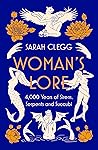
“But our demons are also a testament to the resilience of women's traditions and beliefs: surviving for millennia, for the most part ignored, mocked or appropriated by men, but passed nonetheless from woman to woman down through the centuries, vanishing only when women had found a new way of protecting themselves and their children. Spanning over 4,000 years and crossing continents, the tradition described in this book is one of the oldest and furthest-reaching continuous traditions of humanity. Against seemingly insurmountable obstacles, the story of our demons is the story of the triumph of woman's lore.”
― Woman's Lore: 4,000 Years of Sirens, Serpents and Succubi
― Woman's Lore: 4,000 Years of Sirens, Serpents and Succubi
“But once, on midwinter morning, this is where the party was. Durrington Walls is (probably) where the builders of Stonehenge lived and is the site of another circle made of enormous wooden posts, known today as the Southern Circle. Recreations of the Circle show it as a surreal forest of gigantic, bare tree trunks, angular, geometric, full of long, straight lines and long straight shadows. And this site, unlike Stonehenge, was orientated towards the midwinter sunrise. It was in use at the same time as Stonehenge as well – so perhaps people welcomed the sun in the wood and bid it farewell among the stones.”
― The Dead of Winter: Beware the Krampus and Other Wicked Christmas Creatures
― The Dead of Winter: Beware the Krampus and Other Wicked Christmas Creatures
“Like the folklorists spinning beguiling fantasies of ancient pagan rituals, Jerome, Borlase, Dickens and the Jameses (M.R. and Henry) were tapping into the old need for darkness within the new, Victorian, family Christmas, when people were meant to be getting cosy round the tree or roasting chestnuts by the fire with their nearest and dearest, and not rampaging drunkenly through the streets in a horrible mask. The traditions might have shifted, and the tales may have been rendered in a form that could be enjoyed quietly, at home, with your family, but everyone still wanted midwinter to be full of ghosts and monsters.”
― The Dead of Winter: Beware the Krampus and Other Wicked Christmas Creatures
― The Dead of Winter: Beware the Krampus and Other Wicked Christmas Creatures
“From ancient Greece through to the modern day, our monsters have been used as embodiments of every type of unacceptable womanhood — and unacceptable womanhood, it turns out, has existed in almost every form. Our monsters hate children, want to be mothers more than anything but are unable to be, and are the mothers of multitudes. They are incredibly beautiful, hideously ugly, ugly but able to appear beauties, they are vulnerable young girls and women who are 'past their prime'; they have hunted men down for sex, turned men down flat, been too sexual and too frigid, too feminine and too manly. They are self-posessed queens, and innocent ingénues. They have been both too vain, and scorned for the fact they don't take enough time over their appearance. They have had penises, vulvas, and no genitalia at all. It is no wonder that so many women identify with our monsters: at one point or another, they have embodied almost every aspect of womanhood.
There are women who are more likely to be demonized: women of colour especially are exoticized, sexualized, and accused of being too masculine, too loud, too angry, to a vastly higher degree than white women, and men have used (and are, appallingly, still using) the idea that trans women are nefarious seducers to get away with hideous crimes. But the catalogue of our demons' qualities is a clear demonstration of what every woman knows on some level: there is no way of being a woman that can keep you safe from demonization, that frees you from criticism. And while this is a depressing realization, it's also a freeing one — if you'll be painted as a monster no matter what, you might as well make your own choices, and take control of your own destiny, rather than attempting to mould yourself to a contradictory ideal of womanhood that can be taken away from you no matter what you do. As symbols of 'unacceptable' women, Lilith and our demons are symbols of us all.”
― Woman's Lore: 4,000 Years of Sirens, Serpents and Succubi
There are women who are more likely to be demonized: women of colour especially are exoticized, sexualized, and accused of being too masculine, too loud, too angry, to a vastly higher degree than white women, and men have used (and are, appallingly, still using) the idea that trans women are nefarious seducers to get away with hideous crimes. But the catalogue of our demons' qualities is a clear demonstration of what every woman knows on some level: there is no way of being a woman that can keep you safe from demonization, that frees you from criticism. And while this is a depressing realization, it's also a freeing one — if you'll be painted as a monster no matter what, you might as well make your own choices, and take control of your own destiny, rather than attempting to mould yourself to a contradictory ideal of womanhood that can be taken away from you no matter what you do. As symbols of 'unacceptable' women, Lilith and our demons are symbols of us all.”
― Woman's Lore: 4,000 Years of Sirens, Serpents and Succubi
“In the fourteenth century, the name Perchta started being used to refer to these women. With the name derived from the word ‘Epiphany’, it may be that Perchta herself was part of a medieval tradition of personifying festivals. From the early fourteenth century on, over the Twelve Nights of Christmas Perchtas joined the gang, roaming about at night, bringing prosperity to those who left them food, occasionally eating babies, disembowelling people and stuffing them with straw. St Lucy, sweet, innocent and pure, would be absorbed into all of this as well – a girl associated with Christmas and midwinter because of the date of her saint’s day, pulled into the pack of semi-benevolent monstrous Christmas women.”
― The Dead of Winter: Beware the Krampus and Other Wicked Christmas Creatures
― The Dead of Winter: Beware the Krampus and Other Wicked Christmas Creatures
“In the mid-fourth century AD, Bishop Ambrose of Milan recorded a tradition ‘of the common people’, where on 1 January they disguised themselves as stags. His contemporary, Bishop Pacian of Barcelona, wrote a short treatise condemning the act (called Cervus – ‘stags’). The treatise hasn’t survived, but we do have Pacian’s rueful (and endearing) musing that many people who hadn’t previously known about the practice had read his treatise, thought dressing as a stag on 1 January sounded quite fun, and started doing it themselves. ‘I think,’ he reflected, ‘that they would not have known how to make themselves into stags unless I had shown them by reprimanding them.”
― The Dead of Winter: Beware the Krampus and Other Wicked Christmas Creatures
― The Dead of Winter: Beware the Krampus and Other Wicked Christmas Creatures
“Sixty years after Frazer’s Golden Bough, the poet Robert Graves wrote The White Goddess, a book entirely made up of delightful nonsense about pagan rituals and asserting that the death-and-resurrection mummers plays were ‘the clearest survivals of the pre-Christian religion’. This in turn inspired Sylvia Plath, who found herself identifying with Grave’s goddess – a sister of Holda – who he put at the centre of it all. It inspired books like Susan Cooper’s The Dark Is Rising, the children’s story from 1973 about the dark, pagan magic that bleeds through into Christmas and midwinter. Plenty of our most beloved horror stories are based on these ideas too, from The Wicker Man to Midsommar and, arguably, the entire genre of folk horror.”
― The Dead of Winter: Beware the Krampus and Other Wicked Christmas Creatures
― The Dead of Winter: Beware the Krampus and Other Wicked Christmas Creatures
“The Christmas witches themselves remained powerful and benevolent (if treated correctly), retained their wild night rights, their entourages, their offerings, ready to appear anew each Christmas, to remind us of the dreams of freedom and power that were perverted by the witch trials.”
― The Dead of Winter: Beware the Krampus and Other Wicked Christmas Creatures
― The Dead of Winter: Beware the Krampus and Other Wicked Christmas Creatures
“In other places, though, the vibe is different. In the Lombardy town of Guissano, huge figures of witches are dragged through the town to a jaunty drum-beat before they’re burned by a baying crowd. These figures represent real women who were murdered out of hatred, misogyny and ignorance, their effigies paraded to upbeat music and set aflame while people cheer wildly, hideous deaths enacted and re-enacted year on year, celebrated again and again. Of all the monstrous Christmas traditions, this is one I have no wish to attend.”
― The Dead of Winter: Beware the Krampus and Other Wicked Christmas Creatures
― The Dead of Winter: Beware the Krampus and Other Wicked Christmas Creatures
“In the Vienna Folklore Museum is a yellowing wooden goat head on a pole. It has flapping black ears, short, curved horns, wide black eyes and an enormous, gaping, snapping mouth, lined with sharp little rows of carved wooden teeth. The jaw is rigged so that it snaps closed when the performer, holding the pole and hidden beneath a sheet, pulls on a thin piece of string dangling from the back of the monster’s head. This creature is called a Habergeiß, a name almost certainly related to goats (‘geiß’ is the Austrian for ‘goat’) and it can be found prowling the streets and snapping at the unwary in Bavarian towns over Epiphany.ix Over in Poland there’s the Turon, another horned, shaggy monster head with a clacking jaw that’s held on a pole by a performer under a sheet. The Turon is led on a rope house to house, where its escort sings carols and the Turon jumps and claps his jaw, chasing the householders. In Romania there are the Corlata, monsters who appear at the end of the year led by groups visiting houses, and are made from (you’ll never guess) a horned, wooden head – a stag’s, this time – with a clacking jaw, held on a pole by a performer who hides under a sheet (although the sheet that covers the Corlata can often be extremely brightly patterned – one photograph from 2010 shows it covered in brilliant flowers). In North-East Germany there’s the Klapperbock (the snapping buck), in the Italian Tyrol there are the Schanppvieh – snapbeasts (although these normally appeared at Carnival rather than Christmas). In Switzerland there’s the Schnabelgeiß, the ‘beak goat’, which looks like all the other goat monsters except that the snout narrows to a point, to take the form of a beak. In Finland and Sweden there are the Nuuttipukki, more stags who bother householders, this time on St Knut’s Day, on 13 January (hence their name). And we’ve already come across the Finnish Julebukk – the Yule goat – another goat monster portrayed by a performer hiding under a sheet, this time made of animal hides. In some parts of Lithuania and Silesia, meanwhile, there was the Schimmelreiter – the grey rider – which came with a new innovation. As in Britain, this monster was a horse, with a snapping head that was often a horse’s skull held on a pole, but this one was played by multiple people and could be ridden.x It starts to feel like you can’t go to Europe over the Christmas period without being snapped at by an animal head on a pole, held by a performer lurking under a cloth.”
― The Dead of Winter: Beware the Krampus and Other Wicked Christmas Creatures
― The Dead of Winter: Beware the Krampus and Other Wicked Christmas Creatures
“For much of the early medieval period, Christmas was often regarded as the opposition to Lent – a time of wild revelry before the restraint and piety that started on Ash Wednesday and ran until Easter.”
― The Dead of Winter: Beware the Krampus and Other Wicked Christmas Creatures
― The Dead of Winter: Beware the Krampus and Other Wicked Christmas Creatures
“However it happened, by the early thirteenth century the connections between the Good Ladies, the striga-women and Christmas were fixed, with one text claiming that: On the night of Christ’s Nativity they set the table for the Queen of Heaven, whom people call Frau Holda, that she might help them.”
― The Dead of Winter: Beware the Krampus and Other Wicked Christmas Creatures
― The Dead of Winter: Beware the Krampus and Other Wicked Christmas Creatures
“Those who are gone, those who are leaving us, draw close again at Christmas, whether passing through in Perchta’s hunt, attending ghostly churches on Christmas Eve or conjured by our memories, and we reach out to them.”
― The Dead of Winter: Beware the Krampus and Other Wicked Christmas Creatures
― The Dead of Winter: Beware the Krampus and Other Wicked Christmas Creatures
“In the early eleventh century AD, a monk called Orderic Vitalis recorded a tale that had been told to him by a young priest, Walchelin. Returning from a sick call late at night, the priest had heard what he thought sounded like an approaching army. Taking shelter between four medlar trees he watched as the group approached, and saw to his horror that it was not a living army but a procession of the dead, all being punished for the sins they had committed while they were alive. Passing by his hiding place, Walchelin saw thieves forced to tote impossibly heavy sacks of their ill-gotten loot, a murderer whipped by demons, ‘lecherous’ women on saddles made of nails, plenty of badly behaved knights – even a segment of corrupt churchmen, which caused Orderic to muse that while men faultily judge from external appearances of goodness, God knows better.xiii This is the first attestation we have of a group of the dead parading through the night, and, according to Orderic, like all good monsters, they had a fondness for Christmastime – Walchelin stumbled across them on 1 January.”
― The Dead of Winter: Beware the Krampus and Other Wicked Christmas Creatures
― The Dead of Winter: Beware the Krampus and Other Wicked Christmas Creatures
“Excavations at Durrington Walls have given us even more evidence of the midwinter festivities in the distant past – there were, apparently, huge midwinter pork feasts there.”
― The Dead of Winter: Beware the Krampus and Other Wicked Christmas Creatures
― The Dead of Winter: Beware the Krampus and Other Wicked Christmas Creatures
“Again, Burchard’s list of penances is a showcase for these folkloric female figures: Have you prepared the table in your house and set on the table your food and drink, with three knives, that if those three sisters whom past generations and old-time foolishness called the Fates should come, they may take refreshment there?2 According to Burchard, the belief held that once the Fates had eaten from your table, they would help ‘either now or in the future’. The practice he’s referencing seems to relate to a common early medieval tradition of leaving out food for a group of women who travelled by night, and who would bring prosperity in return. Often led by a figure called Satia or Abundia (names meaning ‘Satisfaction’ and ‘Abundance’ in Latin – a set that ‘Holda’ fits right into), or generically referred to as ‘The Good Ladies’, they went to homes at night, consuming the offerings that had been left out for them and bringing good luck in return. It’s worth noting as well that their ‘consumption’ is magical – anything they eat returns untouched in the morning, much like the devoured children and organs consumed by the night-travelling strigas.”
― The Dead of Winter: Beware the Krampus and Other Wicked Christmas Creatures
― The Dead of Winter: Beware the Krampus and Other Wicked Christmas Creatures
“The plea 'May I have a straightforward pregnancy' is the prayer of every pregnant woman, and every woman who hopes to have a child, whether today or in the ancient world. Lamashtu and her descendants are the echo of that heartache, and that prayer, uttered by women generation after generation, down through the millennia.”
― Woman's Lore: 4,000 Years of Sirens, Serpents and Succubi
― Woman's Lore: 4,000 Years of Sirens, Serpents and Succubi
“Complaints like these kept going for centuries, passing from angry sermon to grumpy tract, weaving their way through penitentials, being preached from pulpits and written in letters. And through it all, the general public carried on spending Kalends in wild abandon, dancing, singing, cross-dressing, ‘feigning madness’, drunkenly overturning the status quo, insulting the authorities and paying little to no attention to every rebuke the church issued. If anything these sorts of celebrations grew, often slipping back from Kalends into Christmas proper, and spilling forward into Twelfth Night, filling the entire season.”
― The Dead of Winter: Beware the Krampus and Other Wicked Christmas Creatures
― The Dead of Winter: Beware the Krampus and Other Wicked Christmas Creatures
“What if, in some alpine town lost in the snow, or a village buried deep in the English countryside, the Old Ways haven’t been forgotten? What if that town or village is the very same one where I happen to be watching a Krampus run or mummers play right now?”
― The Dead of Winter: Beware the Krampus and Other Wicked Christmas Creatures
― The Dead of Winter: Beware the Krampus and Other Wicked Christmas Creatures
“With me is a glorious assortment of people – druids, women in flower crowns, a man wearing only a tank top with blue paint smeared across his body, someone dressed as a pterodactyl. For some, this is one of the most important days on their religious calendar, for others it’s a bit of early morning Christmas fun.”
― The Dead of Winter: Beware the Krampus and Other Wicked Christmas Creatures
― The Dead of Winter: Beware the Krampus and Other Wicked Christmas Creatures
“Unlike the death-and-resurrection mummers play, dated so securely (and so disappointingly) to the eighteenth century, Christmas guising is over 1,500 years old: wearing costumes and masks was associated with Kalends from at least Late Antiquity.”
― The Dead of Winter: Beware the Krampus and Other Wicked Christmas Creatures
― The Dead of Winter: Beware the Krampus and Other Wicked Christmas Creatures