Goodreads helps you follow your favorite authors. Be the first to learn about new releases!
Start by following David Rieff.

Showing 1-9 of 9
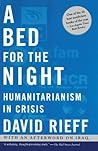
“All major religious traditions accept that suffering and death are simply part of life. The deep radicalism of humanitarian action is its belief that people are not made to suffer.”
― A Bed for the Night: Humanitarianism in Crisis
― A Bed for the Night: Humanitarianism in Crisis
“Perhaps we become accustomed to our grief and, as it becomes increasingly familiar, increasingly part of the emotional landscape, it becomes a dullness. But there is no closure, no forgetting. One mourns those one has loved who have died until one joins them. It happens soon enough.”
― Swimming in a Sea of Death: A Son's Memoir
― Swimming in a Sea of Death: A Son's Memoir
“به همان اندازه که متعهدیم به دیگران بگوییم چه چیز قابل قبول است، همانقدر تعهد داریم که نگوییم چه چیز قابل قبول نیست”
― Swimming in a Sea of Death: A Son's Memoir
― Swimming in a Sea of Death: A Son's Memoir
“She thought the world a charnel house…and couldn’t get enough of it. She thought herself unhappy…and wanted to live, unhappy, for as long as she possibly could.”
― Swimming in a Sea of Death: A Son's Memoir
― Swimming in a Sea of Death: A Son's Memoir
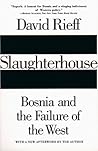
“After Sarajevo, after Srebrenica, we know what “Never again!” means. "Never again’’ simply means "Never again’’ will Germans kill Jews in Europe in the 1940’s. That is all it means.”
― Slaughterhouse: Bosnia and the Failure of the West
― Slaughterhouse: Bosnia and the Failure of the West
“Since 1945, “never again” has meant, essentially, “Never again will Germans kill Jews in Europe in the 1940s.”
―
―
“So many people, including relief workers, talk these days about 'mere' charity, 'mere' humanitarianism. As if coping with a dishonourable world honourably, and a cruel world with kindness, were not honour enough.”
― A Bed for the Night: Humanitarianism in Crisis
― A Bed for the Night: Humanitarianism in Crisis
“Since 1945, 'never again' has meant, essentially, 'Never again will Germans kill Jews in Europe in the 1940s.”
―
―
“Far from setting the stage for more prosperity, the more these markets were opened, they predicted, the more unfavorable Africa's position was likely to become and the more damage would be done to African economies. For these critics, it was utopian footling to suggest that African farmers could soon match the rich world in financial resources, technology, or infrastructure, whether on the national level (roads, ports, bridges, ect.) or in the context of individual farms. Given these realities, a far likelier outcome was the further immiseration and marginalization of Africa's rural smallholders, while the most important enduring effect of trade liberalization was the creation of new markers for the agricultural producers of the Global North.”
― The Reproach of Hunger: Food, Justice, and Money in the Twenty-First Century
― The Reproach of Hunger: Food, Justice, and Money in the Twenty-First Century