Goodreads helps you follow your favorite authors. Be the first to learn about new releases!
Start by following Murray Kempton.

Showing 1-30 of 47
“A critic is someone who enters the battlefield after the war is over and shoots the wounded.”
―
―
“Each of us lives with a sword over his head.
There are those who can ignore its shadow and those who cannot. Those who cannot are not necessarily better than those who can. But they are the creators of the special myth of their time, because any myth is the creation of the very few who cannot bear reality.”
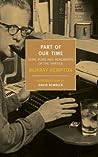
― Part of Our Time: Some Ruins & Monuments of the Thirties
There are those who can ignore its shadow and those who cannot. Those who cannot are not necessarily better than those who can. But they are the creators of the special myth of their time, because any myth is the creation of the very few who cannot bear reality.”
― Part of Our Time: Some Ruins & Monuments of the Thirties
“By adherence to a special set of rules, the child of the shabby-genteel can sometimes leap across the time which has passed by his family and function in the real world without doing violence to the hopes his mother held out for him. But those who cannot live within this pattern are the freaks and poets, and they travel a different road to peace.”
― Part of Our Time: Some Ruins & Monuments of the Thirties
― Part of Our Time: Some Ruins & Monuments of the Thirties
“Any experience deeply felt makes some men better and some men worse. When it has ended, they share nothing but the recollection of a commitment in which each was tested and to some degree found wanting. [...] The consequences of the journey change the voyager so much more than the embarking or the arrival.”
― Part of Our Time: Some Ruins & Monuments of the Thirties
― Part of Our Time: Some Ruins & Monuments of the Thirties
“A critic is someone who enters the battlefield after the war and shoots the injured.”
―
―
“When they began, they could not have thought that it would end like this, because their time seemed to them as simple as a flame. We know now that it was a very complicated time and that they were more complicated people than they knew.”
― Part of Our Time: Some Ruins & Monuments of the Thirties
― Part of Our Time: Some Ruins & Monuments of the Thirties
“We are all addicts in various stages of degradation where I live on the Upper West Side, some to heroin, some to small dogs, and some to the New York Times. The heroin is cut, the dogs are paranoid, and the Times cheats by skimping on the West Coast ball scores. No matter, each of us goes upon the street solely in pursuit of his own particular curse.”
―
―
“The fates have a way of demanding of a man that he suffer his greatest moments all by himself; being alone seems as often attendant upon reality as being in company is attendant upon flight from reality. (frm "Part of Our Time, Some Monuments and Ruins of the Thirties," about American Communist movement.)”
―
―
“To say that an idea is fashionable is to say, I think, that it has been adulterated to a point where it is hardly an idea at all.”
―
―
“Among all the enemies of the plebeian writer’s promise, none lasts longer than self-pity. In 1934, Dashiell Hammett brushed off Clifford Odets’ Awake and Sing with the observation that the arts had little to hope for in a man still weeping because he did not have a bicycle when he was twelve years old.”
― Part of Our Time: Some Ruins and Monuments of the Thirties
― Part of Our Time: Some Ruins and Monuments of the Thirties
“Had there come a time, while he was signing the decrees ordering this man’s death and that man’s imprisonment, when he asked himself if the killing would ever stop? At that, Pressman stopped walking; he was near the marquee of the Hotel William Penn, and, in the light, Hardman saw real shock on his hard young face. “Do you mean, J. B.,” he said at last, “that you reject the Terror?” Things were never the same between them.”
― Part of Our Time: Some Ruins and Monuments of the Thirties
― Part of Our Time: Some Ruins and Monuments of the Thirties
“His philosophy may be summarized as indignation at what he conceived to be the common practice in American industry of bottling up seven cents’ worth of mud and chemicals, giving it an exotic name, and selling it for five dollars to ladies in search of a new and infinitely lovelier countenance. He was, in brief, that glory of American radicalism, the man who is cracked on a single subject.”
― Part of Our Time: Some Ruins and Monuments of the Thirties
― Part of Our Time: Some Ruins and Monuments of the Thirties
“and a governor—himself reluctant.”
― Part of Our Time: Some Ruins and Monuments of the Thirties
― Part of Our Time: Some Ruins and Monuments of the Thirties
“Most men can resist the temptation to lie awake over matters which do not immediately concern them. Only special people cannot.”
― Part of Our Time: Some Ruins and Monuments of the Thirties
― Part of Our Time: Some Ruins and Monuments of the Thirties
“Men are not often what they think they are, and no living person is ever an exact reproduction of a literary conception.”
― Part of Our Time: Some Ruins and Monuments of the Thirties
― Part of Our Time: Some Ruins and Monuments of the Thirties
“It only destroyed them as writers, because it caused them to abandon the quarrel with self.”
― Part of Our Time: Some Ruins and Monuments of the Thirties
― Part of Our Time: Some Ruins and Monuments of the Thirties
“Bartolomeo Vanzetti and Nicola Sacco were very personal instruments. Their creed was the individual; they were victims and not conquerors of institutions.”
― Part of Our Time: Some Ruins and Monuments of the Thirties
― Part of Our Time: Some Ruins and Monuments of the Thirties
“The subjects of this chapter, the buried ones at least, had a different view; they believed that to be a great writer one needed simply to be on the side of the future and to substitute outer reconciliation for interior quarrel. The lesson of their failure is literary and not moral. For the writer is lonely even in fantasy and, try though he will, it is very often his fate to damage no one but himself.”
― Part of Our Time: Some Ruins and Monuments of the Thirties
― Part of Our Time: Some Ruins and Monuments of the Thirties
“Yeats said once that out of the quarrel with others we make rhetoric and out of the quarrel with ourselves we make poetry.”
― Part of Our Time: Some Ruins and Monuments of the Thirties
― Part of Our Time: Some Ruins and Monuments of the Thirties
“by declaring Of Mice and Men a “mess of sentimentality and insidious innocence” and”
― Part of Our Time: Some Ruins and Monuments of the Thirties
― Part of Our Time: Some Ruins and Monuments of the Thirties
“And the key image of their dreams was the working class, disarmed in the twenties and armed in the thirties. I am reminded of how deep that image is buried now whenever a young man of the fifties comes to me to talk about a future in the labor movement. His conversation is about the techniques of labor journalism, about training in labor law, about economic research, and pension statistics. He dreams, as St. Exupéry once complained of the young Frenchman, not of building a cathedral but of serving as its sexton.”
― Part of Our Time: Some Ruins and Monuments of the Thirties
― Part of Our Time: Some Ruins and Monuments of the Thirties
“He feared not defeat or disaster but only that time to come when he must cease to try.”
― Part of Our Time: Some Ruins and Monuments of the Thirties
― Part of Our Time: Some Ruins and Monuments of the Thirties
“The Communist view that the writer was a recruit into the army of history carried with it the traditional Communist faith in empty celebration and rhetorical posture. By its rules, the writer must be a member of a community of the orthodox; he must belong to an organization of writers and it must unfurl banners like those of the army’s other regiments.”
― Part of Our Time: Some Ruins and Monuments of the Thirties
― Part of Our Time: Some Ruins and Monuments of the Thirties
“Josephson told what it meant to create in the Soviet Union: “Writers address a colossal public; cheap editions are circulated by the State Publishing House in amounts of six or more millions, at literally a few pennies a copy; and, as a consequence, writers, being paid on a royalty basis, enjoy a peculiarly favorable position. The security, the prosperity that I noted in Russian writers offered a striking contrast to the condition of writers in my own country, where a very few may succeed in earning somewhat meager livings, establishing them among the lower-paid workers in the community, while the majority starve in garrets still. “It seems,” Josephson ended, “that there is only one way out, that, before we can raise the status of workers in the field of literature, there must be a social revolution.”
― Part of Our Time: Some Ruins and Monuments of the Thirties
― Part of Our Time: Some Ruins and Monuments of the Thirties
“I would like to think it the function of maturity to forgive the enemies, real and fancied, of one’s childhood; and I wondered if it might not be the tragic flaw of Alger Hiss and Whittaker Chambers to have failed to achieve that reconciliation and to have been torn apart between love and hate for the tight little corners of the sheltered life in which they grew up.”
― Part of Our Time: Some Ruins and Monuments of the Thirties
― Part of Our Time: Some Ruins and Monuments of the Thirties
“The student movement's leaders and followers were together victims and propagators of a legend. We can see their illusion nowhere more clearly than in the requirement that the myth of a great student anti-fascist movement be sustained by the counter-myth of a serious student fascist conspiracy in opposition to it. The signal to arms requires an enemy; where none exists, he must be invented.”
― Part of Our Time: Some Ruins & Monuments of the Thirties
― Part of Our Time: Some Ruins & Monuments of the Thirties
“The trouble with you, Jenny Blair, is that you do not know the first thing about life. It is only by knowing how little life has in store for us that we are able to look on the bright side and avoid disappointment.”
― Part of Our Time: Some Ruins and Monuments of the Thirties
― Part of Our Time: Some Ruins and Monuments of the Thirties
“After the Austrian Socialists were destroyed, Alfred Hayes composed a poem about Otto Bauer, their leader, who was even then hiding from the police: “All honor to them, Bauer! For you/ History prepares a shameful grave/ A nameless spot buried under weed and stone/ Where creeping jackals shall come to howl/ Stirred by ancient kinship with those bones!” To read that poem and to think that its author once gave his mother the pangs of birth is to understand why, if the Old Testament God and all his vengeance did not exist, man would have had to invent them.”
― Part of Our Time: Some Ruins and Monuments of the Thirties
― Part of Our Time: Some Ruins and Monuments of the Thirties
“As Gardner Jackson entered Old South that night, he was stopped by Harry Canter, secretary of the Communist Party of Boston. “I just wanted you to know,” said Canter, “that tonight I’m going to call you one of the murderers of Sacco and Vanzetti. I hope you understand that inside I don’t really mean it.”
― Part of Our Time: Some Ruins and Monuments of the Thirties
― Part of Our Time: Some Ruins and Monuments of the Thirties
“He departed AAA early in 1934 to become acting counsel of the Senate investigation of World War I munitions profits, a great war-crimes trial of the merchants of death,”
― Part of Our Time: Some Ruins and Monuments of the Thirties
― Part of Our Time: Some Ruins and Monuments of the Thirties