
Goodreads helps you follow your favorite authors. Be the first to learn about new releases!
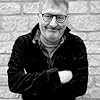
Start by following Paul Broks.

Showing 1-10 of 10
“Cosmology and neuropsychology have absurdity in common. The raw facts are strange beyond imagination.”
―
―
“From a neuroscience perspective we are all divided and discontinuous. The mental processes underlying our sense of self-- feelings, thoughts, memories-- are scattered through different zones of the brain. There is no special point of convergence. No cockpit of the soul. No soul-pilot. They come together in a work of fiction. A human being is a story-telling machine. The self is a story.”
― Into the Silent Land: Travels in Neuropsychology
― Into the Silent Land: Travels in Neuropsychology
“Our ethics and systems of justice, our entire moral order, are founded on the notion of society as a collective of individual selves-- autonomous, introspective, accountable agents. If this self-reflective, moral agent is revealed to be illusory, what then?”
― Into the Silent Land: Travels in Neuropsychology
― Into the Silent Land: Travels in Neuropsychology
“When we see the brain we realize that we are, at one level, no more than meat; and, on another, no more than fiction.”
―
―
“This is the left hemisphere confabulating. It does this for all of us, every waking moment. It edits our conscious experiences, makes them comprehensible and palatable. It's the brain's spin-doctor.”
― Into the Silent Land: Travels in Neuropsychology
― Into the Silent Land: Travels in Neuropsychology
“Are you all right?'
'It's okay,' he says, 'I think I just swallowed some dark.'
He has the notion that darkness is a substance. It will make you choke if you swallow too much in one go. I could have put him straight with some prosaic account of the coughing reflex being triggered by the shock of the cold air rather than a mouthful of darkness, but I didn't I stashed away the treasured image and left him with the version of reality fashioned by his infant brain.”
― Into the Silent Land: Travels in Neuropsychology
'It's okay,' he says, 'I think I just swallowed some dark.'
He has the notion that darkness is a substance. It will make you choke if you swallow too much in one go. I could have put him straight with some prosaic account of the coughing reflex being triggered by the shock of the cold air rather than a mouthful of darkness, but I didn't I stashed away the treasured image and left him with the version of reality fashioned by his infant brain.”
― Into the Silent Land: Travels in Neuropsychology
“How resilient people are. If one day you woke up to find that you had been transformed into a gigantic insect, the chances are you would just get up and carry on with your new life.”
―
―
“In a famous series of lectures on the character of physical law delivered at Cornell University in 1964, the great physicist Richard Feynman put it this way: I think it is safe to say that no one understands quantum mechanics. Do not keep saying to yourself, if you can possibly avoid it, “But how can it be like that?” because you will go “down the drain” into a blind alley from which nobody has yet escaped. Nobody knows how it can be like that. This chimes, as we have seen, with J. B. S. Haldane’s famous assertion that “the Universe is not only queerer than we suppose but queerer than we can suppose.”
― The Darker the Night, the Brighter the Stars: A Neuropsychologist's Odyssey Through Consciousness
― The Darker the Night, the Brighter the Stars: A Neuropsychologist's Odyssey Through Consciousness
“Neuroscience is fast developing the technical and conceptual wherewithal to reveal in fine, bare detail the neurobiological substrates of the mind. Perhaps it will despoil a sacred myth - the myth of selfhood and souls. And, if so, we may be wandering innocently into the opening phase of a dangerous game. Our ethics and systems of justice, our entire moral order, are founded on the notion of society as a collective of individual selves - autonomous, introspective, accountable agents. If this self-reflective, moral agent is revealed to be illusory, then what?”
― Into the Silent Land: Travels in Neuropsychology
― Into the Silent Land: Travels in Neuropsychology
“What I think I am saying is that phenomenal consciousness - the raw feel of experience - is invisible to conventional scientific scrutiny and will forever remain so. It is, by definition, subjective - where as science, by definition, adopts an objective stance. You can't be in two places at once. You either experience consciousness "from the inside" ([...]) or you view it "from the outside" ([...]). Science can study the neural activity, the bodily states, the environmental conditions, and the outward behaviours - including verbal behaviours that stand for different states of awareness ([...]), but the quality - the feel - of our experiences remains forever private and therefore out of bounds of scientific analysis. I can't see a way round this. Privateness is a fundamental constituent of consciousness.”
― Into the Silent Land: Travels in Neuropsychology
― Into the Silent Land: Travels in Neuropsychology


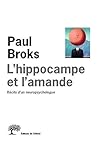
![[(Into the Silent Land: Travels in Neuropsychology)] [Author: Paul Broks] published on (May, 2004)](https://s.gr-assets.com/assets/nophoto/book/111x148-675b3b2743c83e96e2540d2929d5f4d2.png "[(Into the Silent Land: Travels in Neuropsychology)] [Author: Paul Broks] published on (May, 2004)")