Goodreads helps you follow your favorite authors. Be the first to learn about new releases!
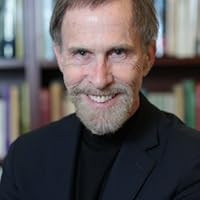
Start by following Alex Rosenberg.
Showing 1-30 of 52
“The truth never takes a backseat
”
―
”
―
“Doing right means nothing more than minimizing human misery.”
― The Girl from Krakow
― The Girl from Krakow
“You know, seeing the world straight doesn’t make you smarter or better. It might just make you worse and more complacent about things.”
― The Girl from Krakow
― The Girl from Krakow
“why did rail journeys always provoke interior monologues of philosophy?”
― The Girl from Krakow
― The Girl from Krakow
“Yes, your emotions are screaming at you. But your emotions have no foresight. They can’t look ahead. They only look back to what enabled your ancestors to survive. If you allow them to overmaster you in the life-or-death choice you face, you’ll regret it in a future that your emotions cannot see.”
― The Girl from Krakow
― The Girl from Krakow
“your emotions are screaming at you. But your emotions have no foresight. They can’t look ahead. They only look back to what enabled your ancestors to survive. If you allow them to overmaster you in the life-or-death choice you face, you’ll regret it in a future that your emotions cannot see.”
― The Girl from Krakow
― The Girl from Krakow
“Who is it, really, peering out at the world from inside my body, and why did it turn out to be me?”
― The Girl from Krakow
― The Girl from Krakow
“natural selection a couple of hundred thousand years. It’s sure to find ways to make you hate strangers who might be threats to survival. Better safe than sorry. Hate all strangers. The best way of making you hate strangers who just might hurt you is the way religion does it. It even gets you to give up your life for some greater cause—protecting your tribe from the strangers.”
― The Girl from Krakow
― The Girl from Krakow
“shriek,”
― The Girl from Krakow
― The Girl from Krakow
“The only subject that you could dive straight into without learning any new theory or, for that matter, any theory at all, was narrative history. From the very beginnings of our”
― How History Gets Things Wrong: The Neuroscience of Our Addiction to Stories
― How History Gets Things Wrong: The Neuroscience of Our Addiction to Stories
“There had to be some meaning to it. Judgment, punishment, test, trial, strengthening—something that made sense out of it. Some scheme into which what was happening could all be fit—Rita, Urs, Tadeusz, Stefan, Erich, Freddy . . . A story from which she might at least learn something about herself and her life. At the end of it, when the war was over, if she survived, there would be a plot with a natural beginning, a long, painful, tension-filled middle, villains and heroes, and a satisfying end, or at least one that brought the story to a close—her survival. When it was all over, the story would stitch together everything that had happened—her perpetual discomfort and danger—even if it didn’t make sense of the horrors visited on the millions somehow suffering through the demented melodrama that would end with her survival. Yes, there would be a story at the end, if she did survive—a plot with dangers and escapes, in which her actions and everyone else’s would make sense. But”
― The Girl from Krakow
― The Girl from Krakow
“There is a reason why stories and histories of war and killing have been more popular than the lives of saints or artists since Homer.”
― How History Gets Things Wrong: The Neuroscience of Our Addiction to Stories
― How History Gets Things Wrong: The Neuroscience of Our Addiction to Stories
“You see, Magda, Darwin showed that purpose in nature is an illusion. Whatever looks planned and organized to attain some end is just the result of blind variation that gets filtered by a passive environment—whether in nature or culture.” Here she looked at Dani. “Denying it is turning your”
― The Girl from Krakow
― The Girl from Krakow
“Like most humans, Krystyna would respond to human emotions with kindness, especially if there were something to gain.”
― The Girl from Krakow
― The Girl from Krakow
“building”
― The Girl from Krakow
― The Girl from Krakow
“the”
― The Girl from Krakow
― The Girl from Krakow
“paquebot, the more distasteful grew the prospect”
― The Girl from Krakow
― The Girl from Krakow
“tea”
― The Girl from Krakow
― The Girl from Krakow
“stretched. The last time she had looked up at the”
― The Girl from Krakow
― The Girl from Krakow
“patient file came to Gil’s desk for a”
― The Girl from Krakow
― The Girl from Krakow
“wrong because forbidden by God, or forbidden by God because wrong? It’s obvious. Forbidden by God because it’s wrong.”
― The Girl from Krakow
― The Girl from Krakow
“Why was she alive? Intelligence, foresight, the right decisions? How foolish to think that. Better to ask why thought always seeks stories, meaning. Why do we endlessly try to make sense of things? Why are we never satisfied with the right answer—dumb luck? Why do we always crave a motive? And why did rail journeys always provoke interior monologues of philosophy?”
― The Girl from Krakow
― The Girl from Krakow
“ ’Tis not contrary to reason to prefer the destruction of the whole world to the scratching of my finger.”
― The Girl from Krakow
― The Girl from Krakow
“Most people were no worse than indifferent to other people’s fate”
― The Girl from Krakow
― The Girl from Krakow
“Evolution is inevitable. But the process isn’t going from lower to higher. It’s just going from different to different—today’s fittest are likely to be tomorrow’s unfit. It’s environments that decide fitness, and environments change.”
― The Girl from Krakow
― The Girl from Krakow
“dissimulate”
― The Girl from Krakow
― The Girl from Krakow
“underwear. She”
― The Girl from Krakow
― The Girl from Krakow
“ideas that make cooperation in your tribe possible are just like any other parasite, only they invade the brain instead of the liver, say. The brain parasites survive and spread because of what they do to and for their hosts—us. So ideas that make us band together, especially against strangers, are going to be encouraged by the same forces of evolution that made it possible for us to kill off the woolly mammoth, right?”
― The Girl from Krakow
― The Girl from Krakow
“The only trick that would work was ganging up to protect ourselves from them. Without that we would have become extinct. So, there must have been very strong selection for anything—especially gestures, grunts, signs—that made it possible for people to gang up, to cooperate. That’s how language, and culture, emerged by natural selection.” “And everything else about”
― The Girl from Krakow
― The Girl from Krakow
“May I take you out for supper?”
― The Girl from Krakow
― The Girl from Krakow