Goodreads helps you follow your favorite authors. Be the first to learn about new releases!
Start by following Kecia Ali.

Showing 1-6 of 6
“However, in a universe with human free will, allowing injustice is not the same as being the cause of it; God repeatedly rejects responsibility for injustice in Qur’anic passages declaring that God does not wrong or oppress people in any way, but rather people do wrong (zulm) “to their own selves” (or “to their own souls"). This assertion is freeing, in that God does not demand that Muslims act contrary to the dictates of conscience. However, it also implies a much more significant responsibility for the individual human being to make ethical judgments and take moral actions. Qur’anic regulations, in this case, must be seen as only a starting point for the ethical development of the human being, as well as for the transformation of human society.”
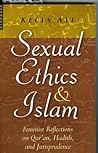
― Sexual Ethics and Islam: Feminist Reflections on Qur'an, Hadith, and Jurisprudence
― Sexual Ethics and Islam: Feminist Reflections on Qur'an, Hadith, and Jurisprudence
“As we engage more deeply with the intellectual heritage of centuries of Muslim thinkers, we must neither romanticize the tradition as it stands nor be blindly optimistic about prospects for transformation within it. Most importantly, as we expose reductive and misogynist understandings of the Qur’an and hadith, refusing to see medieval interpretations as coextensive with revelation, we must not arrogate to our own readings the same absolutist conviction we criticize in others. We must accept responsibility for making particular choices – and must acknowledge that they are interpretive choices, not merely straightforward reiterations of “what Islam says.”
― Sexual Ethics and Islam: Feminist Reflections on Qur'an, Hadith, and Jurisprudence
― Sexual Ethics and Islam: Feminist Reflections on Qur'an, Hadith, and Jurisprudence
“Some may view my focus on sexual matters as playing into the Western obsession with Muslim sexuality at the expense of other, more vital, areas of concern. Poverty, political repression, war, and global power dynamics are, indeed, crucial to Muslim women’s lives. However, even these issues cannot be entirely divorced from sex and sexuality: poverty matters differently for women, when it constrains women’s inability to negotiate marriage terms or leave abusive spouses; repressive regimes may attempt to demonstrate their “Islamic” credentials by capitulating to demands for “Shari‘a” in family matters or imposing putatively Islamic laws that punish women disproportionately for sexual transgressions.”
― Sexual Ethics and Islam: Feminist Reflections on Qur'an, Hadith, and Jurisprudence
― Sexual Ethics and Islam: Feminist Reflections on Qur'an, Hadith, and Jurisprudence
“The legal structure of Islamic marriage is predicated on a gender-differentiated allocation of interdependent claims, which would be thrown into chaos by a same-sex union. In the standard contractual understanding of marriage, the husband holds milk al-nikah, control of the marriage tie, and the wife has a claim to dower and the obligation of sexual exclusivity and availability. Several early jurists considered the possibility of whether these rights and duties could be reallocated – whether a woman could pay a man a dower, for example, and retain control over sex and divorce – and agreed unanimously that such a reallocation is not permitted. Not only are husbands’ and wives’ rights distinct, but each role is fundamentally linked to the sex/gender of the person exercising it. A woman cannot wield control of the marriage tie; a man cannot be contractually bound to sexual availability to his wife. Thus, following that logic, it would not be possible for one woman to adopt the “husband” role and the other to adopt the “wife” role in the marriage of two women. The self-contained logic of the jurisprudential framework does not permit such an outcome.”
― Sexual Ethics and Islam: Feminist Reflections on Qur'an, Hadith, and Jurisprudence
― Sexual Ethics and Islam: Feminist Reflections on Qur'an, Hadith, and Jurisprudence
“Too often, Muslims, especially females, who challenge certain widely accepted views are met with warnings to desist; that way, it is said, lies heresy, blasphemy, apostasy. Those who have appointed themselves the guardians of communal orthodoxy are particularly vigilant on matters concerned with women and gender – in part, because it is in these realms that the construction of Muslim identity in self-conscious opposition to a decadent West takes place.”
― Sexual Ethics and Islam: Feminist Reflections on Qur'an, Hadith, and Jurisprudence
― Sexual Ethics and Islam: Feminist Reflections on Qur'an, Hadith, and Jurisprudence
“Muslim acknowledgement of the positive aspects of female sexuality has historically coexisted with two views that challenge it in different ways. First, certain elements of the classical Muslim tradition treat female sexuality as dangerous, with potentially disruptive and chaotic effects on society. Historians have demonstrated how anxieties about temptation and female sexuality translated into insistence (never fully achieved in reality) on restricting the appearance of women in public spaces. Muslim worry over fitna – chaos and disorder – has often focused on the sexual temptation caused both by women’s unregulated desires and the troublesome desire that women provoke in men. Second, and in a paradoxical relationship to this view of women as sexually insatiable and thus prone to create social chaos, Muslim authorities have stressed the importance of the fulfillment of male sexual needs, especially in the context of marriage. Drawing particularly on several hadith delineating dire consequences for women who refuse their husbands’ sexual overtures, the insistence on men’s sexual needs and wives’ responsibility to fulfill them has competed for prominence in modern intra-Muslim discourses on sex with the recognition of female sexual needs.”
― Sexual Ethics and Islam: Feminist Reflections on Qur'an, Hadith, and Jurisprudence
― Sexual Ethics and Islam: Feminist Reflections on Qur'an, Hadith, and Jurisprudence