Goodreads helps you follow your favorite authors. Be the first to learn about new releases!
Start by following Emma Restall Orr.

Showing 1-13 of 13
“The important element is the way in which all things are connected. Every thought and action sends shivers of energy into the world around us, which affects all creation. Perceiving the world as a web of connectedness helps us to overcome the feelings of separation that hold us back and cloud our vision. This connection with all life increases our sense of responsability for every move, every attitude, allowing us to see clearly that each soul does indeed make a difference to the whole.”
― Druidry
― Druidry
“The wild is an integral part of who we are as children. Without pausing to consider what or where or how, we gather herbs and flowers, old apples and rose hips, shiny pebbles and dead spiders, poems, tears and raindrops, putting each treasured thing into the cauldron of our souls. We stir our bucket of mud as if it were, every one, a bucket of chocolate cake to be mixed for the baking. Little witches, hag children, we dance our wildness, not afraid of not knowing.
But there comes a time when the kiss of acceptance is delayed until the mud is washed from our knees, the chocolate from our faces. Putting down our wooden spoon with a new uncertainty, setting aside our magical wand, we learn another system of values based on familiarity, on avoiding threat and rejection. We are told it is all in the nature of growing up. But it isn't so.
Walking forward and facing the shadows, stumbling on fears like litter in the alleyways of our minds, we can find the confidence again. We can let go of the clutter of our creative stagnation, abandoning the chaos of misplaced and outdated assumptions that have been our protection. Then beyond the half light and shadows, we can slip into the dark and find ourselves in a world where horizons stretch forever. Once more we can acknowledge a reality that is unlimited finding our true self, a wild spirit, free and eager to explore the extent of our potential, free to dance like fireflies, free to be the drum, free to love absolutely with every cell of our being, or lie in the grass watching stars and bats and dreams wander by.
We can live inspired, stirring the darkness of the cauldron within our souls, the source, the womb temple of our true creativity, brilliant, untamed”
―
But there comes a time when the kiss of acceptance is delayed until the mud is washed from our knees, the chocolate from our faces. Putting down our wooden spoon with a new uncertainty, setting aside our magical wand, we learn another system of values based on familiarity, on avoiding threat and rejection. We are told it is all in the nature of growing up. But it isn't so.
Walking forward and facing the shadows, stumbling on fears like litter in the alleyways of our minds, we can find the confidence again. We can let go of the clutter of our creative stagnation, abandoning the chaos of misplaced and outdated assumptions that have been our protection. Then beyond the half light and shadows, we can slip into the dark and find ourselves in a world where horizons stretch forever. Once more we can acknowledge a reality that is unlimited finding our true self, a wild spirit, free and eager to explore the extent of our potential, free to dance like fireflies, free to be the drum, free to love absolutely with every cell of our being, or lie in the grass watching stars and bats and dreams wander by.
We can live inspired, stirring the darkness of the cauldron within our souls, the source, the womb temple of our true creativity, brilliant, untamed”
―
“Pagan deity is never super-natural; existing within nature, as nature, both human and nonhuman nature, the gods are the darkness, the vibrance, the hunger, that we not only witness around us but experience within us. The gods are the cry for justice, the tug of trade, the belly-kick of loss, the bond with the land and with kin that are relayed again and again in the tales of our people and heritage, tales we daily observe in others and feel inside ourselves. The Pagan understanding of deity is therefore not wholly objective; he may acknowledge the existence of any or all gods, but each Pagan’s relationship with his gods is fuelled by his own critically subjective and visceral experience of those forces.”
― Living With Honour: A Pagan Ethics
― Living With Honour: A Pagan Ethics
“In the seventeenth century, John Locke spoke of tolerance. Asking, ‘Where is the man that has incontestable evidence of the truth of all he holds?’ he asserted that nobody could ever be sure of what is true. How do we have the right, then, to proclaim our own infallible truth or judge others’ ideas as right or wrong? Once again Locke’s words support a fundamental concept within modern *Pagan thought, and one here that allows a circle of Pagans to gather together to share prayers of reverence and respect in ceremony, a Wiccan devotee of Demeter who sees her as one aspect of the Great Goddess she calls Isis, beside a Druid polytheist who lives in the service of his god Gwyn ap Nydd, a Witch who is a priestess of the horse goddess Epona, an animist honouring a power she calls Darkness, a Heathen who has struck a good deal with Odin, and a chaos magician who thinks they’re all completely mad, himself honouring the power that seethes within the patterns of all life. The harmony that allows them to stand in ceremony together comes from that acknowledgement that there is no one truth that can be shared. Each individual has questioned, studied, explored, experienced life and made choices of belief that are uniquely personal.”
― Living With Honour: A Pagan Ethics
― Living With Honour: A Pagan Ethics
“The way we see the world is not actually the world in itself. What we see is our idea of it. The truth is, we have no notion of what the world is other than through the veils of our perception.”
― The Wakeful World: Animism, Mind and the Self in Nature
― The Wakeful World: Animism, Mind and the Self in Nature
“As the incorporation of every moment of its experience, every influence of its contextual heritage and environment, a soul is the presence of its complete past.”
― The Wakeful World: Animism, Mind and the Self in Nature
― The Wakeful World: Animism, Mind and the Self in Nature
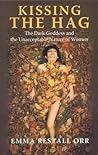
“Round-bottomed, soft-bellied, irrational, magical, too caring, too carefree, proudly demanding, unfettered by dependence, sexually unashamed, hairy, hungry, unpredictable, silently present, intangibly distant, ceaselessly gossipy, alarmingly uninhibited, seething with potential, incomprehensible, altogether unfathomable, dangerous and deliciously powerful, she is the hag. She bleeds. She laughs so hard her belly shakes, she snorts and farts. She is the dark side of woman, the inside, the raw side beneath the surface skin we are taught so well to cleanse and tone and remedy with paint. She is the woman whose self-expression is not quite under control. Mysterious, intuitive, emotional, curvaceous, lustful, needy, selfish, natural and free, she is the me we long to - but know we shouldn’t - reveal. Feeling”
― Kissing the Hag: The Dark Goddess and the Unacceptable Nature of Woman
― Kissing the Hag: The Dark Goddess and the Unacceptable Nature of Woman
“Exploring all I could find, often with reckless dedication, I devoured the philosophies and theologies of animistic and shamanistic traditions. Hungrily I began learning: how to feel connection with the wind and the waves, how to hear the songs of the land and the stories of the ancestors, how to dissolve into darkness and ride the thermals of light. Slowly I discovered how these traditions are still alive, not just in lands that, with a mix of disquiet and envy, Western cultures call primitive and uncivilized. Returning to the islands of my ancestors, with wonder and relief, I found animistic religions in the rolling hills and flowering gardens of Britain. To my surprise and delight, I found too that here my passion for science was as nurtured as my soul’s artistic creativity. There was nothing in quantum physics or molecular biology, or the theories of the physiology of consciousness that could negate my growing understanding and experience of sanctity. I found the power of reason here, naturally inherent within the language of a religion.”
― Living With Honour: A Pagan Ethics
― Living With Honour: A Pagan Ethics
“To the animist, a state of permanent enlightenment is not considered natural. His senses inform him that, firstly, life is sustained by a balance of light and darkness, and, secondly, it is lived for the most part in neither darkness nor light, but in varying degrees of twilight and shadow, of half knowing, believing, assuming and concluding”
― The Wakeful World: Animism, Mind and the Self in Nature
― The Wakeful World: Animism, Mind and the Self in Nature
“The British philosopher and novelist Raymond Tallis, writing in the New Scientist (January 2010), commented on how the ‘material world, far from being the noisy, colourful, smelly place we live in, is colourless, silent, full of odourless molecules, atoms, particles, whose nature and behaviour is best described mathematically’.”
― The Wakeful World: Animism, Mind and the Self in Nature
― The Wakeful World: Animism, Mind and the Self in Nature
“For the woman who has not hidden the hag within herself, that darkness at the centre of the soul is a magical sanctuary. In Druidry, we speak of it as a nemeton deep within the soul, a place of exquisite peace and natural healing. Indeed, it is often referred to as a great dark cauldron; it is only when a woman is able to sit, balanced and grounded, upon the three feet of that inner cauldron, that she is able to find the strength of her soul’s creativity, an ancient and bottomless pot containing that infinite universal darkness, this is the great cauldron of myth and legend, and mumbling beside it is her inner hag who, like Cerridwen, the old witch goddess of the sickle moon, stirs her brew of transformative inspiration.”
― Kissing the Hag: The Dark Goddess and the Unacceptable Nature of Woman
― Kissing the Hag: The Dark Goddess and the Unacceptable Nature of Woman
“Not a squalid den of demons and indecency at the back of a beautiful great house, the mind is a vast and ancient wood, the density of its canopy allowing sunlight only now and then to reach through and touch the spiders and mushrooms in the leaf mould of the forest floor. This is who we are.”
― The Wakeful World: Animism, Mind and the Self in Nature
― The Wakeful World: Animism, Mind and the Self in Nature
“Where is the man that has incontestable evidence of the truth of all he holds?’ he asserted that nobody could ever be sure of what is true. How do we have the right, then, to proclaim our own infallible truth or judge others’ ideas as right or wrong?”
― Living With Honour: A Pagan Ethics
― Living With Honour: A Pagan Ethics