Goodreads helps you follow your favorite authors. Be the first to learn about new releases!
Start by following Blake Bailey.

Showing 1-26 of 26
“All you ought to be worrying about now is order (not about how to impose it on chaos, wish is the opposite of art, but about how to bring it out of chaos, which is art itself). And your worrying about this ought not to be a tortured thing - God knows there's enough torture growing wild in everybody's life so that nobody in his right mind needs to cultivate it - but a serene thing. Don't, in other words, jazz yourself up into a nervous wreck. Be quiet, be as sane as you can, and let the work come out of you. If it's to come, it will; if it's not, no amount of self-induced frenzy is going to hep it along.
One final piece of solemn, teacherly advice, and I do mean this: Try to like yourself a little better.”
―
One final piece of solemn, teacherly advice, and I do mean this: Try to like yourself a little better.”
―
“Vevers remarked on what struck them as Yates's peculiar attitude toward women: 'He expected them to drink a lot and be beautiful all the time.”
― A Tragic Honesty: The Life and Work of Richard Yates
― A Tragic Honesty: The Life and Work of Richard Yates
“Fitzgerald's work was almost entirely out of print when 'The Lost Weekend' was published in 1944—even 'Gatsby' seemed well on its way to being forgotten—and Jackson had meant to be 'deliberately prophetic' in calling attention to a writer he considered the foremost chronicler of 'the temper and spirit of the time.' More than twenty years later he finally received credit, in writing, for having played a key role in the so-called Fitzgerald Revival.”
― Farther and Wilder: The Lost Weekends and Literary Dreams of Charles Jackson
― Farther and Wilder: The Lost Weekends and Literary Dreams of Charles Jackson
“The Lost Weekend was the only book, out of five books, that I wrote sober, without stimulus or sedative.”
― Farther and Wilder: The Lost Weekends and Literary Dreams of Charles Jackson
― Farther and Wilder: The Lost Weekends and Literary Dreams of Charles Jackson
“Poor Scott. Briefly, briefly, as a boy on the verge of manhood, he’d been so handsome and promising that the sequel must have seemed a dream; behind the acne and brain damage and bewildering alienation, he was a golden boy still. Probably he thought he’d given his poor old stepmom the thrill of her life. One thing was certain: at that moment he’d loved her and was sorry for ever thinking ill of her—she’d packed his lunch!—and wanted to convey this in some meaningful way. Probably, too, he was drunk and/or high. As Scott’s only brother—a person who shared his sense of humor and some of his darker tendencies too—I considered explaining as much to Sandra, for what it was worth. Instead I said, “Welcome to the club.” “. . . No!” I nodded. “Tongue and all.” Sandra”
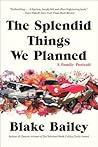
― The Splendid Things We Planned: A Family Portrait
― The Splendid Things We Planned: A Family Portrait
“But what ultimately made Yates the scourge of copy editors was his simple aversion to criticism; any emendation in his manuscript, be it a single semicolon, would cause dark alcoholic brooding, which would finally erupt in long, hectoring, semicoherent phone calls.”
― A Tragic Honesty: The Life and Work of Richard Yates
― A Tragic Honesty: The Life and Work of Richard Yates
“He loved the idea that he was mentally ill,” said his daughter Monica, “and hated the idea he was an alcoholic”—that is, bipolar disorder was a bona fide illness, while alcoholism smacked of a shameful personal failing.”
― A Tragic Honesty: The Life and Work of Richard Yates
― A Tragic Honesty: The Life and Work of Richard Yates
“One of the more curious paradoxes of Yates’s nature was his almost archaic courtliness toward women on the one hand, and his lifelong tendency to emphasize their physical defects and/or dubious upbringing on the other.”
― A Tragic Honesty: The Life and Work of Richard Yates
― A Tragic Honesty: The Life and Work of Richard Yates
“Yates’s determinism, like Flaubert’s, was a matter of knowing his characters well enough to know their fates, and making the reader see this, too. Just as one never expects Emma to repent of her infidelity and embrace provincial life, one also figures the Wheelers won’t move to Europe and live happily ever after. Their weaknesses, well defined at the outset, mark them for a bad end.”
― A Tragic Honesty: The Life and Work of Richard Yates
― A Tragic Honesty: The Life and Work of Richard Yates
“Not only had Yates continued to grow as a writer in terms of craft, but also philosophically, salvaging from the ruins of his life a greater degree of compassion for suffering humankind.”
― A Tragic Honesty: The Life and Work of Richard Yates
― A Tragic Honesty: The Life and Work of Richard Yates
“He had damaged … the ear's innermost chamber, where we hear the heavy noise of the dragon's tail moving over the dead leaves.”
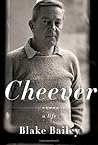
― Cheever: A Life
― Cheever: A Life
“I went down like a tray of dishes”
― Cheever: A Life
― Cheever: A Life
“I had never understood what Eliot meant by the curious phrase ‘objective correlative’ until the scene in Gatsby where the almost comically sinister Meyer Wolfsheim, who has just been introduced, displays his cuff links and explain that they are ‘the finest specimens of human molars.’ Get it? Got it. That’s what Eliot meant (109).”
― A Tragic Honesty: The Life and Work of Richard Yates
― A Tragic Honesty: The Life and Work of Richard Yates
“When a child is young,” Burck explained one night (perhaps he was relating Hauber’s analogy), “you can catch him if he falls. Then he”
― The Splendid Things We Planned: A Family Portrait
― The Splendid Things We Planned: A Family Portrait
“Repeatedly Yates went berserk—raging over grievances old and new, hurling furniture at phantoms out of his past. The nurses who lived upstairs complained about the racket to the landlady, an eccentric woman who adored Yates and did nothing.”
― A Tragic Honesty: The Life and Work of Richard Yates
― A Tragic Honesty: The Life and Work of Richard Yates
“When you put a thing on paper, sometimes you discover you already know the answer. Or maybe that there is no answer, which is the same thing.”
― A Tragic Honesty: The Life and Work of Richard Yates
― A Tragic Honesty: The Life and Work of Richard Yates
“As he wrote a friend, “I’m not at all sure what I’m getting into or getting out of but there seems to be a time for departure and this seems to be it.”
― Cheever: A Life
― Cheever: A Life
“That winter he was invited to give a reading at the University of Massachusetts (Boston), but not a single person showed up. He sat in the silent lecture hall while his two sponsors gazed at their watches; finally Yates suggested they adjourn to a bar. He didn’t seem particularly surprised.”
― A Tragic Honesty: The Life and Work of Richard Yates
― A Tragic Honesty: The Life and Work of Richard Yates
“He got down on one knee and begged Nikky’s forgiveness while everyone in the office gathered around laughing and clapping—it was so cute—and really, you know, that’s what it took with Nikky! My own hands clapped mechanically, but I thought What the fuck what the fuck what the fuck . . . this, again, directed at me rather than them. I”
― The Splendid Things We Planned: A Family Portrait
― The Splendid Things We Planned: A Family Portrait
“There were other times, fortunately, when he knew better. “All I write about is family,” Elizabeth Cox told him. “That’s all there is to write about,” Yates replied.”
― A Tragic Honesty: The Life and Work of Richard Yates
― A Tragic Honesty: The Life and Work of Richard Yates
“Work was its own reward as ever, not least because it was the best way to avoid dwelling on life.”
― A Tragic Honesty: The Life and Work of Richard Yates
― A Tragic Honesty: The Life and Work of Richard Yates
“We don’t have to have easy moralizing reactions to characters in literature.”
― Philip Roth: The Biography
― Philip Roth: The Biography
“But Yates was desperate enough to put aside his anxiety and give teaching a try. He could think of no more demoralizing prospect, after all, than an indefinite future of PR work—insipid, time-consuming, exhausting, and damaging to one’s talent, not to mention sanity.”
― A Tragic Honesty: The Life and Work of Richard Yates
― A Tragic Honesty: The Life and Work of Richard Yates
“In other words Yates had remembered the lesson of his first great master, Fitzgerald—namely, that people rarely say what they mean, and good dialogue is a matter of catching one’s characters “in the very act of giving themselves away.”
― A Tragic Honesty: The Life and Work of Richard Yates
― A Tragic Honesty: The Life and Work of Richard Yates
“Largely to spare his feelings, she’d spoken in rather vague terms about wanting to “find herself,” and Yates concluded that she’d become a “womens’-libbing bitch” as he sometimes put it. He couldn’t speak calmly on the subject; partly, perhaps, because his mother’s “independence” had caused him so much grief, Yates’s hatred for all “feminist horseshit” bordered on the pathological.”
― A Tragic Honesty: The Life and Work of Richard Yates
― A Tragic Honesty: The Life and Work of Richard Yates
“As Monica Yates pointed out, “Dad didn’t notice other people. He picked up on asshole people, he could figure people out in general, but in another way he saw himself projected out, and that’s another thing that made Martha angry: She thought he was going to be so perceptive, but really he was very self-regarding.”
― A Tragic Honesty: The Life and Work of Richard Yates
― A Tragic Honesty: The Life and Work of Richard Yates