Goodreads helps you follow your favorite authors. Be the first to learn about new releases!
Start by following Agustín Rayo.

Showing 1-1 of 1
“The Banach-Tarski Theorem is an astonishing result. We have decomposed a ball into finitely many pieces, moved around the pieces without changing their size or shape, and then reassembled them into two balls of the same size as the original.
I think the theorem teaches us something important about the notion of volume. As noted earlier, it is an immediate consequence of the theorem that some of the Banach-Tarski pieces must lack definite volumes and, therefore, that not every subset of the unit ball can have a well-defined volume. A little more precisely, the theorem teaches us that there is no way of assigning volumes to the Banach-Tarski pieces while preserving three-dimensional versions of the principles we called Uniformity and (finite) Additivity in chapter 7.
(Proof: Suppose that each of the (finitely many) Banach-Tarski pieces has a definite finite volume. Since the pieces are disjoint, and since their union is the original ball, Additivity entails that the sum of the volumes of the pieces must equal the volume of the original ball. But Uniformity ensures that the volume of each piece is unchanged as we move it around. Since the reassembled pieces are disjoint, and since their union is two balls, Additivity entails that the sum of their volumes must be twice the volume of the original ball. But since the volume of the original ball is finite and greater than zero, it is impossible for the sum of the pieces to equal both the volume of the original ball and twice the volume of the original ball.)
If I were to assign the Banach-Tarski Theorem a paradoxicality grade of the kind we used in chapter 3, I would assign it an 8. The theorem teaches us that although the notion of volume is well-behaved when we focus on ordinary objects, there are limits to how far it can be extended when we consider certain extraordinary objects - objects that can only be shown to exist by assuming the Axiom of Choice.”
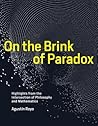
― On the Brink of Paradox: Highlights from the Intersection of Philosophy and Mathematics
I think the theorem teaches us something important about the notion of volume. As noted earlier, it is an immediate consequence of the theorem that some of the Banach-Tarski pieces must lack definite volumes and, therefore, that not every subset of the unit ball can have a well-defined volume. A little more precisely, the theorem teaches us that there is no way of assigning volumes to the Banach-Tarski pieces while preserving three-dimensional versions of the principles we called Uniformity and (finite) Additivity in chapter 7.
(Proof: Suppose that each of the (finitely many) Banach-Tarski pieces has a definite finite volume. Since the pieces are disjoint, and since their union is the original ball, Additivity entails that the sum of the volumes of the pieces must equal the volume of the original ball. But Uniformity ensures that the volume of each piece is unchanged as we move it around. Since the reassembled pieces are disjoint, and since their union is two balls, Additivity entails that the sum of their volumes must be twice the volume of the original ball. But since the volume of the original ball is finite and greater than zero, it is impossible for the sum of the pieces to equal both the volume of the original ball and twice the volume of the original ball.)
If I were to assign the Banach-Tarski Theorem a paradoxicality grade of the kind we used in chapter 3, I would assign it an 8. The theorem teaches us that although the notion of volume is well-behaved when we focus on ordinary objects, there are limits to how far it can be extended when we consider certain extraordinary objects - objects that can only be shown to exist by assuming the Axiom of Choice.”
― On the Brink of Paradox: Highlights from the Intersection of Philosophy and Mathematics