Goodreads helps you follow your favorite authors. Be the first to learn about new releases!
Start by following George Gilder.

Showing 1-30 of 136
“The most precious resource in the world economy is human genius.”
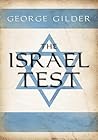
― The Israel Test: Why the World's Most Besieged State is a Beacon of Freedom and Hope for the World Economy
― The Israel Test: Why the World's Most Besieged State is a Beacon of Freedom and Hope for the World Economy
“In the Google era, Newton’s system of the world—one universe, one money, one God—is now in eclipse. His unitary foundation of irreversible physics and his irrefragable golden money have given way to infinite parallel universes and multiple paper moneys manipulated by fiat. Money, like the cosmos, has become relativistic and reversible at will.”
― Life After Google: The Fall of Big Data and the Rise of the Blockchain Economy
― Life After Google: The Fall of Big Data and the Rise of the Blockchain Economy
“Today, on a per capita basis, Israel far leads the world in research and technological creativity.”
― The Israel Test: Why the World's Most Besieged State is a Beacon of Freedom and Hope for the World Economy
― The Israel Test: Why the World's Most Besieged State is a Beacon of Freedom and Hope for the World Economy
“Money is not a magic wand but a measuring stick, not wealth but a gauge of it.”
― Life After Google: The Fall of Big Data and the Rise of the Blockchain Economy
― Life After Google: The Fall of Big Data and the Rise of the Blockchain Economy
“The envy of excellence leads to perdition; the love of it leads to the light.”
― The Israel Test
― The Israel Test
“Midas’s error was to mistake gold, wealth’s monetary measure, for wealth itself. But wealth is not a thing or a random sequence. It is inextricably rooted in hard won knowledge over extended time.”
― Life After Google: The Fall of Big Data and the Rise of the Blockchain Economy
― Life After Google: The Fall of Big Data and the Rise of the Blockchain Economy
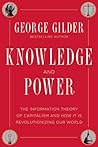
“The freer an economy is, the more this human diversity of knowledge will be manifested. By contrast, political power originates in top-down processes-governments, monopolies, regulators, and elite institutions-all attempting to quell human diversity and impose order. Thus power always seeks centralization.”
― Knowledge and Power: The Information Theory of Capitalism and How it is Revolutionizing our World
― Knowledge and Power: The Information Theory of Capitalism and How it is Revolutionizing our World
“Far from being greedy, America’s leading entrepreneurs—with some exceptions—display discipline and self-control, hard work and austerity, excelling those found in any college of social work, Washington think tank, or congregation of bishops.”
― Knowledge and Power: The Information Theory of Capitalism and How it is Revolutionizing our World
― Knowledge and Power: The Information Theory of Capitalism and How it is Revolutionizing our World
“If it moves tax it. If it keeps moving regulate it. If it stops moving subsidize it.”
― Life After Google: The Fall of Big Data and the Rise of the Blockchain Economy
― Life After Google: The Fall of Big Data and the Rise of the Blockchain Economy
“From Adam Smith’s pin factory to Moore’s Law of microchips, the division of labor drives the extension of the market, not the other way around. Supply creates its own demand through the proliferation of goods and services down the curves of learning, entropy, and imagination.”
― Knowledge and Power: The Information Theory of Capitalism and How it is Revolutionizing our World
― Knowledge and Power: The Information Theory of Capitalism and How it is Revolutionizing our World
“The test distills into a few questions: What is your attitude toward people who surpass you in the creation of wealth or in other accomplishments? Do you aspire to equal their excellence, or does it make you seethe? Do you admire and celebrate exceptional achievement, or do you impugn it and seek to tear it down?”
― The Israel Test: Why the World's Most Besieged State is a Beacon of Freedom and Hope for the World Economy
― The Israel Test: Why the World's Most Besieged State is a Beacon of Freedom and Hope for the World Economy
“If the government controls, guarantees, channels, or directs investment, it is not capitalism. Pivotal to the investment process is interest rates. For entrepreneurs to control capital, interest rates must reflect its real cost rather than merely the cost of printing money. Otherwise the money printers will dominate investment.”
― The Scandal of Money: Why Wall Street Recovers but the Economy Never Does
― The Scandal of Money: Why Wall Street Recovers but the Economy Never Does
“To declare enthusiasm for feminist ideals is almost a new mode of macho, a way to flaunt an invulnerable virility. Many will dismiss feminism as merely a matter of domestic logistics. . . . Mention procreation, and they talk about the population explosion. They believe it is just as well that many women indicate disinterest in having children.”
― Men and Marriage
― Men and Marriage
“The environmental movement has palsied two generations of American youth. It has diverted much of our high school curricula into the phony field of environmental science. (As legendary physicist Richard Feynman observed, “If a science has an adjective it probably isn’t science.”) At the same time, the movement has turned many universities into apocalyptic nature cults that divert money from education to an obscurantist debauch. Seventy-two percent of Harvard students in late 2012 actually voted to have their university disinvest from all fossil fuels. This movement has already corrupted most branches of government with a carbon dioxide fetish. Now it is debilitating America’s most precious venture assets.”
― Knowledge and Power: The Information Theory of Capitalism and How it is Revolutionizing our World
― Knowledge and Power: The Information Theory of Capitalism and How it is Revolutionizing our World
“Denying the necessary role of the creative mind as expressed in capital and technology, Marx ended up vindicating the zero-sum vision of anti-Semitic envy, in which bankers, capitalists, arbitrageurs, shopkeepers, entrepreneurs, and traders are deemed to be parasitical shysters and dispensable middlemen.”
― The Israel Test: Why the World's Most Besieged State is a Beacon of Freedom and Hope for the World Economy
― The Israel Test: Why the World's Most Besieged State is a Beacon of Freedom and Hope for the World Economy
“The risk-bearing role of the rich cannot be performed so well by anyone else. The benefits of capitalism still depend on capitalists. The other groups on the pyramid of wealth should occasionally turn from the spectacles of consumption long enough to see the adventure on the frontiers of the economy above them - an adventure not without its note of nobility...”
― Wealth and Poverty
― Wealth and Poverty
“Even though Jews are a tiny minority of less than a tenth of 1 percent of the world’s people, they comprise perhaps a quarter of the world’s paramount capitalists and entrepreneurs.”
― The Israel Test: Why the World's Most Besieged State is a Beacon of Freedom and Hope for the World Economy
― The Israel Test: Why the World's Most Besieged State is a Beacon of Freedom and Hope for the World Economy
“The key issue in economics is not aligning incentives with some putative public good but aligning knowledge with power. Business investments have both a financial and an epistemic yield. Capitalism catalytically joins the two. Capitalist economies grow because they award wealth to its creators, who have already proved that they can increase it. Their tests yield knowledge because they are falsifiable; they can be exposed as wrong. Businesses are subject to failure.”
― Knowledge and Power: The Information Theory of Capitalism and How it is Revolutionizing our World
― Knowledge and Power: The Information Theory of Capitalism and How it is Revolutionizing our World
“Egalitarians never seem to understand that promoting economic equality in theory means promoting resentments and polarization in practice, making everyone worse off. —Thomas Sowell (2016)”
― The Scandal of Money: Why Wall Street Recovers but the Economy Never Does
― The Scandal of Money: Why Wall Street Recovers but the Economy Never Does
“Let us imagine the lineaments of an economics of disorder, disequilibrium, and surprise that could explain and measure the contributions of entrepreneurs. Such an economics would begin with the Smithian mold of order and equilibrium. Smith himself spoke of property rights, free trade, sound currency, and modest taxation as conditions necessary for prosperity. He was right: disorder, disequilibrium, chaos, and noise inhibit the creative acts that engender growth. The ultimate physical entropy envisaged as the heat death of the universe, in its total disorder, affords no room for invention or surprise. But entrepreneurial disorder is not chaos or mere noise. Entrepreneurial disorder is some combination of order and upheaval that might be termed “informative disorder.”
― Knowledge and Power: The Information Theory of Capitalism and How it is Revolutionizing our World
― Knowledge and Power: The Information Theory of Capitalism and How it is Revolutionizing our World
“Like the railroads that bankrupted a previous generation of visionary entrepreneurs and built the foundations of an industrial nation, fiber-optic webs, storewidth breakthroughs, data centers, and wireless systems installed over the last five years will enable and endow the next generation of entrepreneurial wealth. As Mead states, "the hardest thing I ever had to do in my life was to get a company going during the bubble". Now, Mead says, "there's space available; you can get fab runs; you can get vendors to answer the phone. You can make deals with people; you can sit down and they don't spend their whole time telling you how they're a hundred times smarter than you. It's absolutely amazing. You can actually get work done now, which means what's happening now is that the entrepreneurs, the technologists, are building the next generation technology that isn't visible yet but upon which will be built the biggest expansion of productivity the world has ever seen.”
― The Silicon Eye: Microchip Swashbucklers and the Future of High-Tech Innovation
― The Silicon Eye: Microchip Swashbucklers and the Future of High-Tech Innovation
“Although some observers believe that feminism and sexual liberalism no longer threaten family values, little in fact has changed. Contemporary sexual liberals are merely less honest than earlier feminists in facing the inevitable antifamily consequences of their beliefs. They continue to maintain that the differences between men and women, such as men's greater drive to produce in the workplace, are somehow artificial and dispensable. They still insist that men and women can generally share and reverse roles without jeopardizing marriage. They still encourage a young woman to sacrifice her twenties in intense rivalry with men, leaving her to clutch desperately for marriage as her youthfulness and fertility pass. Although they declare themselves supporters of the family, they are scarcely willing to define it.”
― Men and Marriage
― Men and Marriage
“Ignored...was the one unbridgeable gap between physics and any such science of human behavior: the surprises that arise from free will and human creativity...they constitute the most important economic events. For a miracle is simply an innovation, a sudden and bountiful addition of information to the system.”
― Knowledge and Power: The Information Theory of Capitalism and How it is Revolutionizing our World
― Knowledge and Power: The Information Theory of Capitalism and How it is Revolutionizing our World
“A society does not run into real trouble, however, until its culture begins to adopt the unmarried male pattern, until the long-term commitments on which any enduring community is based are undermined by an opportunistic public philosophy. The public philosophy of the unmarried male focuses on immediate gratification: “What did posterity ever do for me?” A society that widely adopts this attitude is in trouble.”
― Men and Marriage
― Men and Marriage
“Spontaneous order is self-contradictory. Spontaneity connotes the ebullition of surprises. It is highly entropic and disorderly. It is entrepreneurial and complex. Order connotes predictability and equilibrium. It is what is not spontaneous. It includes moral codes, constitutional restraints, personal disciplines, educational integrity, predictable laws, reliable courts, stable money, trustworthy finance, strong families, dependable defense, and police powers. Order requires political guidance, sovereignty, and leadership. It normally entails religious beliefs. The entire saga of the history of the West conveys the courage and sacrifice necessary to enforce and defend these values against their enemies.”
― Knowledge and Power: The Information Theory of Capitalism and How it is Revolutionizing our World
― Knowledge and Power: The Information Theory of Capitalism and How it is Revolutionizing our World
“Locked in a debate over Israel’s alleged vices, they miss the salient truth running through the long history of anti-Semitism: Israel is hated above all for its virtues.”
― The Israel Test: Why the World's Most Besieged State is a Beacon of Freedom and Hope for the World Economy
― The Israel Test: Why the World's Most Besieged State is a Beacon of Freedom and Hope for the World Economy
“The . . . argument of the expert, that the man who is trained should be the man who is trusted, would be absolutely unanswerable if it were really true that the man who studied a thing and practiced it every day went on seeing more and more of its significance. But he does not. He goes on seeing less and less of its significance”
― Life After Google: The Fall of Big Data and the Rise of the Blockchain Economy
― Life After Google: The Fall of Big Data and the Rise of the Blockchain Economy
“Inevitably failing to fulfill the impossible dream of a society without conflict and hierarchy, the supposed idealists often lash out at the very attitudes and institutions—social pressures and legal processes—that are indispensable to all social improvement in a democracy.”
― Wealth and Poverty: A New Edition for the Twenty-First Century
― Wealth and Poverty: A New Edition for the Twenty-First Century
“The blind spot of AI is that consciousness does not emerge from thought; it is the source of”
― Life After Google: The Fall of Big Data and the Rise of the Blockchain Economy
― Life After Google: The Fall of Big Data and the Rise of the Blockchain Economy
“Aim at performance, and low cost will follow. Aim at low cost, and you will not achieve sufficient performance to have an enduring business. After a sufficient system is devised, demand will foster economies of scale and learning curves that bring the price down over time.”
― Life After Google: The Fall of Big Data and the Rise of the Blockchain Economy
― Life After Google: The Fall of Big Data and the Rise of the Blockchain Economy