Goodreads helps you follow your favorite authors. Be the first to learn about new releases!
Start by following Gideon Haigh.

Showing 1-26 of 26
“Far from marking the end of nationalism, the IPL is the ultimate triumph of that principle: a global tournament in which the same nation always wins.”
―
―
“George Orwell famously described international sport as 'war minus the shooting'. But for all Orwell's greatness as a thinker, this was one of his least felicitous lines, analogous to 'murder minus the death' or 'life minus the breathing'.”
―
―
“Nearly 30 years since his only tour of Australia, mention of Tavaré still occasions winces and groans. Despite its continental lilt, his name translates into Australian as a very British brand of obduracy, that Trevor Baileyesque quality of making every ditch a last one.”
―
―
“[F]or all its reputation for conservatism, cricket in its history has demonstrated a remarkable capacity for innovation. What game has survived subjection to such extraordinary manipulations, having been prolonged to 10 days (in Durban 70 years ago), truncated to as few as 60 balls (in Hong Kong every year), and remained recognisable in each instance?”
―
―
“The risk is, as ever, that the hyperbole of IPL will simply smother the cricket; perhaps the members of the IPL's cheer squad should stop listening to each other and start listening to themselves.”
―
―
“One keeps looking out for innovation in IPL, but of late it hasn't been all that obvious. Lionel Richie as an opening act? Johnny Mathis must have been busy. Matthew Hayden's Mongoose? Looks a bit like Bob Willis' bat with the "flow-through holes"; Saint Peter batting mitts are surely overdue a revival. The only genuinely intriguing step this year, bringing the IPL to YouTube, was forced on Modi by the collapse of Setanta; otherwise what Modi presents as 'innovation' is merely expansion by another name, in the number of franchises and the number of games.”
―
―
“As an ersatz opening batsman, Tavaré did not so much score runs as smuggle them out by stealth.”
―
―
“Since Modi's Mumbai sign-off, much commentary has been focused on the brand-dilution potential inherent in its scandals. MS Dhoni doesn't think we should worry: 'IPL as a brand can survive on its own.' Shilpa Shetty, 'brand ambassador' of the Rajasthan Royals, tweets that we should: 'Custodians of Cricket must not hamper d Brandvalue of this viable sport.' Hampering d Brandvalue, insists new IPL boss Chirayu Amin, is the furthest thing from his mind: 'IPL's brand image is strong and nobody can touch that.' Harsha Bhogle, however, frets for the nation: 'Within the cricket world, Brand India will take a hit.'
Not much more than a week after Modi's first tell-all tweets, the media was anxiously consulting Brand Finance's managing director, Unni Krishnan. Had there been any brand dilution yet? It was, said the soothsayer gravely, 'too early to say'. He could, however, confirm the following: 'The wealth that can be created by the brand is going to be substantially significant for many stakeholders. A conducive ecosystem has to be created to move the brand to the next level… We have to build the requisite bandwidth to monetise these opportunities.' Er, yeah… what he said. Anyway, placing a value on the IPL brand has clearly been quite beneficial to Brand Finance's brand.”
―
Not much more than a week after Modi's first tell-all tweets, the media was anxiously consulting Brand Finance's managing director, Unni Krishnan. Had there been any brand dilution yet? It was, said the soothsayer gravely, 'too early to say'. He could, however, confirm the following: 'The wealth that can be created by the brand is going to be substantially significant for many stakeholders. A conducive ecosystem has to be created to move the brand to the next level… We have to build the requisite bandwidth to monetise these opportunities.' Er, yeah… what he said. Anyway, placing a value on the IPL brand has clearly been quite beneficial to Brand Finance's brand.”
―
“The IPL, involving the socialist principle of a salary cap and the protectionist mechanism of quotas, is not perhaps the best example of a market left flourishingly to its own devices and dynamics.”
―
―
“No cricketer is so dependent on the turf on which the game is played as the spinner; it can make, break, enfang or defang him.”
―
―
“Since inception, the IPL has worn its brand value like a corroboration of inner virtue. On the eve of this tournament, under the headline 'Brand IPL touches the sky', the league's website reverberated with the announcement that Brand Finance, a branding consultancy, had valued the brand value of the IPL brand at $4.13 billion worth of brand—which is a lot of brand, brand-wise.”
―
―
“[I]f Modi is toast, it will in one sense be a tremendous pity. In his way, he represents a third generation in cricket's governance. For a hundred years and more, cricket was run by administrators, who essentially maintained the game without going out of their way to develop it. More recently it has been run by managers, with just an ounce or two of strategic thought. Modi was neither; he was instead a genuine entrepreneur. He has as much feeling for cricket as Madonna has for madrigals, but perhaps, because he came from outside cricket's traditional bureaucratic circles, he brought a vision and a common touch unexampled since Kerry Packer.”
―
―
“The assumption now is that the interests of the brand and of the game overlap to the degree that cricket need hardly be mentioned.”
―
―
“Batting, for once, in his accustomed slot at No. 3, Tavaré took his usual session to get settled, but after lunch opened out boldly. He manhandled Bruce Yardley, who'd hitherto bowled his offbreaks with impunity. He coolly asserted himself against the pace bowlers, who'd elsewhere given him such hurry. I've often hoped on behalf of cricketers, though never with such intensity as on that day, and never afterwards have I felt so validated. Even his failure to reach a hundred was somehow right: life, I was learning, never quite delivered all the goods. But occasionally—just occasionally—it offered something to keep you interested.”
―
―
“Sambit Bal may be right that this is a scandal the IPL needed. It certainly brings fans face-to-face with the tangled reality of their amusement, based as it is on a self-seeking, self-perpetuating commercial oligarchy issued licenses to exploit cricket as they please. Whether the fans care is another matter: one of the reasons Indians have embraced economic liberalisation so fervently is a shoulder-shrugging resignation about the efficiency and integrity of their institutions. Given the choice between Lalit Modi, with his snappy suits and his soi-disant 'Indian People's League', and the BCCI, stuffed with grandstanding politicians and crony capitalists, where would your loyalties lie?”
―
―
“Tavaré played 30 Tests for England between 1980 and 1984, adding a final cap five years later. He filled for much of that period the role of opening batsman, even though the bulk of his first-class career was spent at Nos. 3 and 4. He was, in that sense, a typical selection in a period of chronic English indecision and improvisation, filling a hole rather than commanding a place. But he tried—how he tried. Ranji once spoke of players who 'went grey in the service of the game'; Tavaré, slim, round-shouldered, with a feint moustache, looked careworn and world-weary from the moment he graduated to international cricket.”
―
―
“Some years ago I adjourned with a friend to a nearby schoolyard net for a recreational hit. On the way, we exchanged philosophies of cricket, and a few personal partialities. What, my friend asked, did I consider my favourite shot? 'Easy,' I replied ingenuously. 'Back-foot defensive stroke.'
My friend did a double take and demanded a serious response. When I informed him he'd had one, he scoffed: 'You'll be telling me that Chris Tavaré's your favourite player next.' My guilty hesitation gave me away. 'You Poms!' he protested. 'You all stick together!”
―
My friend did a double take and demanded a serious response. When I informed him he'd had one, he scoffed: 'You'll be telling me that Chris Tavaré's your favourite player next.' My guilty hesitation gave me away. 'You Poms!' he protested. 'You all stick together!”
―
“In fact, I was shortly to be chosen for my first tour to New Zealand. Again, I had Javed, now restored to captaincy, to thank. I was immediately anxious. I could not drive. I had neither money of my own nor even a bank account. I rang Javed and asked him how much it would cost me to go on the tour; he replied deadpan: "100,000 rupees."
My heart sank. 'Javed bhai, my dad would never give me that amount of money,' I said gloomily. 'I'm sorry. I won't be able to come.'
Javed burst out laughing. 'You idiot!' he said. 'You don't have to pay; you get paid.'
I couldn't believe it. 'I get paid?' I said. 'To play for Pakistan? Unbelievable!”
― Sultan: A Memoir
My heart sank. 'Javed bhai, my dad would never give me that amount of money,' I said gloomily. 'I'm sorry. I won't be able to come.'
Javed burst out laughing. 'You idiot!' he said. 'You don't have to pay; you get paid.'
I couldn't believe it. 'I get paid?' I said. 'To play for Pakistan? Unbelievable!”
― Sultan: A Memoir
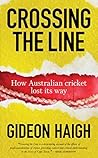
“counter to the game’s insularity; the subsequent reform became, I suspect, the basis for reaction against any sense of cricket’s distinctiveness and institutional significance, an indifference to its past, a neglect of its spirit, and a desperation to bring it into conformity with other sports”
― Crossing the Line: How Australian Cricket Lost Its Way
― Crossing the Line: How Australian Cricket Lost Its Way
“Watson in the nineties has been like English cricket in the nineties: an accident waiting to happen.”
― Ashes to Ashes: How Australia Came Back and England Came Unstuck, 2013-14
― Ashes to Ashes: How Australia Came Back and England Came Unstuck, 2013-14
“Yet I cannot deny that the big cricket I am engaged in watching and writing about feels less precious, less special, less representative and less part of civic life than it used to; more the property of a commercial and bureaucratic elite puffed up with its own importance.”
― Crossing the Line: How Australian Cricket Lost Its Way
― Crossing the Line: How Australian Cricket Lost Its Way
“An even more pointed reminder of changed circumstances, of course, is the AIG symbol sported, doubtless with some chagrin, by Manchester United, worth £14 million a year to the club when the deal was done thirty months ago, but now as ignominiously conspicuous as mouthing a slogan for Luftschiffbau Zeppelin in May 1937: ‘You’ll always travel Fuhrer class on the Hindenburg!’ Man”
― Sphere of Influence: Writings on Cricket and its Discontents
― Sphere of Influence: Writings on Cricket and its Discontents
“There is a hint of hypocrisy about a cricketer who affects to let his bat do the talking, then in the next breath has his talk do the baiting.”
―
―
“more stiffly endorsed by Prime Minister Lyons, who expressed support for free speech to the extent that people didn’t use it to foment discontent.”
― The Brilliant Boy: Doc Evatt and the Great Australian Dissent
― The Brilliant Boy: Doc Evatt and the Great Australian Dissent
“Richards double-century”
― The Cricket War: The Story of Kerry Packer's World Series Cricket
― The Cricket War: The Story of Kerry Packer's World Series Cricket