Goodreads helps you follow your favorite authors. Be the first to learn about new releases!
Start by following Robin Morgan.

Showing 1-30 of 36
“Don't accept rides from strange men, and remember that all men are strange.”
―
―
“Hate generalizes, love specifies.”
―
―
“Women are not inherently passive or peaceful. We're not inherently anything but human. ”
―
―
“Pornography is the theory, and rape is the practice.”
― Going Too Far: The Personal Chronicle of a Feminist
― Going Too Far: The Personal Chronicle of a Feminist
“We will grow old, and older,
One of us will die, and then the other.
The earth itself will be impaled
by sunspokes. It doesn't matter.
We have been imprinted on the protons
of energy herself,”
― Lady of the Beasts
One of us will die, and then the other.
The earth itself will be impaled
by sunspokes. It doesn't matter.
We have been imprinted on the protons
of energy herself,”
― Lady of the Beasts
“She touched her fingertip to his wet face and brought away a tear. Amazed, he did the same. He tasted this river his own eyes had rained.
"It tastes of salt!" he exclaimed. "It tastes like the sea!"
"Mine too!" she laughed through her own tears, and he touched and tasted hers as well. "It's as if humans kept a sign of the mother sea in ourselves, a secret token of grief or gladness.”
―
"It tastes of salt!" he exclaimed. "It tastes like the sea!"
"Mine too!" she laughed through her own tears, and he touched and tasted hers as well. "It's as if humans kept a sign of the mother sea in ourselves, a secret token of grief or gladness.”
―
“Hate generalises, love specifies”
―
―
“If for centuries women have been accused by the Right of being dangerously radical creatures and by the Left of being dangerously conservative ones, it is because the sub-patriarchal reality in which women live is a third politics altogether.”
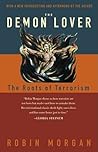
― The Demon Lover
― The Demon Lover
“Not until she, and you, and I, fully comprehend the enormity - that all issues are women's issues to be defined in women's ways and confronted in women's ways - can any of us break free and refuse to settle for rebellion within his deadly context.”
― The Demon Lover
― The Demon Lover
“Squeezing power into a monodefinition is imperative for the monopolizing of it. The more "powerful" you become (in the Demon Lover's politics of Thanatos), the more rigid and abstract are the laws you forge and follow; the more "powerless" you are (in his system), the more fluid and specific are your realities.”
― The Demon Lover
― The Demon Lover
“More curiously, why have women, suffering greater powerlessness and having greater cause for despair than the most powerless of men, avoided resorting to it on our own behalf?”
― The Demon Lover
― The Demon Lover
“He goes on to hammer at a refrain we’ve heard before: “Revolutionary leaders are not often present to hear their children’s first words; their wives must also share in their sacrifice if the revolution is to reach its goal; their friends are to be found only among their comrades in the revolution. For them there is no life outside the revolution.”’
Let’s try a little exercise in logic here—the logic to which Campbell’s hero must be dead. Substitute the words “religious” and “religion” for “revolutionary” and “revolution” in the above quotation, and notice that it still makes unsettingly familiar sense. Now substitute the words “corporate” and “corporation.” Now “military.” Now “national” and “nation.” Now “tribal” and “tribe.” Now “professional” and “‘profession.” It works terrifyingly well. (Revealingly, it does not work when the words “‘feminist‘‘ and ‘“‘feminism” are substituted, precisely because of the integrative nature of female experience.) Most women will instantly connect what most men will not: that it’s a rare man in any walk of life in any culture who’s present to hear his child’s first words; that the institution of “wife” itself, in spirit and legal contract, demands sacrifice to the husband’s goal; that friendships, domicile, lifestyle, are determined and circumscribed by his career, work, politics, or calling, whether humble or exalted. Guevara is not just describing the revolution. He is describing the institutions of religion, business, war, the State, and the family. He is describing the patriarchy.”
― The Demon Lover
Let’s try a little exercise in logic here—the logic to which Campbell’s hero must be dead. Substitute the words “religious” and “religion” for “revolutionary” and “revolution” in the above quotation, and notice that it still makes unsettingly familiar sense. Now substitute the words “corporate” and “corporation.” Now “military.” Now “national” and “nation.” Now “tribal” and “tribe.” Now “professional” and “‘profession.” It works terrifyingly well. (Revealingly, it does not work when the words “‘feminist‘‘ and ‘“‘feminism” are substituted, precisely because of the integrative nature of female experience.) Most women will instantly connect what most men will not: that it’s a rare man in any walk of life in any culture who’s present to hear his child’s first words; that the institution of “wife” itself, in spirit and legal contract, demands sacrifice to the husband’s goal; that friendships, domicile, lifestyle, are determined and circumscribed by his career, work, politics, or calling, whether humble or exalted. Guevara is not just describing the revolution. He is describing the institutions of religion, business, war, the State, and the family. He is describing the patriarchy.”
― The Demon Lover
“Bound, hobbled, silenced, battered, raped raw, starved, exhibited, bought and sold and traded, pedestaled or guttered, derided, trivialized, dismissed, erased - something there is in her that refuses it.
Something there is in her that knows that she - in her poverty of flesh, knowledge, means, at times even spirit - has never lost that self.”
― The Demon Lover
Something there is in her that knows that she - in her poverty of flesh, knowledge, means, at times even spirit - has never lost that self.”
― The Demon Lover
“—and some feminists say it’s her own fault for living with him, and she hides her dark red velvet wounds from pride, the pride of the victim, the pride of the victim at not being the perpetrator, the pride of the victim at not knowing how to withhold love.”
― Death Benefits: Poems
― Death Benefits: Poems
“If men are now afraid in daily circumstances, why then the situation must be taken seriously, attention must be paid. This also is patriarchal democracy.”
― The Demon Lover
― The Demon Lover
“Who was it you feared? Trace it, trace the fearing to a source. Not the mid-management collaborators, remember. Not those who only obey orders; just because the responsibility is everywhere doesn't mean that it's not somewhere. Trace it further, as far as you can. Scrutinize those in power behind the fear. Visualize them. There.
Are women in the picture?”
― The Demon Lover
Are women in the picture?”
― The Demon Lover
“So she begins to love herself, to love her own flesh, to love her own genius. She begins to deserve herself.”
― The Demon Lover
― The Demon Lover
“Unlike the United Nations, the U.S. State Department doesn’t restrict its definition to specific named acts: ““Terrorism is premeditated, politically motivated violence, perpetrated against noncombatant targets by subnational groups or clandestine state agents.”” Some of us might find this a fairly workable description of rape, battery, child abuse, homophobia, sexual harassment, economic exploitation, educational discrimination, and religious manipulation. We must be confused.”
― The Demon Lover
― The Demon Lover
“Wherever she exists, she labors: her work as homemaker or mother, as prostitute or nun, is erased because it's considered natural; her work in farm, factory, or office is marginalized because it's considered unskilled, transient, or migratory.”
― The Demon Lover
― The Demon Lover
“The irony is that while he has defined himself as a multi-faceted being, he is the impatient entity ceaselessly operating in terms of his sexuality: fearing it, seeking it, demanding it, proving it, forcing & enforcing it. His is an ejaculatory politics. Just as long ago he forgot what "self" truly could be, so he forgot what "power" really is.”
―
―
“She is not deterred by Margaret Thatcher. She is in fact bored at having Margaret Thatcher thrown at her; she knows men will pounce upon such an example because it has been cloned in their own image and is so much an exception to the rule.”
― The Demon Lover
― The Demon Lover
“[on Gerda Lerner] As for stepping outside of patriarchal thought:
"Being skeptical toward every known system of thought: being critical of all assumptions, ordering values and definitions . . . , developing intellectual courage, . . . the challenge to move from the desire for safety and approval to the most "unfeminine" quality of all - that of intellectual arrogance, the supreme hubris which asserts to itself the right to reorder the world.”
― The Demon Lover
"Being skeptical toward every known system of thought: being critical of all assumptions, ordering values and definitions . . . , developing intellectual courage, . . . the challenge to move from the desire for safety and approval to the most "unfeminine" quality of all - that of intellectual arrogance, the supreme hubris which asserts to itself the right to reorder the world.”
― The Demon Lover
“She thinks: I resent being different from men when men are defining that difference.
She thinks: Do I resent being different from men when I and other women are defining the difference? Do I resent that difference if a singular power is not at work to enforce it, but our multiple powers are at work to explore it?”
― The Demon Lover
She thinks: Do I resent being different from men when I and other women are defining the difference? Do I resent that difference if a singular power is not at work to enforce it, but our multiple powers are at work to explore it?”
― The Demon Lover
“I can hear her now, in furious rebuttal: "To say that my revolutionary struggle is a male-defined one is to trivialize me the way you feminists claim men trivialize women. You refuse to take me, my politics, my militance, seriously as my own. You treat me as a pawn in a game between men. Is this your support? Is this what you call sisterhood?"
And I would reply: "Yes. Trying to name the truth, however painful, to one another is the highest respect sisterhood can offer.”
― The Demon Lover
And I would reply: "Yes. Trying to name the truth, however painful, to one another is the highest respect sisterhood can offer.”
― The Demon Lover
“Elsewhere and at length I've constructed a detailed analogy between women and colonized peoples, observing that colonization requires at least three elements: first, control over the land, so that it can be mined for its natural resources - in the case of women, the "natural resources" of our bodies, in sex and in reproduction; second, the enforced alienation of the colonized from their own territory by a system based on exclusion and mystification - in the case of women, alienation from one's own flesh (lack of reproductive freedom and freedom of sexual preference) and alienation from one's own self-defined existence; and third, a readiness on the part of the colonizer to meet all demands for self-determination with a repertoire of repression, from ridicule through tokenism to brutality - in the case of women, a repertoire spanning derision, individual co-optation, and the more blatant forms of response: rape, battery, sati, purdah, erasure, prostitution, and other such means of enslavement.”
― The Demon Lover
― The Demon Lover
“George A. Lopez, characterizing techniques common to the State as terrorist, lists four approaches—information control, law enforcement/legal, economic coercion, and outright life threatening (including kidnapping, disappearances, torture, etc.). He argues with unusual acumen that all four are entwined with the dynamic of patriarchy: “The emphasis on masculinity demands the assumption of warrior-hero characteristics: a proclivity for violence, an aura of the fighter, and an explicit rejection of those characteristics associated with the frail and womanly aspects of human beings: sensitivity, pity, emotionality, tenderness toward others, and so on.”
He’s right—but the truth is even worse. The phallic malady is epidemic and systemic. It’s too easy to imagine the power concentrated in a series of rooms, with ten or even a hundred high-level would-be-hero bureaucrats raving toward Armageddon for one another’s approval. The more frightening reality is that each individual male in the patriarchy is aware of his relative power in the scheme of things. A few may be distressed at that power, many may claim innocence of it, most may deny it or pretend to ignore it, and some may blatantly delight in it—but all are aware of it.”
― The Demon Lover
He’s right—but the truth is even worse. The phallic malady is epidemic and systemic. It’s too easy to imagine the power concentrated in a series of rooms, with ten or even a hundred high-level would-be-hero bureaucrats raving toward Armageddon for one another’s approval. The more frightening reality is that each individual male in the patriarchy is aware of his relative power in the scheme of things. A few may be distressed at that power, many may claim innocence of it, most may deny it or pretend to ignore it, and some may blatantly delight in it—but all are aware of it.”
― The Demon Lover
“I seriously wondered, for example, whether Lisa McElhaney had ever been to Leningrad, or Ulster, or North Waghi. Then again, I couldn’t even figure out what she really died of. Her seventeen-year-old body was found in a plastic bag in Columbus, Ohio, in April 1987. Her father was an alcoholic, her mother had tried to get an abortion when pregnant with Lisa, but couldn’t afford it. Lisa was raped as a child, became pregnant and miscarried at age fifteen, was thrown out by her family, became addicted to drugs, and worked in pornography and prostitution to support her habit. Each time she ran afoul of the law and was incarcerated in a home for delinquents, social workers noted on her file that she displayed an eagerness for relationships and was “‘starved for affection.”’ But the system was set up to rehabilitate, not to provide relationships or affection, so Lisa withdrew and “would sit for hours and hours, staring into space.”’ When photographs of her performing sexual acts were discovered by the police, she was subpoenaed to testify in a child-pornography case against Larry Miller, the pornographer. Although Miller was a suspect in her murder, police believed the killer was a client of hers, Rob Roy Baker, a thirty-four-year-old truck driver who had been linked to similar attacks on other prostitutes. When police came to question him, Baker shot himself to death in a house filled with pictures of nude women cut from pornographic magazines.
So I would ask myself, did Lisa die of assault? Which assault? The lack of affordable abortion for her mother? The beating from her john? Did she die of the disease called "family" or the disease called "rehabilitation," of poverty or drugs or pornography, of economics or sexual slavery or a broken body? Or a broken spirit? When she stared into space for hours was it because she knew she was in here but had no way of trying to reach anyone in the neighboring cell?
Perhaps she died on unknown causes.”
― The Demon Lover
So I would ask myself, did Lisa die of assault? Which assault? The lack of affordable abortion for her mother? The beating from her john? Did she die of the disease called "family" or the disease called "rehabilitation," of poverty or drugs or pornography, of economics or sexual slavery or a broken body? Or a broken spirit? When she stared into space for hours was it because she knew she was in here but had no way of trying to reach anyone in the neighboring cell?
Perhaps she died on unknown causes.”
― The Demon Lover
“If transgression is erotic, then violation can be revolutionary. Possession equals Rape equals Ravishment. Nonconsciousness equals Obliteration equals Ecstasy. If death makes one more intensely alive, then terror is a prerequisite for living.”
― The Demon Lover
― The Demon Lover
“Like Margarita Chant Papandreou, president of the Women's Union of Greece, she can say, " I do want to argue that women's values, whether they are biologically imbedded or culturally instilled, are clearly more anti-war, more anti-violence, more for the preservation of life than are male values.”
― The Demon Lover
― The Demon Lover
“There, according to Paul Theroux in The Kingdom by the Sea, virtually all social duties had been assumed by women, leaving the men with few responsibilities except manliness, idleness, religion, and violence.”
― The Demon Lover
― The Demon Lover