Goodreads helps you follow your favorite authors. Be the first to learn about new releases!
Start by following Richard Lederer.

Showing 1-8 of 8
“There once was a time when all people believed in God and the church ruled. This time was called the Dark Ages.”
― Anguished English: An Anthology of Accidental Assaults Upon Our Language
― Anguished English: An Anthology of Accidental Assaults Upon Our Language
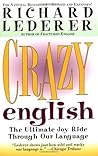
“Let’s face it - English is a crazy language. There is no egg in eggplant nor ham in hamburger; neither apple nor pine in pineapple. English muffins weren’t invented in England or French fries in France. Sweetmeats are candies while sweetbreads, which aren’t sweet, are meat. We take English for granted. But if we explore its paradoxes, we find that quicksand can work slowly, boxing rings are square and a guinea pig is neither from Guinea nor is it a pig.
And why is it that writers write but fingers don’t fing, grocers don’t groce and hammers don’t ham? If the plural of tooth is teeth, why isn’t the plural of booth beeth? One goose, 2 geese. So one moose, 2 meese? One index, 2 indices? Doesn’t it seem crazy that you can make amends but not one amend? If you have a bunch of odds and ends and get rid of all but one of them, what do you call it?
If teachers taught, why didn’t preachers praught? If a vegetarian eats vegetables, what does a humanitarian eat? In what language do people recite at a play and play at a recital? Ship by truck and send cargo by ship? Have noses that run and feet that smell? How can a slim chance and a fat chance be the same, while a wise man and a wise guy are opposites?
You have to marvel at the unique lunacy of a language in which your house can burn up as it burns down, in which you fill in a form by filling it out and in which an alarm goes off by going on. English was invented by people, not computers, and it reflects the creativity of the human race (which, of course, isn’t a race at all). That is why, when the stars are out, they are visible, but when the lights are out, they are invisible.
And finally, why doesn't "buick" rhyme with "quick"?”
―
And why is it that writers write but fingers don’t fing, grocers don’t groce and hammers don’t ham? If the plural of tooth is teeth, why isn’t the plural of booth beeth? One goose, 2 geese. So one moose, 2 meese? One index, 2 indices? Doesn’t it seem crazy that you can make amends but not one amend? If you have a bunch of odds and ends and get rid of all but one of them, what do you call it?
If teachers taught, why didn’t preachers praught? If a vegetarian eats vegetables, what does a humanitarian eat? In what language do people recite at a play and play at a recital? Ship by truck and send cargo by ship? Have noses that run and feet that smell? How can a slim chance and a fat chance be the same, while a wise man and a wise guy are opposites?
You have to marvel at the unique lunacy of a language in which your house can burn up as it burns down, in which you fill in a form by filling it out and in which an alarm goes off by going on. English was invented by people, not computers, and it reflects the creativity of the human race (which, of course, isn’t a race at all). That is why, when the stars are out, they are visible, but when the lights are out, they are invisible.
And finally, why doesn't "buick" rhyme with "quick"?”
―
“It is now time to face the fact that English is a crazy language — the most loopy and wiggy of all tongues.
In what other language do people drive in a parkway and park in a driveway?
In what other language do people play at a recital and recite at a play?
Why does night fall but never break and day break but never fall?
Why is it that when we transport something by car, it’s called a shipment, but when we transport something by ship, it’s called cargo?
Why does a man get a hernia and a woman a hysterectomy?
Why do we pack suits in a garment bag and garments in a suitcase?
Why do privates eat in the general mess and generals eat in the private mess?
Why do we call it newsprint when it contains no printing but when we put print on it, we call it a newspaper?
Why are people who ride motorcycles called bikers and people who ride bikes called cyclists?
Why — in our crazy language — can your nose run and your feet smell?Language is like the air we breathe. It’s invisible, inescapable, indispensable, and we take it for granted. But, when we take the time to step back and listen to the sounds that escape from the holes in people’s faces and to explore the paradoxes and vagaries of English, we find that hot dogs can be cold, darkrooms can be lit, homework can be done in school, nightmares can take place in broad daylight while morning sickness and daydreaming can take place at night, tomboys are girls and midwives can be men, hours — especially happy hours and rush hours — often last longer than sixty minutes, quicksand works very slowly, boxing rings are square, silverware and glasses can be made of plastic and tablecloths of paper, most telephones are dialed by being punched (or pushed?), and most bathrooms don’t have any baths in them. In fact, a dog can go to the bathroom under a tree —no bath, no room; it’s still going to the bathroom. And doesn’t it seem a little bizarre that we go to the bathroom in order to go to the bathroom?
Why is it that a woman can man a station but a man can’t woman one, that a man can father a movement but a woman can’t mother one, and that a king rules a kingdom but a queen doesn’t rule a queendom? How did all those Renaissance men reproduce when there don’t seem to have been any Renaissance women?
Sometimes you have to believe that all English speakers should be committed to an asylum for the verbally insane:
In what other language do they call the third hand on the clock the second hand?
Why do they call them apartments when they’re all together?
Why do we call them buildings, when they’re already built?
Why it is called a TV set when you get only one?
Why is phonetic not spelled phonetically? Why is it so hard to remember how to spell mnemonic? Why doesn’t onomatopoeia sound like what it is? Why is the word abbreviation so long? Why is diminutive so undiminutive? Why does the word monosyllabic consist of five syllables? Why is there no synonym for synonym or thesaurus?
And why, pray tell, does lisp have an s in it?
If adults commit adultery, do infants commit infantry? If olive oil is made from olives, what do they make baby oil from? If a vegetarian eats vegetables, what does a humanitarian consume? If pro and con are opposites, is congress the opposite of progress? ...”
―
In what other language do people drive in a parkway and park in a driveway?
In what other language do people play at a recital and recite at a play?
Why does night fall but never break and day break but never fall?
Why is it that when we transport something by car, it’s called a shipment, but when we transport something by ship, it’s called cargo?
Why does a man get a hernia and a woman a hysterectomy?
Why do we pack suits in a garment bag and garments in a suitcase?
Why do privates eat in the general mess and generals eat in the private mess?
Why do we call it newsprint when it contains no printing but when we put print on it, we call it a newspaper?
Why are people who ride motorcycles called bikers and people who ride bikes called cyclists?
Why — in our crazy language — can your nose run and your feet smell?Language is like the air we breathe. It’s invisible, inescapable, indispensable, and we take it for granted. But, when we take the time to step back and listen to the sounds that escape from the holes in people’s faces and to explore the paradoxes and vagaries of English, we find that hot dogs can be cold, darkrooms can be lit, homework can be done in school, nightmares can take place in broad daylight while morning sickness and daydreaming can take place at night, tomboys are girls and midwives can be men, hours — especially happy hours and rush hours — often last longer than sixty minutes, quicksand works very slowly, boxing rings are square, silverware and glasses can be made of plastic and tablecloths of paper, most telephones are dialed by being punched (or pushed?), and most bathrooms don’t have any baths in them. In fact, a dog can go to the bathroom under a tree —no bath, no room; it’s still going to the bathroom. And doesn’t it seem a little bizarre that we go to the bathroom in order to go to the bathroom?
Why is it that a woman can man a station but a man can’t woman one, that a man can father a movement but a woman can’t mother one, and that a king rules a kingdom but a queen doesn’t rule a queendom? How did all those Renaissance men reproduce when there don’t seem to have been any Renaissance women?
Sometimes you have to believe that all English speakers should be committed to an asylum for the verbally insane:
In what other language do they call the third hand on the clock the second hand?
Why do they call them apartments when they’re all together?
Why do we call them buildings, when they’re already built?
Why it is called a TV set when you get only one?
Why is phonetic not spelled phonetically? Why is it so hard to remember how to spell mnemonic? Why doesn’t onomatopoeia sound like what it is? Why is the word abbreviation so long? Why is diminutive so undiminutive? Why does the word monosyllabic consist of five syllables? Why is there no synonym for synonym or thesaurus?
And why, pray tell, does lisp have an s in it?
If adults commit adultery, do infants commit infantry? If olive oil is made from olives, what do they make baby oil from? If a vegetarian eats vegetables, what does a humanitarian consume? If pro and con are opposites, is congress the opposite of progress? ...”
―
“Athens was democratic because people took the law into their own hands.”
― Anguished English: An Anthology of Accidental Assaults Upon the English Language
― Anguished English: An Anthology of Accidental Assaults Upon the English Language
“The students’ love of punctuation is boundless. To form the possessive of plural nouns that don’t end in s, add an apostrophe and s: The men’s love of punctuation is boundless. If two or more people possess the same thing, you need only put the apostrophe after the last one of the two mentioned: Len and Barry’s seminar teaches a love of punctuation. if two people own items individually, you must show your respect by giving them each an ’s: Len’s and Barry’s wives love punctuation. The possessive form of it is spelled its: The level of a civilization is measured by the precision of its punctuation.”
― Comma Sense: A Fun-damental Guide to Punctuation
― Comma Sense: A Fun-damental Guide to Punctuation
“When we step back and think about the air that escapes from the holes in our faces, we are just in for a lifetime of discovery”
―
―
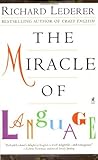
“The limits of my language,” wrote the philosopher Ludwig Wittgenstein, “are the limits of my mind. All I know is what I have words for.” Without the word we are imprisoned; possessing the word, we are set free.”
― The Miracle of Language
― The Miracle of Language
“The Apostrophe To grant possession to a singular noun, simply add an apostrophe and s: The student’s love of punctuation is boundless. If a plural noun that already ends in s needs to become possessive, slap a single apostrophe on the end of that word:”
― Comma Sense: A Fun-damental Guide to Punctuation
― Comma Sense: A Fun-damental Guide to Punctuation