Goodreads helps you follow your favorite authors. Be the first to learn about new releases!
Start by following Raoul McLaughlin.

Showing 1-11 of 11
“He suggested that silk fashions were indecent and harmful to society and denounced transparent dresses, arguing that these ‘see-through materials barely cover the shame of the body with more than a slender veil.’ He believed that tightly-fitting opaque silk garments were as objectionable because these heavier and more luxurious dresses would cling to the female figure. Although the woman’s nakedness was hidden from view, ‘these dresses fit close to the body and easily take its form, following the curves of the woman to reveal her distinctive female shape.’ Therefore ‘her whole form is still visible to onlookers, even though they do not see her actual flesh beneath.”
― The Roman Empire and the Silk Routes: The Ancient World Economy & the Empires of Parthia, Central Asia & Han China
― The Roman Empire and the Silk Routes: The Ancient World Economy & the Empires of Parthia, Central Asia & Han China
“The Romans knew about India, but were unaware of the Far East until the first century BC when silk began to reach the Mediterranean through the Parthian Empire which ruled in ancient Iran.”
― The Roman Empire and the Silk Routes: The Ancient World Economy & the Empires of Parthia, Central Asia & Han China
― The Roman Empire and the Silk Routes: The Ancient World Economy & the Empires of Parthia, Central Asia & Han China
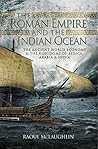
“Dio explains the argument given by Agrippa, ‘if we permit all the men of military age to have weapons and to practise warfare, they will always be a source of sedition and civil wars’.”
― The Roman Empire and the Indian Ocean: The Ancient World Economy & the Kingdoms of Africa, Arabia & India
― The Roman Empire and the Indian Ocean: The Ancient World Economy & the Kingdoms of Africa, Arabia & India
“These initiatives established the first direct contacts between Chinese civilization and the urbanized kingdoms of ancient Transoxiana, Afghanistan, India and Iran. This was the origin of the Central Asian Silk Routes which created an unprecedented growth in international commerce that enhanced and enriched distant regimes, including Rome.”
― The Roman Empire and the Silk Routes: The Ancient World Economy & the Empires of Parthia, Central Asia & Han China
― The Roman Empire and the Silk Routes: The Ancient World Economy & the Empires of Parthia, Central Asia & Han China
“The problem for Rome was that its gold and silver reserves were finite; while the products that the Romans sought in eastern markets were renewable resources for the regimes that controlled production.”
― The Roman Empire and the Silk Routes: The Ancient World Economy & the Empires of Parthia, Central Asia & Han China
― The Roman Empire and the Silk Routes: The Ancient World Economy & the Empires of Parthia, Central Asia & Han China
“At one time we used to wear leather military breastplates, but fashions have become so bizarre that even the toga is considered to be unnecessarily heavy.”
― The Roman Empire and the Silk Routes: The Ancient World Economy & the Empires of Parthia, Central Asia & Han China
― The Roman Empire and the Silk Routes: The Ancient World Economy & the Empires of Parthia, Central Asia & Han China
“beryls which display the best qualities of the most valuable gems, including the subtle-fires of the ruby, the flashing-purple of the amethyst and the sea-green tint of the emerald’. The most valuable beryls displayed aquamarine colours, but Pliny also mentions golden-yellow chrysoberyls and vivid-blue hyacinthizonte.30 For many Romans these Indian gems became an indispensable mark of their status. Beryl rings were cherished items and many”
― The Roman Empire and the Indian Ocean: The Ancient World Economy & the Kingdoms of Africa, Arabia & India
― The Roman Empire and the Indian Ocean: The Ancient World Economy & the Kingdoms of Africa, Arabia & India
“Mass population movements, natural disasters, wars and the threat of global pandemics still have the potential to diminish human progress. Ultimately,”
― The Roman Empire and the Indian Ocean: The Ancient World Economy & the Kingdoms of Africa, Arabia & India
― The Roman Empire and the Indian Ocean: The Ancient World Economy & the Kingdoms of Africa, Arabia & India
“use trade exports to cause foreign powers to be economically reliant on Chinese products and manufactured items. Then, if the foreign regime did not comply with Chinese authority, the Han could impose trade sanctions that would cause economic damage.13”
― The Roman Empire and the Silk Routes: The Ancient World Economy & the Empires of Parthia, Central Asia & Han China
― The Roman Empire and the Silk Routes: The Ancient World Economy & the Empires of Parthia, Central Asia & Han China
“The sailors said to Gan Ying: ‘The ocean is huge. Those making the round trip can do it in three months if the winds are favourable. However, if you encounter winds that delay you, it can take two years.’ Gan Ying was also told that he would have to pay for large-scale provisions since ‘all the men who go by sea take stores for three years.’ When he heard this, Gan Ying abandoned his plans to reach Rome by sea and began the long journey back to the Chinese held Tarim protectorates. He did not realise that Parthia and Rome shared a common land border and the city of Characene was only forty days distant from the Roman frontier in Syria.”
― The Roman Empire and the Silk Routes: The Ancient World Economy & the Empires of Parthia, Central Asia & Han China
― The Roman Empire and the Silk Routes: The Ancient World Economy & the Empires of Parthia, Central Asia & Han China