Goodreads helps you follow your favorite authors. Be the first to learn about new releases!
Start by following Dawn Chatty.

Showing 1-5 of 5
“In 1857, in response to the massive numbers of forced migrant Muslim Tatars from the Crimea, the Ottoman Sublime Porte promulgated a Refugee Code (also translated from Ottoman Turkish into English in some texts as the Immigration Law). Responding to the grave need to provide shelter and food for its subjects, expelled initially from the Crimea but also from other border-land regions with Russia, the Ottoman government set out to swiftly disperse and integrate its forced migrants. It aimed to provide ‘immigrant’ families and groups with only a minimum amount of capital, with plots of state land to start life anew in agricultural activity. Families who applied for land in Rumeli (the European side of the Ottoman Empire) were granted exemptions from taxation and conscription obligations for a period of six years. If, however, they chose to continue their migration into Anatolia and Greater Syria then their exemptions extended for twelve years. In both cases the new immigrants had to agree to cultivate the land and not to sell or leave it for twenty years. Ottoman reformers were eager to see the largely depopulated Syrian provinces revived by these new migrants after several centuries of misadministration, war, famine, and several pandemics of the plague (Shaw and Shaw 1977: 115). The twenty-year clause also meant that these newcomers were released from the pressure of nineteenth-century property developers, as there was a kind of lien on the property, prohibiting its onward sale for twenty years.”
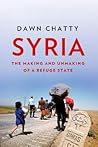
― Syria: The Making and Unmaking of a Refuge State
― Syria: The Making and Unmaking of a Refuge State
“The motivating force behind the UNDHR and the 1951 Convention on the Status of Refugees was a desire to ensure that never again would there be such suffering as that experienced in the wake of the Second World War. Unfortunately that is exactly what is happening now.”
― Syria: The Making and Unmaking of a Refuge State
― Syria: The Making and Unmaking of a Refuge State
“These forced migrants were also promised freedom of religion, and were permitted to construct their own houses of worship. News of this decree spread widely along the frontier zones and in Europe as the Ottomans advertised—also in European newspapers—for immigrant families wishing to settle as farmers in the Levant.”
― Syria: The Making and Unmaking of a Refuge State
― Syria: The Making and Unmaking of a Refuge State
“As requests for plots of state land from forced migrants and potential immigrants rose, in 1860 the Ottoman authorities set up a refugee commission (the Ottoman Commission for the General Administration of Immigration) under the Ministry of Trade. The following year it became a separate public authority (Shaw and Shaw 1977: 115). The commission was charged with integrating not only the Tatars and Circassians fleeing from lands conquered by the Russians north and west of the Black Sea, but also the thousands of non-Muslim immigrant farmers and political leaders from Hungary, Bohemia, and Poland, Cossacks from Russia, and Bulgarians from the Balkans (Shaw and Shaw 1977: 116).”
― Syria: The Making and Unmaking of a Refuge State
― Syria: The Making and Unmaking of a Refuge State
“People have moved throughout history. It is part of our heritage as human beings. It explains our distribution across the face of the earth, and it is captured not only in genome research but also in literature—secular as well as sacred. Texts dating back to the Bible and before, to Homer’s Iliad and to Virgil’s Aeneid, tell of forced migration of peoples as well as individual exiles and refuge.”
― Syria: The Making and Unmaking of a Refuge State
― Syria: The Making and Unmaking of a Refuge State