Goodreads helps you follow your favorite authors. Be the first to learn about new releases!
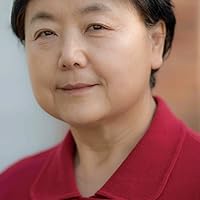
Start by following Xi Van Fleet.
Showing 1-23 of 23
“If you can orchestrate the words people use and how they use them, you can control their speech and therefore their thoughts.”
― Mao's America: A Survivor's Warning
― Mao's America: A Survivor's Warning
“Thought Reform and the Psychology of Totalism: A Study of “Brainwashing” in China by Robert Jay Lifton.”
― Mao's America: A Survivor's Warning
― Mao's America: A Survivor's Warning
“Cancel culture ensued, and on its path anything that was not pure Maoist—including our Chinese heritage—was literally destroyed. Statues were toppled by mobs. Books and art were burned. In the course of the Chinese Cultural Revolution, artifacts, symbols, traditions, and customs of 3,000 years of Chinese civilization were removed from our daily lives.”
― Mao's America: A Survivor's Warning
― Mao's America: A Survivor's Warning
“In February 2010, Tian Yu arrived in Shenzhen with 500 yuan from her father and a secondhand phone. She joined the army of 400,000 workers at Foxconn’s Longhua campus, where her task on the assembly line was to inspect products for scratches, a monotonous job repeated 2,880 times a day. Despite working for over a month, Tian Yu never received her wage card. When she sought help, she was sent on a fruitless day-long journey between departments at another factory campus, only to be told her wage card could not be located. Penniless and exhausted, she walked fourteen kilometers back to her dormitory in tears. Her phone had broken, cutting off communication with her family. Overwhelmed with despair, the young girl struggled through the night before jumping from her dormitory’s fourth floor. Tian Yu remained in a coma for twelve days. When she finally woke up, she discovered she could no longer walk.3 How did Foxconn respond to the suicide epidemic at its factories? By installing suicide nets around its buildings to catch workers attempting to jump.”
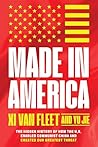
― Made in America: The Hidden History of How the U.S. Enabled Communist China and Created Our Greatest Threat
― Made in America: The Hidden History of How the U.S. Enabled Communist China and Created Our Greatest Threat
“Scott Rozelle, a Stanford University economist, uncovered a harsh reality in his study of left-behind children in China’s impoverished rural areas. His study shows that more than half of eighth graders have IQs below ninety, making it difficult for them to keep up with the country’s rigorous official curriculum. He further notes that over a third of rural children do not complete junior high. Rozelle delivers a stark warning—an estimated 400 million future working-age Chinese, he predicts, “are in danger of becoming cognitively handicapped.”4”
― Made in America: The Hidden History of How the U.S. Enabled Communist China and Created Our Greatest Threat
― Made in America: The Hidden History of How the U.S. Enabled Communist China and Created Our Greatest Threat
“Decades of engagement with Communist China proved every single one of Clinton’s promises wrong. Worse still, as the CCP became less like us, America began to look more and more like Communist China. It’s an alarming reality that far too many Americans have yet to recognize.”
― Made in America: The Hidden History of How the U.S. Enabled Communist China and Created Our Greatest Threat
― Made in America: The Hidden History of How the U.S. Enabled Communist China and Created Our Greatest Threat
“China successfully detonated both an atomic bomb in 1964 and a hydrogen bomb in 1967. This success was largely attributed to Qian Xuesen (1911–2009), a U.S.-trained physicist and a recipient of the Boxer Indemnity scholarship who had played a significant role in NASA’s early missile and nuclear programs. Accused of Communist ties during the Red Scare, Qian was expelled from the United States—a decision Secretary of the Navy Dan Kimball later described as “the stupidest thing this country ever did.”11 While Qian may have been a Communist sympathizer, this reckless decision ultimately became a great gift to the CCP.”
― Made in America: The Hidden History of How the U.S. Enabled Communist China and Created Our Greatest Threat
― Made in America: The Hidden History of How the U.S. Enabled Communist China and Created Our Greatest Threat
“Doesn’t this justification mirror Bernie Sanders’s defense of flying private jets to attend events aimed at fighting oligarchy and the climate crisis—arguing that he can’t afford to waste time standing in line for commercial flights like ordinary people?12 But what if someone dared to challenge that justification? Not long after Snow’s visit, Wang Shiwei, a writer and translator who had joined the CCP in Yan’an, was persecuted and ultimately executed—hacked to death with a large machete, to save bullets—for daring to criticize the glaring inequalities that contradicted the very Communist principles the CCP preached. The catalyst for Mao’s wrath was Wang’s widely read essay “Wild Lilies,”13 in which he wrote, “I am not an egalitarian, but the division of clothing into three grades and canteens into five tiers seems neither necessary nor reasonable.” Wang’s tragic fate underscored the deep-seated tensions and contradictions within the CCP’s structure—realities carefully concealed from foreign observers like Snow during his visit.”
― Made in America: The Hidden History of How the U.S. Enabled Communist China and Created Our Greatest Threat
― Made in America: The Hidden History of How the U.S. Enabled Communist China and Created Our Greatest Threat
“the parent of prosperity.”14”
― Made in America: The Hidden History of How the U.S. Enabled Communist China and Created Our Greatest Threat
― Made in America: The Hidden History of How the U.S. Enabled Communist China and Created Our Greatest Threat
“The Belt and Road Initiative has also become a vehicle for advancing Xi Jinping’s even more ambitious ideological vision: a “Community with a Shared Future for Mankind”—a doctrine now enshrined in China’s constitution. As Xi himself describes it, the goal is to “strive to build the planet where we were born and raised into a harmonious big family, turning the hopes of people everywhere for a better life into reality.”5 Doesn’t this sound like a globalist reboot of the New World Order by the World Economic Forum—now rebranded as Communist Utopia 2.0 with Chinese characteristics? The message is clear: Having a seat at the Globalist Club is no longer enough—Xi Jinping wants to build his own and run it.”
― Made in America: The Hidden History of How the U.S. Enabled Communist China and Created Our Greatest Threat
― Made in America: The Hidden History of How the U.S. Enabled Communist China and Created Our Greatest Threat
“Even before officially entering World War II in December 1941, the United States had already sent arms and equipment to the Soviet Union—totaling $11.3 billion, or roughly $231.4 billion in 2025 dollars.15 Without U.S. aid, it would have been nearly impossible for the Soviet Union to withstand—and ultimately defeat—the Nazi invasion.”
― Made in America: The Hidden History of How the U.S. Enabled Communist China and Created Our Greatest Threat
― Made in America: The Hidden History of How the U.S. Enabled Communist China and Created Our Greatest Threat
“Yi-Zheng Lian captured the deceptive nature of the United Front strategy perfectly in his article “China Has a Vast Influence Machine, and You Don’t Even Know It”: Rather than coercing, China manipulates, preferring to act in moral and legal gray areas. It masks its political motives behind laudable human-interest or cultural projects, blurring the battle line with its adversaries. When the job is done, the other side may not realize it was gamed, or that a strategic game was even going on.3 Crucially, the success of the United Front cannot be understood in isolation. It is deeply intertwined with the “long march through the institutions” carried out by American cultural Marxists, who are the ideological allies of the CCP. Both forces share a common objective: the destabilization and eventual destruction of the United States from within. They deploy similar tactics of infiltration, subversion, and soft penetration, and increasingly, they reinforce each other’s efforts.”
― Made in America: The Hidden History of How the U.S. Enabled Communist China and Created Our Greatest Threat
― Made in America: The Hidden History of How the U.S. Enabled Communist China and Created Our Greatest Threat
“Soon after, an investigation by the Daily Caller News Foundation, conducted amid anti-ICE riots in Los Angeles, revealed a similar pattern involving Mayor Karen Bass. Adam Ma, a senior official in her administration, was identified as the son of Ma Shurong—a prominent figure in multiple CCP United Front organizations. Not only did Ma Shurong raise substantial funds for Bass’s campaign, but he also maintained close ties to Chinese intelligence–linked groups, raising serious concerns about CCP infiltration at the local level.33”
― Made in America: The Hidden History of How the U.S. Enabled Communist China and Created Our Greatest Threat
― Made in America: The Hidden History of How the U.S. Enabled Communist China and Created Our Greatest Threat
“Nixon and Kissinger’s decision to align with Communist China raised profound questions at home: What was the true purpose of America’s Cold War? If it was a fight against Communism, why forge an alliance with Communist China now? If not, what had Americans in Korea and Vietnam fought and died for? If the Cold War wasn’t genuinely about combating Communism, then what was it really about? The uncomfortable truth was that there were no good answers.”
― Made in America: The Hidden History of How the U.S. Enabled Communist China and Created Our Greatest Threat
― Made in America: The Hidden History of How the U.S. Enabled Communist China and Created Our Greatest Threat
“In his infamous address at Johns Hopkins University, Clinton not only made brazenly false promises but also attempted to reframe the history of U.S.–China relations to win over the American public: In the early 1900’s, most Americans saw China either through the eyes of traders seeking new markets, or missionaries seeking new converts. During World War II, China was our ally; during the Korean War, our adversary. At the dawn of the Cold War, when I was a young boy beginning to study such things, it was a cudgel in a political battle: “Who lost China?” Later it was a counterweight to the Soviet Union, and now, in some people’s eyes, it’s a caricature. Will it be the next great capitalist tiger, with the biggest market in the world, or the world’s last great communist dragon and a threat to stability in Asia?”
― Made in America: The Hidden History of How the U.S. Enabled Communist China and Created Our Greatest Threat
― Made in America: The Hidden History of How the U.S. Enabled Communist China and Created Our Greatest Threat
“While the primary focus was on the U.S.S.R., Eisenhower also warned of the threat posed by Communist China. He noted that Mao had openly declared his commitment to global revolution and the violent overthrow of all other forms of government. Eisenhower further stressed that Mao held absolute contempt for the principles of honor, decency, and integrity—values essential to the functioning of international law and order.15”
― Made in America: The Hidden History of How the U.S. Enabled Communist China and Created Our Greatest Threat
― Made in America: The Hidden History of How the U.S. Enabled Communist China and Created Our Greatest Threat
“Chiang Ching-kuo returned to China in 1937 after the Xi’an Incident, when his father was forced into the alliance with the CCP. To “reprogram” him, Chiang Kai-shek had his son study Chinese classics and Sun Yat-sen’s teachings, and urged him to write about his time in the Soviet Union. The result was My Days in the Soviet Union (1937), in which Chiang Ching-kuo reflected: “After enduring twelve years of torment, I came to fully understand the cunning and malicious tactics used by the Communists to corrupt and destroy young minds. They first deceive young people with sweet words and enticing promises, manipulating and numbing their thoughts. Then, through terror and coercion, they strip away their dignity and destroy their individuality. Their ultimate goal is to eradicate personal free will, turning individuals into submissive slaves shackled by obedience.”
― Made in America: The Hidden History of How the U.S. Enabled Communist China and Created Our Greatest Threat
― Made in America: The Hidden History of How the U.S. Enabled Communist China and Created Our Greatest Threat
“This is something I’ve been trying to warn the American people about: Communism is globalism, or, perhaps better phrased for today’s reader, globalism is Communism. At its core, Soviet imperialism was simply Communist globalism by another name—an ideology engineered to spread, dominate, and remake the world on its own terms.”
― Made in America: The Hidden History of How the U.S. Enabled Communist China and Created Our Greatest Threat
― Made in America: The Hidden History of How the U.S. Enabled Communist China and Created Our Greatest Threat
“Author James Pethokoukis articulates this phenomenon perfectly: “The main ingredient in the secret sauce that leads to innovation is freedom. Freedom to exchange, experiment, imagine, invest and fail; freedom from expropriation or restriction by chiefs, priests and thieves; freedom on the part of consumers to reward the innovations they like and reject the ones they do not… Innovation is the child of freedom and the parent of prosperity.”14”
― Made in America: The Hidden History of How the U.S. Enabled Communist China and Created Our Greatest Threat
― Made in America: The Hidden History of How the U.S. Enabled Communist China and Created Our Greatest Threat
“Just how cheap was Chinese labor, say, in 2003? About ¥3.8 per hour—roughly $0.46 USD. These workers averaged twenty-eight days a month, ten hours a day, with no benefits of any kind—not even paid holidays.2 Most importantly, they were barred from organizing to defend their rights, demand safer conditions, or negotiate for better wages. The source of China’s cheap labor came from hundreds of millions of peasant workers, mostly from the country’s inland and impoverished regions, who left their homes in search of work in cities where opportunities were available. For them, simply having a job and keeping their wages was a dream—something unimaginable under Mao’s era of total state control, where peasants earned only work points through labor, which could be exchanged for food at harvest. Earning cash was nearly impossible. I know—because I was one of them during my reeducation years in the countryside. It is these landless peasant workers who created the wealth for the CCP.”
― Made in America: The Hidden History of How the U.S. Enabled Communist China and Created Our Greatest Threat
― Made in America: The Hidden History of How the U.S. Enabled Communist China and Created Our Greatest Threat
“In declaring his four cardinal principles, Deng made it very clear he was not giving up on Marxism. These principles were: upholding the socialist path upholding the people’s democratic dictatorship upholding the leadership of the Communist Party and upholding Marxism-Leninism and Mao Zedong thought These principles defined the core issues that Deng considered non-negotiable for China’s political structure and direction. In 1978, under Deng Xiaoping, the Chinese constitution was amended to implement the one-child policy, stripping citizens of reproductive rights. The policy led to more than 336 million abortions between 1980 and 2009, according to official CCP figures.3 It’s safe to say that the majority were involuntary—or outright forced. The long-term consequences include a demographic crisis marked by population decline, rapid aging, and a severe gender imbalance.”
― Made in America: The Hidden History of How the U.S. Enabled Communist China and Created Our Greatest Threat
― Made in America: The Hidden History of How the U.S. Enabled Communist China and Created Our Greatest Threat
“The term quickly took on symbolic meaning beyond China. In 1967, German Marxist Rudi Dutschke coined the phrase “the Long March through the institutions,” referring to a strategy of gradual, internal transformation of Western institutions from within—a phrase that has since entered the American political lexicon. However, few—including Snow himself—knew the real story behind the Long March.”
― Made in America: The Hidden History of How the U.S. Enabled Communist China and Created Our Greatest Threat
― Made in America: The Hidden History of How the U.S. Enabled Communist China and Created Our Greatest Threat
“During the Cultural Revolution, he and his family fell victim to the very system he had helped create. Li and his wife endured relentless struggle sessions, his wife committed suicide, and his son was beaten to death by the Red Guards. Isn’t this a perfect example of “what goes around comes around”? The ultimate prize for the Red Guards was the downfall of Liu Shaoqi, the president of China, whom Mao regarded as his archenemy. Branded as the chief “Capitalist Roader” and accused of betraying Communist ideals, Liu was publicly denounced, subjected to brutal struggle sessions, and stripped of all party positions. The Red Guards also targeted his wife, who was similarly humiliated and abused. Liu died in confinement, deprived of medical care. His death was officially recorded under a pseudonym, with his occupation listed as “unemployed.” As an ally of Liu Shaoqi, Deng Xiaoping was branded the number two “Capitalist Roader” and subjected to severe persecution, along with his entire family—a common tactic of the CCP. Deng’s eldest son was accused of being a counterrevolutionary and detained by Red Guards. In a desperate attempt to escape, he jumped from a third-floor window, resulting in lifelong paralysis. However, unlike Liu Shaoqi—who was seen as a direct threat to Mao and ultimately perished in custody—Deng was exiled to work in a remote tractor factory rather than imprisonment. Mao spared Deng’s life, believing he might prove useful in the future.”
― Made in America: The Hidden History of How the U.S. Enabled Communist China and Created Our Greatest Threat
― Made in America: The Hidden History of How the U.S. Enabled Communist China and Created Our Greatest Threat