Goodreads helps you follow your favorite authors. Be the first to learn about new releases!
Start by following Mary Gabriel.

Showing 1-25 of 25
“The poor stole what they could from the rich, and the rich stole what they could from the working poor - one act called crime, the other, industry”
―
―
“Every so often a painter has to destroy painting. Cezanne did it. Picasso did it with cubism, then Pollock did it. He busted our idea of a picture all to hell. —Willem de Kooning”
― Ninth Street Women: Lee Krasner, Elaine de Kooning, Grace Hartigan, Joan Mitchell, and Helen Frankenthaler: Five Painters and the Movement That Changed Modern Art
― Ninth Street Women: Lee Krasner, Elaine de Kooning, Grace Hartigan, Joan Mitchell, and Helen Frankenthaler: Five Painters and the Movement That Changed Modern Art
“Said Simone de Beauvoir in her groundbreaking book The Second Sex,
"Just as in America there is no Negro problem but rather a white problem; just as 'anti-Semitism is not a Jewish problem; it is our problem'; so the women problem has always been a man's problem. . . . Men have always held the lot of women in their hands; and they have determined what it should be, not according to her interest, but rather with regard to their own projects, their fears, and their needs.”
― Ninth Street Women: Lee Krasner, Elaine de Kooning, Grace Hartigan, Joan Mitchell, and Helen Frankenthaler: Five Painters and the Movement That Changed Modern Art
"Just as in America there is no Negro problem but rather a white problem; just as 'anti-Semitism is not a Jewish problem; it is our problem'; so the women problem has always been a man's problem. . . . Men have always held the lot of women in their hands; and they have determined what it should be, not according to her interest, but rather with regard to their own projects, their fears, and their needs.”
― Ninth Street Women: Lee Krasner, Elaine de Kooning, Grace Hartigan, Joan Mitchell, and Helen Frankenthaler: Five Painters and the Movement That Changed Modern Art
“The talented woman… must have, besides their talent, an unusual energy which drives them… to exercise their own powers. Like talented men, they are single-minded creatures, and they cannot sink into idleness, nor fritter away life and time, nor endure discontent. They possess that rarest gift, integrity of purpose.… Such women sacrifice, without knowing they do, what many other women hold dear—amusement, society, play of one kind or another—to choose solitude and profound thinking and feeling, and at last final expression. “To what end?” another woman might ask. To the end, perhaps… of art—art which has lifted us out of mental and spiritual savagery.51”
― Ninth Street Women: Lee Krasner, Elaine de Kooning, Grace Hartigan, Joan Mitchell, and Helen Frankenthaler: Five Painters and the Movement That Changed Modern Art
― Ninth Street Women: Lee Krasner, Elaine de Kooning, Grace Hartigan, Joan Mitchell, and Helen Frankenthaler: Five Painters and the Movement That Changed Modern Art
“There are hardly any exceptions to the rule that a person must pay dearly for the divine gift of the creative fire.”
― Ninth Street Women: Lee Krasner, Elaine de Kooning, Grace Hartigan, Joan Mitchell, and Helen Frankenthaler: Five Painters and the Movement That Changed Modern Art
― Ninth Street Women: Lee Krasner, Elaine de Kooning, Grace Hartigan, Joan Mitchell, and Helen Frankenthaler: Five Painters and the Movement That Changed Modern Art
“When one is young and on the threshold of life’s long deception, rashness is all. —Françoise Sagan1”
― Ninth Street Women: Lee Krasner, Elaine de Kooning, Grace Hartigan, Joan Mitchell, and Helen Frankenthaler: Five Painters and the Movement That Changed Modern Art
― Ninth Street Women: Lee Krasner, Elaine de Kooning, Grace Hartigan, Joan Mitchell, and Helen Frankenthaler: Five Painters and the Movement That Changed Modern Art
“Elaine (de Kooning) wrote,
"For the bureaucrat, reality is found in . . .the radio with the advertisements that make claims that he accepts a s false. Reality is the baseball game, Hollywood, Washington, D.C. Reality is conspicuous consumption. All of this in short, is the reality that someone else has made for him.
This to the artist is unreality . . .”
― Ninth Street Women: Lee Krasner, Elaine de Kooning, Grace Hartigan, Joan Mitchell, and Helen Frankenthaler: Five Painters and the Movement That Changed Modern Art
"For the bureaucrat, reality is found in . . .the radio with the advertisements that make claims that he accepts a s false. Reality is the baseball game, Hollywood, Washington, D.C. Reality is conspicuous consumption. All of this in short, is the reality that someone else has made for him.
This to the artist is unreality . . .”
― Ninth Street Women: Lee Krasner, Elaine de Kooning, Grace Hartigan, Joan Mitchell, and Helen Frankenthaler: Five Painters and the Movement That Changed Modern Art
“Simply to live does not justify existence, for life is a mere gesture on the surface of the earth, and death a return to that from which we had never been wholly separated; but oh to leave a trace, no matter how faint, of that brief gesture! For someone, some day, may find it beautiful! —Frank O’Hara1”
― Ninth Street Women: Lee Krasner, Elaine de Kooning, Grace Hartigan, Joan Mitchell, and Helen Frankenthaler: Five Painters and the Movement That Changed Modern Art
― Ninth Street Women: Lee Krasner, Elaine de Kooning, Grace Hartigan, Joan Mitchell, and Helen Frankenthaler: Five Painters and the Movement That Changed Modern Art
“When I lost my possessions, I found my creativity,” said E. Y. “Yip” Harburg, the lyricist behind The Wizard of Oz. “I felt I was being born for the first time.”11”
― Ninth Street Women: Lee Krasner, Elaine de Kooning, Grace Hartigan, Joan Mitchell, and Helen Frankenthaler: Five Painters and the Movement That Changed Modern Art
― Ninth Street Women: Lee Krasner, Elaine de Kooning, Grace Hartigan, Joan Mitchell, and Helen Frankenthaler: Five Painters and the Movement That Changed Modern Art
“John Myers wrote,
"It is Imagination, man's power to imagine, that makes living in society, any society, possible. It think what Paul Goodman says about doing away with 'intolerable biological deprivation and spiritual impoverishment' through what he calls 'creative cooperative production' is the right and humane solution to our social woes.”
― Ninth Street Women: Lee Krasner, Elaine de Kooning, Grace Hartigan, Joan Mitchell, and Helen Frankenthaler: Five Painters and the Movement That Changed Modern Art
"It is Imagination, man's power to imagine, that makes living in society, any society, possible. It think what Paul Goodman says about doing away with 'intolerable biological deprivation and spiritual impoverishment' through what he calls 'creative cooperative production' is the right and humane solution to our social woes.”
― Ninth Street Women: Lee Krasner, Elaine de Kooning, Grace Hartigan, Joan Mitchell, and Helen Frankenthaler: Five Painters and the Movement That Changed Modern Art
“After Kristallnacht, tight U.S. immigration laws were relaxed somewhat, allowing a trickle of people who wanted to leave Europe to enter the United States. Many of those given priority in a first wave of immigration were artists, writers, composers, and scientists, but even that very circumscribed immigration caused alarm. As late as 1939, 95 percent of Americans did not want any part of a European war.15 And, with the country’s economy still fragile, many people resented those fleeing it as needy hordes who would compete for scarce jobs and dwindling government support. Anti-immigration forces in Congress used fear as an excuse to deny foreigners entry. The House Committee on Un-American Activities was established in 1938 to investigate newcomers suspected of being communists or spies.16 Alarm and insecurity in some soon hardened into paranoia and hatred. In February 1939, twenty-two thousand people marched through Manhattan, giving fascist salutes and carrying U.S. flags as well as banners with swastikas, toward a pro-Nazi rally at Madison Square Garden.”
― Ninth Street Women: Lee Krasner, Elaine de Kooning, Grace Hartigan, Joan Mitchell, and Helen Frankenthaler: Five Painters and the Movement That Changed Modern Art
― Ninth Street Women: Lee Krasner, Elaine de Kooning, Grace Hartigan, Joan Mitchell, and Helen Frankenthaler: Five Painters and the Movement That Changed Modern Art
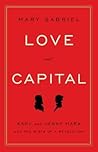
“…his love for children was often remarked on by friends and family. Liebknecht recalled that during the Soho years, when his own family had nothing, Marx would often trail off in midsentence if he saw a neglected child on the street. As broke as he was if he had a penny or ha’penny he would slip it into the child’s hand. If his pocket was empty he would offer comfort by speaking gently to the youngster and stroking his or her head. In later years he could often be seen on the Heath trailed by a gaggle of children who apparently saw in this stern revolutionary an apparition of Father Christmas…”
― Love and Capital: Karl and Jenny Marx and the Birth of a Revolution
― Love and Capital: Karl and Jenny Marx and the Birth of a Revolution
“An artist is a conduit for a vision that is as uniquely her own as a fingerprint, and unrecognizable until it appears.”
― Ninth Street Women: Lee Krasner, Elaine de Kooning, Grace Hartigan, Joan Mitchell, and Helen Frankenthaler: Five Painters and the Movement That Changed Modern Art
― Ninth Street Women: Lee Krasner, Elaine de Kooning, Grace Hartigan, Joan Mitchell, and Helen Frankenthaler: Five Painters and the Movement That Changed Modern Art
“the artist through his or her work revealed pure spirit so that men mired in the bitter reality of daily life might find the strength to continue.30”
― Ninth Street Women: Lee Krasner, Elaine de Kooning, Grace Hartigan, Joan Mitchell, and Helen Frankenthaler: Five Painters and the Movement That Changed Modern Art
― Ninth Street Women: Lee Krasner, Elaine de Kooning, Grace Hartigan, Joan Mitchell, and Helen Frankenthaler: Five Painters and the Movement That Changed Modern Art
“The man who stands in dependence on another is no longer a man at all, he has lost his standing, he is nothing but the possession of another man.”
― Love and Capital: Karl and Jenny Marx and the Birth of a Revolution
― Love and Capital: Karl and Jenny Marx and the Birth of a Revolution
“The abstract artist, he said, would be repeatedly challenged by such skeptics asking, “‘What does it mean?’… ‘Is it a sky, a house, a horse?’” To which they should respond with confidence and honesty, “‘No, it is a painting.’”29”
― Ninth Street Women: Lee Krasner, Elaine de Kooning, Grace Hartigan, Joan Mitchell, and Helen Frankenthaler: Five Painters and the Movement That Changed Modern Art
― Ninth Street Women: Lee Krasner, Elaine de Kooning, Grace Hartigan, Joan Mitchell, and Helen Frankenthaler: Five Painters and the Movement That Changed Modern Art
“The result was abstraction free of anything but the material with which the art was made and the naked energy of the artist who produced it.”
― Ninth Street Women: Lee Krasner, Elaine de Kooning, Grace Hartigan, Joan Mitchell, and Helen Frankenthaler: Five Painters and the Movement That Changed Modern Art
― Ninth Street Women: Lee Krasner, Elaine de Kooning, Grace Hartigan, Joan Mitchell, and Helen Frankenthaler: Five Painters and the Movement That Changed Modern Art
“Elaine once replied, “I was going to quote from the Old Testament, and say that ‘a man sharpens his face on the face of his friends.’ This is why important movements in art have always taken place where groups of artists could get together. And then something happens. It’s some kind of electricity. A movement is never started by one; it’s always give and take.”27 Elaine’s and Bill’s relationship involved a continual exchange of ideas that wasn’t restricted to conversations with friends.”
― Ninth Street Women: Lee Krasner, Elaine de Kooning, Grace Hartigan, Joan Mitchell, and Helen Frankenthaler: Five Painters and the Movement That Changed Modern Art
― Ninth Street Women: Lee Krasner, Elaine de Kooning, Grace Hartigan, Joan Mitchell, and Helen Frankenthaler: Five Painters and the Movement That Changed Modern Art
“our own troubled world is sorely lacking in the nutrients that art provides.”
― Ninth Street Women: Lee Krasner, Elaine de Kooning, Grace Hartigan, Joan Mitchell, and Helen Frankenthaler: Five Painters and the Movement That Changed Modern Art
― Ninth Street Women: Lee Krasner, Elaine de Kooning, Grace Hartigan, Joan Mitchell, and Helen Frankenthaler: Five Painters and the Movement That Changed Modern Art
“We Will Never Die”—occurred at that same location. One hundred thousand people attended, among them Supreme Court judges, cabinet ministers, three hundred congressmen, senators, diplomats, and first lady Eleanor Roosevelt.55 The groundswell witnessed in New York had taken years to build: ten years since Hitler had come to power and begun persecuting his people, five years since the world had stood shocked at the sight and sound of Kristallnacht. The crowds in Manhattan vowed not to forget. But many, many others would continue to ignore what was too horrible to contemplate, at least until the killing had stopped. Then they would comfort themselves by repeating like a mantra, “We didn’t know.” The truth was, they did.”
― Ninth Street Women: Lee Krasner, Elaine de Kooning, Grace Hartigan, Joan Mitchell, and Helen Frankenthaler: Five Painters and the Movement That Changed Modern Art
― Ninth Street Women: Lee Krasner, Elaine de Kooning, Grace Hartigan, Joan Mitchell, and Helen Frankenthaler: Five Painters and the Movement That Changed Modern Art
“The work of the artists in postwar New York, like the work of artists during troubled periods throughout history, acted as a kind of beacon, a ping from hidden depths reminding those who searched for it that, all evidence to the contrary, civilization had not perished: If there is art, there is hope. Man is not a monster, because he yearns for truth and is capable of producing great beauty.”
― Ninth Street Women: Lee Krasner, Elaine de Kooning, Grace Hartigan, Joan Mitchell, and Helen Frankenthaler: Five Painters and the Movement That Changed Modern Art
― Ninth Street Women: Lee Krasner, Elaine de Kooning, Grace Hartigan, Joan Mitchell, and Helen Frankenthaler: Five Painters and the Movement That Changed Modern Art
“When you meet someone you think you can’t live without, then you get married.”
― Ninth Street Women: Lee Krasner, Elaine de Kooning, Grace Hartigan, Joan Mitchell, and Helen Frankenthaler: Five Painters and the Movement That Changed Modern Art
― Ninth Street Women: Lee Krasner, Elaine de Kooning, Grace Hartigan, Joan Mitchell, and Helen Frankenthaler: Five Painters and the Movement That Changed Modern Art
“Word arrived of an uprising in the Prussian region of Silesia. For the likes of Marx and the workers in Paris this was electrifying as a portent of what was to come.
On June 4th 1844, driven mad by their misery, a group of weavers marched on the home of a pair of Prussian industrialist brothers, demanding higher pay, and singing, “You villains all, You hellish drones / You knaves in Satan’s raiment!/ You gobble all the poor man owns / Our curses be your payment!”
The protestors were beyond desperate, beyond furious. Men, women and children had been subjected to such low wages that some of the workers had starved. Their demands denied, the enraged weavers stormed the house and destroyed it….”
― Love and Capital: Karl and Jenny Marx and the Birth of a Revolution
On June 4th 1844, driven mad by their misery, a group of weavers marched on the home of a pair of Prussian industrialist brothers, demanding higher pay, and singing, “You villains all, You hellish drones / You knaves in Satan’s raiment!/ You gobble all the poor man owns / Our curses be your payment!”
The protestors were beyond desperate, beyond furious. Men, women and children had been subjected to such low wages that some of the workers had starved. Their demands denied, the enraged weavers stormed the house and destroyed it….”
― Love and Capital: Karl and Jenny Marx and the Birth of a Revolution
“1848…..they returned to Cologne to begin a new working-class group there. By April it had eight thousand members. Almost immediately, Marx disagreed with its leader Gottschalk over tactics. Gottschalk preferred explosive rhetoric about worker’s rights and arming a people’s militia, communist notions that terrified the middle classes of Germany who were afraid the rights just won would be lost with a revolt by the more numerous lower classes. Marx, however, believed that although the pace of change was frustrating, historical development was slow, and before there could be proletariat rule, there had to be middle-class rule. In any case, a proletariat ‘class’ barely existed in Germany. The number of people who labored with their hands was great, but they were disorganized and did not as yet recognize their own strength. To support the ultimate goal of that group, Marx believed one had to work for middle-class democracy. Viewing upcoming elections as just such an opportunity, he encouraged participation to ensure by democratic candidates over reactionaries who would roll back on reforms. Marx further believed that any newspaper he and his associates published In Colgne had to be democratic not communist, because in Germany democracy was the ideology with the greater immediate potential. If they had chosen to produce an ultra-radical newspaper, Engels said, ‘there was nothing left for us to do but to preach communism in a little provincial sheet and to found a tiny sect instead of a great party of action.’ The pragmatic approach was not unlike the one Marx had taken during his tenure as editor…”
― Love and Capital: Karl and Jenny Marx and the Birth of a Revolution
― Love and Capital: Karl and Jenny Marx and the Birth of a Revolution
“As intellectuals they were brilliant, incisive, prescient, and creative (but also elitist, cantankerous, impatient, and conspiratorial). As friends they were bawdy, foulmouthed, and adolescent. They loved to smoke (Engels a pipe, Marx cigars), drink until dawn (Engels fine wine and ale, Marx whatever was available), gossip (mostly about the sexual proclivities of their acquaintances), and roar with laughter (usually at the expense of their enemies, and in Marx’s case until tears streamed down his cheeks).”
― Love and Capital: Karl and Jenny Marx and the Birth of a Revolution
― Love and Capital: Karl and Jenny Marx and the Birth of a Revolution