Goodreads helps you follow your favorite authors. Be the first to learn about new releases!
Start by following Patricia Anthony.

Showing 1-4 of 4
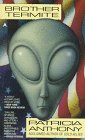
“They don't understand anything. They see their engineering is fifty years stale, and they see the drop in the birthrate, sure. Only we make certain they can't think about it very long. We stopped the statisticians' reports at an eighteen percent decline. As far as any humans know, that's bottom line, okay?”
― Brother Termite
― Brother Termite
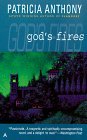
“Pat’s take on « Organic Writing » : « I don’t make an outline before writing a book, the subconscious formulates the story. You can’t stop it – it just happens. I never know what I’ll end up with. I begin researching the subject and writing at the same time. My subconscious is telling me a story, so I’m being entertained. I don’t know what’s going to happen.” Quote from 1997”
― God's Fires
― God's Fires
“You cannot get emotionally involved in the writing, the object for the writer is to manipulate the reader so that the reader feels the emotion.
Quote from a radio interview on the Reality Break show in 1997.”
― God's Fires
Quote from a radio interview on the Reality Break show in 1997.”
― God's Fires
“© 2000 The Barcelona Review, interview made by Sarah Martin with Patricia Anthony on the subject of her novel FLANDERS - Why did you choose to write about World War I?
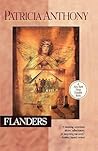
The easy answer to your question "Why?" would be that I wanted to write about death in all its aspects, from the terror and pain of it to the transcendent beauty of the end. Normally I don't begin a novel with a theme, but allow the theme to grow organically, just as I allow my characters and story to grow on their own and follow where they lead. Anyway, this time, rather than the idea, I played with theme. I looked around history for just the right death--the worst grinding horror of it, the great maw of the beast. The perfect choice, of course, was WWI. Not when the Americans entered the war - then the war became mobile. The soldiers climbed up out of the trenches. The early tanks made their debut. Earlier, then. So the secondary characters had to be British, as I didn't know enough about the Germans. It wouldn't be appropriate to set the novel in 1914 when, despite the slaughter of the British Army, many soldiers still believed the war would be won soon. No. It had to be the tag end of 1915, expanding until that dismal, wet autumn of 1916 when in Flanders the mud was so deep that the wounded drowned in it, that horses couldn't move. Hope was lost and all that was left was the daily grind of battle. War had become commonplace, a way of life, no longer a goal to be won. War had become the terrible, mindless machine that rolls over everything in its path - morality and courage and even outrage become moot in its shadow.
But in that darkness, Travis Lee's enlightenment. And in the end, of course, the only light of the book resides in him, even though his external world is uncompromisingly dark. What I wanted to do was show one man who faces the worst that life and death has to offer, yet still has inner peace. Travis Lee's story is that of a man on his road toward enlightenment.”
― Flanders
The easy answer to your question "Why?" would be that I wanted to write about death in all its aspects, from the terror and pain of it to the transcendent beauty of the end. Normally I don't begin a novel with a theme, but allow the theme to grow organically, just as I allow my characters and story to grow on their own and follow where they lead. Anyway, this time, rather than the idea, I played with theme. I looked around history for just the right death--the worst grinding horror of it, the great maw of the beast. The perfect choice, of course, was WWI. Not when the Americans entered the war - then the war became mobile. The soldiers climbed up out of the trenches. The early tanks made their debut. Earlier, then. So the secondary characters had to be British, as I didn't know enough about the Germans. It wouldn't be appropriate to set the novel in 1914 when, despite the slaughter of the British Army, many soldiers still believed the war would be won soon. No. It had to be the tag end of 1915, expanding until that dismal, wet autumn of 1916 when in Flanders the mud was so deep that the wounded drowned in it, that horses couldn't move. Hope was lost and all that was left was the daily grind of battle. War had become commonplace, a way of life, no longer a goal to be won. War had become the terrible, mindless machine that rolls over everything in its path - morality and courage and even outrage become moot in its shadow.
But in that darkness, Travis Lee's enlightenment. And in the end, of course, the only light of the book resides in him, even though his external world is uncompromisingly dark. What I wanted to do was show one man who faces the worst that life and death has to offer, yet still has inner peace. Travis Lee's story is that of a man on his road toward enlightenment.”
― Flanders